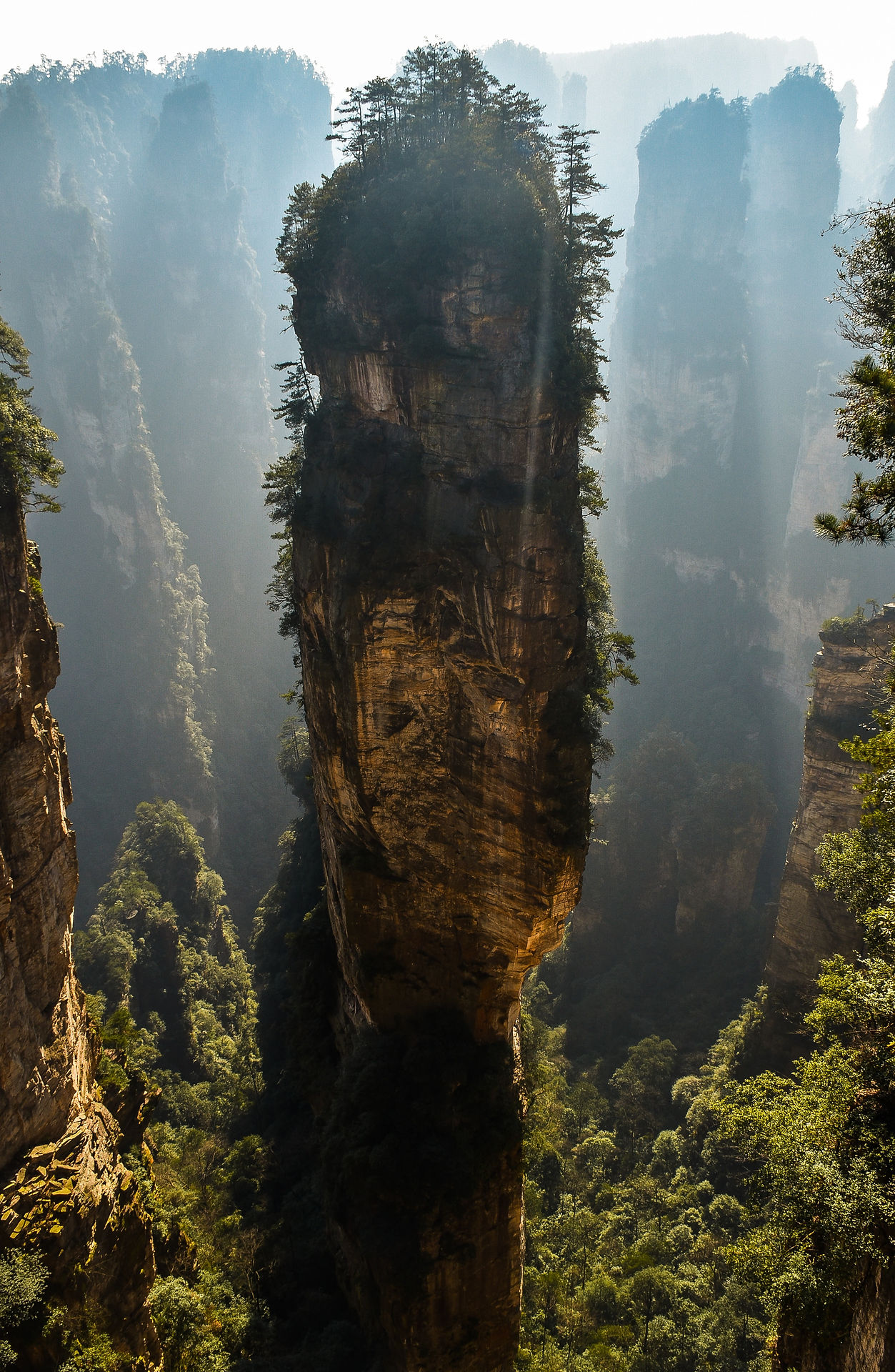



All recommended sites & everything else can be located & checked out with a few clicks - most have 10 photos showing views, food, beds, scenery, facilities, goods - everything you need to make an informed decision & links to all of them.
Just click on any marker, then on the traffic arrow and a 2nd location for instant detailed public & private travel information including routes, distances, times, frequency, transfers & stop locations.


Your holiday - Your way
Click on the icons to see photos

COUNTRY GUIDE

BEST TIME TO GO - Spring and Autumn - April to May and Sept to Oct.
-
Summer - June to August can be very busy but is good for the mountains.
-
Winter is the only time the weather could be a problem - Nov to early March.
POPULATION - 1,439,323,776
CAPITAL - Beijing (Northern Capital)
ETHNICITY - Han 92% and 55 other minorities
LANGUAGE - Mandarin
NATIONAL DRINK - Baijiu, distilled grain
NATIONAL DISH - Peking Duck
GOVERNMENT - Communist
AGE - 3600
BIG MAC IN $US - $3.12
LITERACY - 96.36%
RELIGION - Buddhism, Taoism, Catholicism, Protestantism, and Islam
MINIMUM WAGE ANNUAL IN $US - $4312
CURRENCY - Chinese Yuan Renmimbi CNY 1 CNY = 14c
LIFE EXPECTANCY - 77
TOURISTS PER YEAR - 57 million
NO.1 TOURIST SITE - The Great Wall of China
CHEERS - Gan Bei (dry cup)


HIGHLIGHTS - GOOGLE image these towns & you'll be packing your bags
-
Jinghong 3N to Shanghai 3N via Kunming 2N - Dali 3N - Lijiang 2N - Shangri La (Diqing) 3N - Chengdu 2N - Yanjin 3N Fenghuang 3N - Zhangjiajie National Forest Park Area 5N - Huangshan Mountains Area 9N and Nanjing 4N
-
Tibet - Shangri-La
-
Dali the #1 attraction in Yunnan
-
Shilin Stone Forest - Kunming
-
Dine in the Duck Capital of China
-
Thailand in China - Xishuangbanna
-
Stay in most beautiful town in China
-
Chengdu - home of the Giant Pandas
-
Yunnan Golf Courses in the Stone Forest
- See the world's first Groundscraper Hotel
-
Tiger Leaping Gorge - deepest in the world
-
Discover the 2nd unknown Great Wall of China
-
Shake hands with the most famous tree in China
-
Ride the infamous Bund sightseeing Tunnel Train
-
Follow the Tea Horse Trail - Ancient Caravan Route
-
Admire the view from the world's longest cableway
-
Walk the longest and highest glass bridge in the world
-
Lijiang Ancient Town - UNESCO World Heritage Centre
-
Start the trip in Jinghong / Xishuangbanna. You can either fly in via Kunming, come from northern Thailand via Laos or possibly even take a boat from Thailand. There is also a high speed train from Vientiane the capital of Laos which has stops in Vang Vieng and Luang Prabang. This town is more like Thailand than China as it was once a Tai Kingdom which had a close relationship with the Lanna Kingdom of which Chiang Rai and Chiang Mai were the capitals. This town straddles the Mekong which is now called the Lancang River. Many of the attractions are focused on the Dai culture. The food is a treat and also the night market. This town has expanded a lot in recent years so their is a lot of choice but it still retains its laid back atmosphere.
Jinghong - Tue 28 July 3 Nights - the ‘City of Dawn’
The town was founded as Chiang Hung (Cheli), by Tai king Phanya Coeng in 1180. It was the capital of Sipsongpanna. The Tai Lue are the Tai-speaking inhabitants of Sipsongpanna. (This name is written "Xishuangbanna" in Pinyin; when the status of the prefecture as part of the People's Republic of China is being referred to. Sipsongpanna means "the twelve thousand fields" or "the twelve principalities." The extent of the kingdom varied over time, but in the precolonial period it included Muang Sing, now in Laos, and parts of the Tai-speaking areas of Myanmar (Burma). Today, however, there are Lue communities throughout northern Thailand, and it is not easy to make distinctions between the Lue and the Yorng and Khoen of Myanmar. There is now also a sizable Lue population in Taiwan. The term "Tai" is used for all Tai-speaking peoples. In the southwestern part of Yunnan these are mainly the Lue and the people known variously as Tai Nuea (Northern Tai), Chinese Shans, Tai Khorn, and Tai Mao. There is considerable difference between the Tai Lue and Tai Nuea languages and they should be considered mutually unintelligible.
During the Mongol Yuan Dynasty in China, the Tai kingdom of Sipsongpanna began a close and long-lasting relationship to Lanna, another historic Tai kingdom that lay south. In 1296, Lanna's capital Chiang Mai was founded by Mangrai, whose maternal grandfather was King Rung Kaen Chai. He also founded Chiang Rai.
The kingdoms of Sipsongpanna and Lanna maintained ties through migration and intermarriage.
Jǐnghóng is the capital of Xishuangbanna in southern Yunnan. Xishuangbanna is the most tropical area of China. It is a hub for Chinese package tourists as well as for travellers passing between China and Laos. A prime area for backpackers, it is an interesting alternative to Laos or northern Thailand. It is a small city on the Lancang River with lush tropical and subtropical scenery and a unique folk culture. Jinghong City is well-known for its beautiful peacocks.
Jinghong was of minor significance before 1953, but the completion of a highway that year from Kunming, the provincial capital, and the institution of a less oppressive policy toward the local Dai (Tai) peoples than previously under the communist administration from 1949 made it an important commercial centre for the remote mountains of the extreme southern section of the province. Routes lead from Jinghong south into Laos and southwest into Myanmar. In addition, navigation improvements on the Mekong have made it possible for ships of up to 100 tons to reach upstream to Jinghong, and since the mid-1980s the city has become China’s southwestern trading port to the countries of Southeast Asia. A new airport was completed in 1990, and there are now daily flights to several major Chinese cities as well as to Bangkok, Thailand.
About - Pop : 520,000
Jinghong has a very laid-back atmosphere and great choices for going for a coffee, a drink with friends, walking along the Mekong, listening to life music, dinner boat parties, entertaining cultural evening shows and many others, just to unwind and enjoy life without pressure.
The once underpopulated left bank of the Mekong is at the heart of the boom, meaning the city's axis is beginning to shift from its traditional centre on the right bank. Nevertheless, Jǐnghóng sees relatively few Western visitors and it remains laid-back despite the increasingly snarled traffic. And everything from the food to the weather has more in common with Southeast Asia than China.
Enjoying the fame as 'Green Treasury' and 'Gene Pool of Species', the region keeps a large area of tropical rainforest, including oil palms, coconut palms and mango trees as well as various other tropical plants grown wherever in the parks, on the sides of the streets, in front of or behind the houses.
Jinghong is home to 13 ethnic groups including the Dali, the Hani, the Jinuo, and the Bulang. People of minority nationalities account for about 65% of the total population. The Dai people have the largest population. They are mild and very versatile. The Dai people believe in Buddhism and Buddhist temples are scattered around every village.
Similar to the Yao, the Dai is a composite of several related people groups. With a long history and a fun-loving culture, the Dai have come to influence Yunnan culture in a significant way. One of China’s 55 officially recognized ethnic minorities, the Dai are closely related to both the Lao and Thai peoples, having a closely intertwined history and a relatively close geographical position. There are over one million Dai living in China, primarily in the southern Yunnan province; however, the largest cluster of Dai live in Myanmar, with an estimated 6.3 million. While Dai peoples all share a similar language and culture, the term is actually a generalization of several Tai-Kadai-speaking peoples in China’s south. To clear up confusion with the term, Thailand has come to call them Tai Lue, meaning Tai peoples in general.
The Communists tried to make reparations with the Dai, establishing Xishuangbanna as an autonomous prefecture in the 1950s, but many Dai still faced persecution during the later Cultural Revolution and fled across the border to Dai communities in Thailand, Laos, Myanmar, and Vietnam.
Transport - Lao/China border
The daily bus leaves around 8 AM, costs 50,000 kip to Mengla and 90,000 kip to Jing Hong, you'll want to exchange/use up all your kip before you head off, as exchange rates at the border are variable, and Kip is useless outside Laos.
Jinghong, (Xishangbanna, Yunnan Province, China) There is a daily bus Jinghong (through Mengla) leaving at 8:30 from the 10 km south bus station, 90,000kip.
Boten border with China, buses 8:00, 9:30, 11:00, 12:30, 14:00, 15:30 - 25,000 kip / 1 hour.
(In Chinese, especially at the bus station, Luang Namtha may be called "Nan Ta".)
The quality of bicycling/motorcycling on the road from Luang Namtha to the Chinese border is excellent. The road is completely sealed with little or no traffic along the way. The route from Luang Namtha to Boten round trip is approximately 100 km long and passes through Laotian hill country and rice fields. The grades range from flat to moderate with one 2 km 10% grade stretch. Welcomes along the way are great.
Boten / Mengla
This is the only Lao border that is currently open to independent travellers. The border is about 42km north of Luang Nam Tha. There is regular transport between the two in the morning, but by early afternoon this drops to a trickle, so try to cross in the morning if you can. There is accommodation available in Boten should you get stranded.
From Luang Namtha 25,000 Kip (to the Lao side of the border). There are vans leaving from the Namtha City Bus Station every morning. But they don’t leave until they have at least five passengers, so you might have to wait for a while. It’s better to go to the bus station in the morning and ask how many passengers they have at the moment. You can also catch a bus from Luang Namtha’s new bus station, 7km away from the town. There are buses going to Jinghong every morning. They charge 30,000 Kip to the border.
If you catch a van from Luang Namtha town bus station, the van will drop you off at the Lao side border passport control. It’s an easy process to get an exit stamp from Lao immigration. And from there, it’s about 500m (6~7min walk) to get to the Chinese side border control. This side has another easy process for getting an entry stamp in your passport (if you already have a visa for China). This whole border crossing process should take about 15 min, if there’s no queue at immigration. This particular border crossing is very easy. Many times the Lao immigration officers, at different borders, ask for pocket money, but this border's officers don’t ask, even on week-ends!
On the Chinese side there are many places to get a big feed for a small price. Then continue walking along the highway out of town, after which you'll soon get a ride to the first city, Mengla, from which you can continue on to Pu'er, Ning'er, and eventually the relaxing capital of Yunnan, Kunming.
It’s about a 50 min ride from Mengla by bus (van) for ¥17. There are frequent buses to/from Mengla every 20 min (52km away).
From the Mohan Bus Station
To Jinghong 景洪 (190km), Fare: ¥66
Departure: 8:30, 9:50, 15:50
This is the first big city for travelers coming from Laos. This is the first place with banks that accept foreign cards, but most travelers will have to change buses in Mengla to get here. A direct bus from the border town of Mohan takes 3 hours. There are also direct buses from Luang Namtha
Get Around
Jǐnghóng is small enough that you can walk to most destinations, but a bike makes life easier and can be rented from some hostels for ¥30 a day or from the bike hire shop on Manting Lu.
Taxi flag fall is ¥8, but you may struggle to get drivers to use their meters. Taxis run about ¥10-30 to places in town.
There is a system of public buses for ¥2 trip.
Jinghong has plenty of tuk-tuks or auto-ricksaws about. Hire these as a slightly cheaper way to get between places, but more than a kilometer or two and your butt might be sore all day.
Down by the Lancang jiang (or Mekong river) it may be possible to hire a boat for a bit of river cruising.
Orientation
Left Side
Main side of the river. Most stuff ie transport, banks etc is on this side. A lot of new developement on this side.
Jǐnghóng (景洪) – the ‘City of Dawn’ in local Dai language – is experiencing some serious investment. The once-sleepy capital of Xīshuāngbǎnnà Prefecture is expanding fast, with new apartment blocks sprawling down both sides of the Mekong River which bisects the city and ambitious developments sprouting on the city's outskirts.
Right Side
Gaoshuang Floating Market and Star Night Market are on this side as well as the big temple / pagoda. More laid back than the left side. Every evening the whole area becomes a market in the style of night markets from Thailand with a lot of different very good food.
Tips
-
The capital of Xishuangbanna is Jinhong town. Jinghong is sometimes also referred to as Xishuangbanna.
-
This is the first place with banks that accept foreign cards
-
Dai Minority Nationalities is the majority.
-
Wet season (May thru October).
-
Local Specialties: Jade articles, Tree Fossil, Wooden Carve, Coffee, Tea and National Costume
-
We found people here are very friendly and not so hectic like in other urban areas of China.
Stay
Left Bank
Empark Grand Hotel ***** $59 dbl Golfcourse onsite
Walk in. Hard to book online. Cheap 5 star. 867 rooms.
Empark Grand Hotel offers a pool and a poolside bar.
Mekong At Home Homestay $43 dbl
Mekong At Home Homestay provides accommodation with free WiFi, air conditioning, a shared lounge and a terrace.
Each unit comes with a sofa, a seating area, a flat-screen TV with cable channels, a well-fitted kitchen with a dining area, and a private bathroom with a hair dryer. A microwave and fridge are also provided, as well as a kettle and a coffee machine.
Doudou Meilan Fengqing Inn $43 46m2 Apt
All units at the aparthotel feature air conditioning, a satellite flat-screen TV and a washing machine. An Asian breakfast can be enjoyed in the breakfast area. Doudou Meilan Fengqing Inn offers a terrace. It also feature a shared kitchen and tea house. A bicycle rental service is available at the apartHotel.
Boutique Garden Hotel *** $44 dbl - on food & drink map
Infused with local elements, each unit here is fitted with sheer bed canopy, air conditioning and a flat-screen satellite TV. The bathroom attached offers a walk-in shower.In the shared lounge, you can enjoy a break after a long journey. The front desk is at your service for 24 hours.
Hearty breakfast with local features can be enjoyed at the on-site restaurant.
Jinghong Yuehong Holiday Hotel $20 dbl
At the hotel, the rooms are fitted with a desk and a flat-screen TV.
Right Bank
Tianqi Gaozhuang Inn B* $42 dbl swimming pool
The hotel offers pool views, a year-round outdoor pool, a 24-hour front desk, and free WiFi is available. At the hotel, all rooms come with a desk, a TV and a private bathroom. Guests at Tianqi Gaozhuang Inn can enjoy a buffet breakfast.
My Secret Garden Boutique Hotel *** $39 dbl
My Secret Garden Boutique Hotel features air-conditioned accommodation and a bar. The accommodation offers a 24-hour front desk, room service and buying tickets for guests. At the hotel, the rooms are equipped with a balcony with a city view. Featuring a private bathroom with a shower and a hair dryer, rooms at My Secret Garden Boutique Hotel also feature free WiFi. All guest rooms at the accommodation come with a flat-screen TV with satellite channels. My Secret Garden Boutique Hotel offers a terrace.
@Siam Hotel B* $29 dbl
@Siam Hotel offers affordable hotel in Xishuangbanna. Guests can rent a bicycle to explore the surroundings. Recreational options on site include evening entertainment and a bar. Free WiFi is available throughout the entire hotel. Gaoshuang Floating Market and Star Night Market are 600 m away.
@Siam Hotel offers a 24-hour front desk, express check-in/check-out and luggage storage. There are a terrace and a shared lounge area at this hotel. The ticket service is available from the tour desk.
The on-site restaurant serves local dishes.
Brekky
Bǎnnà Cafe
A good place for breakfast, this friendly, Akha-owned cafe also has a small terrace that is ideal for a sundowner or late-evening libation while watching the world go by. Staff can also arrange treks and guides.
Smoko
I also recommend checking out MeiMei’s Cafe and Mountain Cafe. These two expat owned cafes serve an outstanding cup of coffee and I found the staff at Meimei’s to be incredibly helpful. Coconut coffee really nice!
Lunch
Mekong Cafe
Very nice authentic French food,such a surprise!
Really enjoyed their wine and food over lunch, so went back again for dinner during my short stay in xishuangbanna. Chef Greg is from France. Absolutely amazing authentic French food, Greg is very hospitable and let us try his duck liver confit. What delicacy! Thank you very much and I recommend this place! Also have view of Lancang river from the balcony.
See
Great Mengle Buddha Temple
The city is known for its Mengle Great Buddha Temple which is enormous and stands tall overlooking the city. It’s great eye candy, though to be honest, I wouldn’t recommend paying the 120 Yuan to go see it up close due to the fact that it lacks historical authenticity.
Jinghong Attractions
The city has the most enchanting tropical landscape. The main scenic spots worthwhile visiting are the Peacock Lake, Chunhuan Park, Manjinglan Tourism Village, Folk-Custom garden, Dai Garden (the village of the Dai ethnic group) and Xishuangbanna Primitive Forest Park. The many Buddhist pagodas of Xishuangbanna, with their unique architectural characteristics, are also popular tourist destinations. The most outstanding ones are the White Pagoda of Menglong, and Black Pagoda of Damenglong.
Riverfront Walks. The town is on the Lancang River, to most Westerners better known as the Mekong. There is excellent walking along the riverfront.
Visitors to Xishuangbanna Dai autonomous prefecture in Southwest China’s Yunnan province now are able to experience the cultures of China, Laos, Myanmar, Thailand, Cambodia and Vietnam in one place, as the Mekong 6-country Water Market opened recently.
Day Trips
Xishuangbanna Dai Minority Village
Is the collective name of 5 ethnic villages located within Xishuangbanna Dai Minority Park, about 28km away from Jinghong urbal area. The five villages, Man Song Man (Garden Village), Man Ting (Flower and Fruit Village) being the two larger ones and Man Jiang, Man Zha, Man Ga the other three smaller ones, fall under the jurisdiction of Menghan Town.
The village is concentrated with Dai minority of Yunnan Province which originates from the people of Thailand and Laos. Up to the present, there are Dai locals residing in the village, making it a live museum of Dai ethnic culture heritage. Through the villages features detached bamboo houses in typical Dai style, in blend with charming tropical rural landscape and Buddhist pagodas. Everywhere in the village, lush tropical trees such as coconut palms, mango trees, pineapple trees, and etc. can be found offering pleasant shade to the village.
Despite that Water Splashing Festival happens in mid-April, twice-a-day water splashing rituals are practice in the village for visitor to participate and check out the festive joy. Following the water splashing is a show performed by dancers in colorful dress with ethnic hues.
The small family-owned restaurants in the village affords visitors with bounty options. Visitors are most welcome to walk into one of them tucked in a bamboo house for quintessential Dai local food touch.
Ticket: CNY100 to enter the Minority Park Opening Hours: 07:00 - 19:00
Transportation
From Banna Bus Station in Jinghong city center, tourists can take buses bound for Mengla and get off at Ganlanba. The bus journey takes about one hour.
Travel Tips
1. Recommended length of visit: 5 hours
2. Best season to visit: October to the next June when the climate is ideal for tourists activities.
3. Please show respect to local religious customs and obtain approval before take photos.
The collection of five pleasant Dai villages has now been "preserved" for tourists, which essentially means it has become a human zoo for Chinese tourists in golf carts. The first village of Manchunman has the Manchunman Fo Si, a regal temple first built in 1126. There is a gorgeous golden Burmese stupa here surrounded by four smaller golden stupas. Farther in, Manting village has another impressive temple and white pagoda worth exploring, the Manting Fo Si Da Du Ta, built in 669, which now houses Buddha statues donated by a Thai philanthropist.
For wonderful scenery along rivers and rice paddies, some travellers recommend heading to the south of town, crossing the Mekong by ferry (¥2) and then heading left (east). The last ferry returns at 7pm.
How to Get to Dai Minority Garden?
By water: take ship at the pier of Jinghong and go down along the river to Ganlanba, 2-3 hours
By bus: there are many buses departuring from the bus station near the Shuyuan Hotel of Jinghong City, 8.5 yuan for ticket.
Skytree - 5 hrs round trip
Located in the Wangtianshu Tropical Rainforest Park of Xishuangbanna, Wangtianshu Tropical Park represents a unique moment of leisure. The suspended walkway through the park offers a sensational visit amidst leafy Parashorea branches. The winds from the Nanla River that breeze through the lush rainforest are vaguely reminiscent of the Amazon.
The Parashorea Tree
In a huge tropical park of Xishuangbanna, there are the towering Wangtianshu trees. These sky trees are green all year round and some grow to more than 70 meters high. This treasure of the forest is found only in Xishuangbanna for its microclimate.
The Suspended Bridge
The huge suspension bridge in the middle of the gigantic trees is a great attraction. Extending over 2.5 kilometers, it would be the longest bridge in the world overlooking the ground 34 meters below. Each connection to a tree makes it possible to come down and then wander around trees. This paved path is also very nice, offering a unique visit with an impression of three dimensions, other walkers doing the same path just 34 meters above.
The Amazon of China
At the heart of the park, visitors can find Wangtianshu’s pride, the Nanla River. This river that sinks into the lush rainforest often reminds visitors of South America and the Amazon. It offers panoramic views and a unique experience.
Best time to visit - Jan. Feb. Mar. Apr. May. Jun. Sep. Oct. Nov. Dec.
Altitude 560M Altitude Wangtianshu Tropical Park
You will see a magnificent natural scenery, a very fresh air and an experience with the incredible nature of china
Inclusion :
1.Admission to Skytree
2. A one-way Cruise Ticket
3. Glass Corridors Item or Canopy Corridors Item (choose one)
4. A round-trip Bus Ticket within scenic area
Yunnan’s Ancient Tea & Horse Caravan Road (FYI)
The 3,100-mile route of the Ancient Tea and Horse Caravan Road started in Southern China, passed through Tibet, Burma, Nepal, and ended in India. China’s desire to import horses from Tibet and Tibet’s desire to import tea from China was the main motivation of the trade along the Tea and Horse Caravan Road. Traveling this route was difficult due to its diverse terrain, and one minor misstep could be fatal for both trader and animals.
For more than a thousand years, the Tea Horse Road -- a thoroughfare of commerce between China and Tibet – was one of the harshest trails in Asia. The ancient passageway stretched almost 2,250km across the tea-growing region of China’s Sichuan Province to Lhasa, the 365m-high capital of Tibet. Beginning in the 10th Century, Chinese porters and pack animals inched up switchbacks to cross Tibet's Zar Gama Pass (pictured) to trade Chinese tea for Tibetan horses. Today, most of the original Tea Horse Road is gone and what is left of the old route is now travelled by car or truck.
Today, the Tea and Horse Caravan Road attracts people from all over the world with its assorted teas, mixed cultures, stunning landscapes, and ancient centers of trade. By traveling along this route, travelers can experience both ancient and modern China by learning about the culture of local ethnic communities, hiking in the ancient tea tree forests, and exploring the scenic mountain, rivers and valleys.
Here is a breakdown of some of the villages and sites along the way:
Xishuangbanna
Xishuangbanna prefecture encompasses the subtropical lowlands of Yunnan. Its rolling hills are spotted with small Dai villages surrounded by acres and acres of tea. This is the land of Pu’er, a particularly favoured tea that is fermented and shaped into bricks or pancakes for easy transport by mule.
Dali
Dali Old City sits at 4,000ft, with vertical peaks rising behind it like a green screen. A major conduit market town on the route, Dali is the cradle of Bai civilization and you will notice their signature whitewashed buildings with flower-painted borders. This ethnic minority group acted as middlemen between tea growers from Xishuangbanna and horse traders from Tibet.
Lijiang
Traders rarely made the entire journey along the Tea-Horse Road, instead trading goods at markets along the way. Lijiang, also on the Unesco World Heritage List, was one such town. It is a stunning place if you can get past the theme park-feel and the crowds of tourists. But with its ancient canal system filled with rushing water from the snow-topped peaks in the distance, topped by arched stone and wood bridges, and reflecting moody red lanterns in the evening, Lijiang’s personality is difficult to resist.
Sun
Bǎnnà Cafe
A good place for breakfast, this friendly, Akha-owned cafe also has a small terrace that is ideal for a sundowner or late-evening libation while watching the world go by. Staff can also arrange treks and guides.
Sunset on the Lancang (Mekong)
Eat
Dai food: Chinese cuisine’s best-kept secret
One of the best things about visiting Jinghong is the opportunity to eat authentic Dai food. Chili peppers, cilantro and lime juice are where much of the flavor in Dai food comes from, but lemongrass, fermented soybeans and a variety of herbs you won't find anywhere else are also used to create unforgettable taste combinations.
Dai cuisine is predominantly spicy and sour. It is similar in some ways to Thai cuisine south of the border, but it has its own distinctive identity and style.
The local specialties include bamboo rice, fragrant bamboo glutinous rice, roasted fish, and fried cowhide. The area near the new bridge, called Jinshatan in jinghong city, is clustered with food stalls. When the veil of night descends, it is wrapped in the tasty fragrances of a wide variety of enticing food choices.
Local Food: Tengchong Bait Wire, Dabopian, Salted Vegetables. Popular dishes include pineapple rice, mashed potatoes with chives and chilies and goat’s milk cheese.
Dai dishes include grilled fish or beef cooked with lemon grass, or served with peanut and tomato sauce. The most authentic Dai restaurants are located on the outskirts of town and serve up big set-meal feasts, so get a group together. Ask at the Meimei Café for directions. In the centre, Menghai Lu, Mengpeng Lu and Menghun Lu all have decent Dai restaurants.
There is a strip of open-air Dai barbecue joints on Menghai Lu between Baji Lu and Manting Lu. Exotic treats at these restaurants include fresh passion fruit juice for around five yuan a glass, fried banana flowers, wild boar, pineapple rice made with purple rice and much more.
Cai Chun Qing Thai Food
Cai Chun Qing Thai Food mainly serves Thailand style food, and the price there is affordable. It is very popular in Jinghong City.
Manting Xiaozhai
Manting Xiaozhai is a snack street. Barbecue is the highlights there, and Zutong Fan (竹筒饭, rice cooked in bamboo), roast fish (香茅草烤鱼), and pineapple rice (菠萝饭) are highly recommended by customers having being there.
Average price per person: 48 yuan Address: Near Manting Park (曼听公园)
Manjinglan Flavor Street
Next to the street, lies a Dai ethnic village that makes the street full of ethnic breath, such as the designs of the buildings. It is where you can enjoy the original dance performances by the Dai people while you having the sumptuous feast in the restaurants.
Golden Beach
Here is a paradise of barbecue, where there are barbecue of various kinds and distinctive snacks waiting for you, which will come to live when the night falls.
Damanme
It is a Dai Village as the most popular Gourmets Paradise, where all the delicious Dai dishes and snacks can be got. Enjoy the fantastic nightscapes, while tasting the feasts inside the bamboo restaurants.
Night market Xishuangbanna Park
On the righ side of the New Bridge. Every night there is a big night market in Xishuangbanna Park just on the right of the New Bridge. You can buy almost anything here and there are endless street food stalls.
Starlight Night Market
Starlight Night Market is one of the growing night markets in Xishuangbanna and one of the attractions in the tourist resort of Gaozhuangxi. It is usually open at 7:00 in the evening. The night market has mostly food snacks and diverse handicrafts. It is much nicer than the Binjiang Night Market. Maybe because there are almost tourists, the environment is not messy. And come to Xishuangbanna, the night market is full of local atmosphere. .
Jǐnghóng Night Market
With Jǐnghóng's axis switching inexorably to the left bank of the river, this night market is increasingly popular with both locals and visitors. All manner of Dai and Yúnnán eats are on display, and you are close to the riverbank where Chinese-style bars are beginning to congregate. It's a ¥15 to ¥20 taxi ride from the centre of town.
Mangulan Dai Food Street
Along the Menghai Rd near the Binjiang Park, which is considered the most authentic and very popular among locals. The place is popular among local people, the food is considered as the best and most authentic in town. There are numerous open-air barbeque stands along a walking street, stalls selling various drinks, simple tables and garden chairs beside the street. Looking for a good place for dinner we followed the recommendation of a local taxi driver and were amazed about the location near the banks of the Mekong, the night view of the bridge.
Gaozhuang Night Market
Gaozhuang, a newly developing neighborhood north of the Mekong, with many scenic spots, streets and restaurants near the Puti Blvd. The very picturesque Gaozhuang Night Market at the Dajin Tower square nearby.
Drink
With many new areas opening up in Jǐnghóng, you'll find bars and clubs in a number of different locations. On the right bank of the Mekong, close to the bridge, there's a strip of Chinese-style bars – on the left bank they're close to the night market. Clubs are clustered around the performance square off Menghai Lu. Menglong Lu has Western-style cafes.
Thailand Avenue (Tai Guo Jie). A newly built large open market and Thai themed stores centered around a stage. There are at least two bars on premise. Free live music at night at around 7 pm.
There are many nice bars by the Mekong river on the left side of the New Bridge, a bit expensive but beautiful at night, they are worth a stroll even if you don't go inside for a drink.
The Bar Street along the Binjiang Ave near the western bridge-head of the Xishuangbanna Brdg has plenty of different bars and restaurants with life music, cool drinks, good food, and night long exciting view at the Mekong River with its pleasure boats and the illuminated new Xishuangbanna Bridge. The party boats with dinner show and life music start from the port of Jinghong at the north-eastern bridge head. The cultural dance show with dinner and candlelight procession in the Manting Park happens every evening and is a very nice experience.
Měngbālā Nàxī Arts Theatre
Wildly popular with tour groups, this theatre has a nightly song and dance show. It begins at 7pm with a brief outdoor display, but you'll need to buy a ticket for the full extravaganza inside.
Galan Zhonglu 8pm tickets ¥260-380
-
Lijiang with the Himalayas as the backdrop looks like the China in your imagination. It is quite stunning and populated by numerous colourful minorities. It is a UNESCO World Heritage Site and a must see. It will feel like you are staying in a living museum. Head up to Tiger Leaping Gorge for a day trip if you like or go for a bike ride around the outskirts or walk the Canal Path. Try salty cheese or stone grilled fish then have an impromptu pub crawl in the many local bars.
-
Lakeside Dali was one of the original backpackers hangouts in China. These days you're more likely to see Chinese hippies. It is a very scenic spot with the lake, mountains and the Old Town where you will be staying. There are some nice bike rides around here. It might pay to get a bit of exercise because soon you'll be in the mountains.


Photo by Sokoudom Ung on Unsplash

Photo by Vicky T on Unsplash
Dali - Fri July 31 3 Nights
Dàlǐ (大理), the original backpacker hang-out in Yúnnán, was once the place to chill, with its stunning location sandwiched between mountains and Ěrhǎi Lake. Loafing here for a couple of weeks was an essential part of the Yúnnán experience.
In recent years, domestic tourists have discovered Dàlǐ in a big way and the scene has changed accordingly. Instead of dreadlocked Westerners, it's young Chinese who walk around with flowers in their hair. Still, Dàlǐ has not been overwhelmed by visitors like nearby Lìjiāng and remains a reasonably relaxed destination, with the local Bai population very much part of daily life.
Surrounding Dàlǐ there are fascinating possibilities for exploring, especially by bicycle and in the mountains above the lake, or you can do what travellers have done for years – eat, drink and make merry.
Dali Old Town (not to be confused with Dali City, or Xiaguan) is one of Yunnan’s most popular tourist destinations. Famous for its traditional architecture, natural scenery and nightlife, Dali feels like the most touristy place in Yunnan and can be passed over by those hoping for a trip that doesn’t feel like its being shared with half a million of your closest friends. For those willing to brave the crowds and touts, though, Dali has its fair share of worthwhile offerings, namely Erhai Lake and the Cangshan Mountains.
Dali has a long and rather glorious history. In 738, the Nanzhao Kingdom was established with Dali as its capital and covered a large area of Yunnan and northern Burma and parts of Sichuan and Guizhou. By 1000, Dali was one of the 13 largest cities in the world. The old Dali City was rebuilt in the early 1400s by the Ming Dynasty. What you see in Dali Old Town today is the rebuilt Ming town. Since then, the fortunes of Dali have declined and its importance as a cultural and economic centre in the Yunnan area have been overtaken by Kunming, the provincial capital.
About
Dali feels like a backpacker hangout, similar to Yangshuo; there are Western restaurants and tourists everywhere.
Despite Dali's former fame as a backpacker heaven (in the late 90s and early 00s), foreigners are now hugely outnumbered by Chinese tourists, and has developed a reputation as the country's go-to for one-night stands. Dali has recently been overshadowed by nearby Lijiang and many group package tourists either bypass it or give it 1-2 days stay. Still, in contrast to Lijiang, Dali is not just an assembly of tourist souvenir stores, but people actually live and work there.
Transport
Getting Train Tickets
We book our train tickets online days ago before we arrived in mainland China. In Kunming, we went straight to the ticket booth to exchange our electronic tickets. Foreign visitors have their own lane to get their tickets.
If you are planning to buy tickets in the railway station, you will need to queue up for a long time and end up buying late scheduled tickets. So always book in advance so it won’t ruin your trip unless you are traveling without scheduled itinerary.
You can book at Travel China Guide. That’s the official website that sells train tickets at official rates.
https://www.travelchinaguide.com/china-trains/
SLEEPER BUS 17 hrs
The road distance is 834.2 km. There is a bus service to Xiaguan from Jinghong, Xishuangbanna province, which has buses running at 17:00 and 21:30, possibly earlier too. Tickets are ¥195 and trip is 17 hours. The bus used on this route is a sleeper bus so you get a fairly comfortably bed and a blanket. This service may be useful for people who have arrived in China from northern Laos, e.g. Luang Namtha.
In Xiaguan, there are three different bus stations, to reach the train station, go east along Jianshe Lu and Dianyuan Lu. From Xiaguan Train Station (in Dali New Town) you can take bus 8 and bus 4 (¥2, 40 min approx. 18 km (11 mi)) to Dali Old Town, 13 km (8 mi) to the north (Bus 4 also runs through the town).
PLANE
Around $300 and 4 hours via Kunming
Orientate
Dali is the seat of Dali Prefecture and includes Dali New City (下关, Xiàguān) and Dali Old Town (古城, Gǔchéng). The OldTown has a population of only 40,000 but the prefecture as a whole holds 3 million. When discussing or travelling to "Dali", it's important to be clear which you are talking about. Xiaguan is usually where transportation to "Dali" arrives but is an standard industrial Chinese city. Tourists are usually trying to get to the Old Town, which is famed for its traditional architecture, beautiful scenery (the dramatic Cangshan range, the expansive Erhai Lake, and small handworked fields of pleasantly varied produce), minority cultures (mostly Bai but also Yi and Hui), and nightlife. There is also much to see and do in the surrounding countryside.
Unlike any other Chinese town, the traditional Bai ethnic folk houses and blooming flower gardens they cared, give the town distinctive feel. The town's layout was uniform, with five main streets from south to north and eight main streets from east to west, while marketplaces were neatly arranged within the town, which has remained unchanged to this date.
The Ancient City is cornered with four gates – North, East, South and West which helps when trying to familiarise yourself with the area. There are lots of shops and local markets, where you can buy anything and everything. There are even street ‘dentists’ complete with wires and pliers (and usually a pile of teeth)
Get Around
Old Town is small enough to get around on foot, and being laid out in a grid format it is relatively easy to navigate. The major landmarks are the South and North Gates with Fuxing Rd running between them, and Yangren St (Westerner's St) lined with cafés and tourist shops. City maps are readily available for around ¥5 but tend not to follow the usual north-at-the-top standard because the natural orientation of someone in Dali is to look towards the huge, looming Cangs Mountain which runs north-south next to the city. As you look at the mountains and face west, the lake is at your back (east). This method of orientation makes even more sense when you realize that the entire town gently slopes from the mountains to the lake, making those two landmarks a natural way to find your bearings.
Bikes are also available at many guesthouses and rental huts around town and cost ¥5-40 per day. Bikes vary greatly in quality so shop around for the best deal. Merida and Giant are among the better brands to consider.
Taxis in Dali Old Town generally cost ¥5 for under 3 km (1.8 mi) (though most drivers will ask for ¥10). For other locations outside Old Town, all prices are negotiable. A taxi to New City will cost around ¥40, to the railway station ¥50. A private car will cost the same (sep. 2014).
Tips
-
25 ethnic minorities to create an unique background with kinds of ancient towns and historical buildings.
-
Bank of China Changes cash and travellers cheques, and has an ATM that accepts all major credit cards.
-
If you are planning to hike up the Cang mountains, travel in a group both to protect yourself from robbery and as back up in case of accident. Stay on the paths and don't take any risks climbing no matter how experienced you are, as fatal accidents do happen!
-
As with most places in China, make sure you get your tickets to attractions from a reputable source.
-
Don't get your shoes fixed by men approaching you on the corner of Fu Xing Rd and Foreigner St. Even if a price is agreed, they will add a couple of extra stitches and charge ridiculously inflated prices (¥200-300). You're in a difficult position to argue because they have your shoes! Just go to a regular established shoe shop (there are several towards the East end of Renmin Rd) where you can get your shoes repaired well for less than ¥10.
-
Unlike much of China, there is virtually no air pollution.
-
Yunnan is famous for its fragrant teas, especially Pu’er tea!
Stay - In the Old Town near Foreigner Street
-
Some of these aren't on the map, if you like the sound of them their address wil be on the Booking.com app
Allan's Homestay Dali B$3 $45 King Rm Gdn View
With garden views, Allan's Homestay Dali is located in Dali and has a restaurant, a 24-hour front desk, bar, garden, barbecue and terrace. Each unit comes with a fully equipped kitchen with a dishwasher, a seating area with a sofa, a flat-screen TV, a washing machine, and a private bathroom with shower. A microwave, a fridge and oven are also provided, as well as a kettle and a coffee machine.
An Asian breakfast is available daily at the homestay.
After a day of hiking, skiing or cycling, guests can relax in the shared lounge area.
Hotel Dalifornia *** $41 Queen Rm
Offering a nicely decorated courtyard with lush plants, Hotel Dalifornia is located a short stroll of 450 m from the center of Dali Ancient Town. To relax, there is a courtyard and a shared lounge with a flat-screen TV. Additionally, you may while away leisure time at the reading corner where a couch and English books can be found. Also, the staff can offer ticketing service for local tourist spots.
Qingxin Courtyard Art Guesthouse B$5 $66 Chalet
Qingxin Courtyard Art Guesthouse has free bikes, garden, a bar and shared lounge in Dali. Among the facilities of this property are a restaurant, a 24-hour front desk and a shared kitchen, along with free WiFi. The accommodation offers room service, ticket service and organising tours for guests.
At the guest house, all rooms have a patio with a garden view. The private bathroom is fitted with a shower, a hairdryer and free toiletries. All guest rooms will provide guests with a desk and a kettle.
à la carte and American breakfast options are available every morning at Qingxin Courtyard Art Guesthouse.
Dali 27 Cups of Wine Hongluo Inn $54 Dbl
Rooms have a flat-screen TV. You will find a kettle in the room. Each room has a private bathroom fitted with a shower. For your comfort, you will find slippers and free toiletries.
Dali 27 Cups of Wine Inn has a 24-hour front desk offering free luggage storage. Guests may enjoy views in the garden.
Dali Folding Time Guesthouse B$3 $49 King / Balc
Dali Folding Time Guesthouse offers express check-in and check-out, non-smoking rooms, a garden, free WiFi and a bar. All rooms boast a kitchen, a flat-screen TV with satellite channels, and a private bathroom. The accommodation provides a shared kitchen, room service and ticket service for guests.
At the guest house, all rooms are fitted with a balcony with a garden view. All guest rooms will provide guests with a microwave. Dali Folding Time Guesthouse offers a à la carte or Asian breakfast. The accommodation offers a terrace. You can play darts at Dali Folding Time Guesthouse.
Old Town of Dali Guanshan Jiayuan Boutique Hostel $43 2xDbl
Offering a sun terrace and views of the sea, Old Town of Dali Guanshan Jiayuan Boutique Hostel is situated in Dali, 500 m from Dali Zhangjia Garden. It features typical Bai minority decorations and fittings. Enjoy a cup of tea while looking out at the mountain or lake. Extras include a desk, chairs, clothes rack, flat-screen TV, slippers, hairdryer and free toiletries. Electronic blankets are provided in some units.
There is a 24-hour front desk and free WiFi access at the homestay. Laundry facilities and shared drying room are offered on site.
Xian Yun Ya Jv Guesthouse $41 Family Rm
Every room is fitted with a flat-screen TV with cable channels. You will find a kettle in the room. Each room is equipped with a private bathroom. For your comfort, you will find slippers, free toiletries and a hairdryer.
There is a 24-hour front desk at the guest house.
Brekky
Birdbar Cafe - Japanese
There's a great, sun-filled upstairs area to lounge in over a coffee, tea or beer, while the menu mixes Western, Chinese and Japanese cuisine (all organic). The breakfasts are an especially good deal, as are the set meals (from ¥48).
9am-7pm Tue-Sun
Smoko
Dali has great teahouses. Relax in one regularly, buy a little tea and you will be welcome to come back at any time, with friends -- usually for free. Sample new teas and as long as you buy something every so often, you will be welcomed again and again.
Bill's Place (火柴人), 105 Bo'ai Rd. On 2F. Large, comfy cafe serving properly made coffees (lattes, cappuccinos, etc) ¥25 for a large Americano. Seating on the terrace overlooking Bo'ai Rd. The entrance is on the corner, south of the blackboard opposite Foreigners' St entrance. Free WifF. Full menu.
Cafe de Jack (樱花园咖啡; Yīnghuāyuán Kāfēi), 82 Boai Rd (博爱路82号; Bó'ài Lù) (Closed as of April 2014, as the landlord is kicking out most of the tenants on this street. It will reopen later in a new location.), ☎ +86 872 2671-572. Definitely Dali's oldest Western cafe. Has a fireplace, great apple pie, pleasant atmosphere and a great rooftop garden. While the menu is a little tired, the breakfast is good, the chocolate cake legendary, and the lasagne just delicious. Spread over three levels, Cafe de Jack is the largest and most successful of the backpacker cafe/bars in Dali. Very popular with locals and travellers alike. The owners, local brothers Jack and Tim, are often on hand to provide good travel advice.
Lunch
The Linden Centre ("喜林苑“), Xizhou Village. Considered by many to be one of the most beautiful settings to drink coffee or eat lunch, The Linden Centre has three elegant dining areas, a fully-stocked Western bar, and a terrace that floats above the surrounding rice fields and offers unimpeded views of the mountains and historic complexes of Xizhou village- all housed in a restored national relic! A must if you are visiting Dali!
Méizi Jǐng - Yunnan
This charmingly authentic Bai restaurant is composed of three grey-brick courtyards each containing small seating nooks where you can feast on traditional local cuisine. The English menu features some erratic translations (‘garlic loofah tip’, anyone?), but the ‘braised chicken’ or ‘wild mushroom’ dishes are both fine starting points. It’s tucked off Renmin Lu opposite the vegetable market.
11am-9pm dishes from ¥15
Bakery No. 88 - International
Spread across two floors and with a small garden, this popular, smoke-free haven of tranquillity has excellent sandwiches, pastas and soups, all prepared with local produce, as well as fine breads and cakes. It also sells German sausages and beer. This German style bakery is easy to spot and has a great cake selection visible from the street. Run by a long term German resident, Karine, popular with visiting foreigners and locals alike. Delicious.
Bakery 88 (88号西点店; 88hào Xīdiǎndiàn), 17 Renmin Road (人民路17号; Rénmín Lù), [7].
8.30am-10pm
See
Dali Old Town
Dali Old Town is the southernmost of the large old towns - the other two are Lijiang and Shangri-La. Embracing Erhai Lake in the east and Cangshan Mountain in the west; streams from Cangshan Mountain come into the city, going across the streets and visiting every family, running eastwards to Erhai Lake. In the Town, you’ll enjoy the City Wall, Gate-towers, elegant streets, small and exquisite courtyards, colorful flowers blooming in the sunshine. Some visitors, seduced by Dali’s charms forget to leave and Westerners run much business here.
The Three Pagodas
The Three Pagodas, around 3km north of the Dali Old Town, is Dali’s most iconic landmarks, three Layered, cream-coloured pagodas gently tapering towards their summits. The oldest pagoda was built around 850 when the region was a major Buddhist center. The Three Pagodas look best at a distance. Chongsheng Temple adjoins the Three Pagodas and was the largest monastery in this area.
dOt is Xizhou Ancient Town
Erhai Lake
Ride a bike around Erhai lake shore, (Just head downhill from Dali until you hit the shore, then north along the shore). Shops renting mountain bikes or electric scooters for prices as low as 20CNY a day are plentiful in the streets of Dali. If getting a mountain bike, make sure gear and brakes work, if getting an electric scooter, ask for the battery range and take the bigger battery if in doubt (there's nothing worse than stranding with drained battery, and battery ranges are usually over-stated by the shops). The ride along the sea shore passes through various of the old villages and offers an insight into rural Yunnan lifestyle. Make sure to head home well before sunset, as the roads are not lit.
Erhai Lake stretches 40km along the flat valley in the west of Dali Old Town, its shore fringed with Bai villages. The west side is well watered by stream descending the Cangshan Mountain; and famous little old town, Xizhou Town and Zhoucheng Town are all lies in the west side. You can reach many local villages by cycling or car.
Cruising on the Erhai Lake is a leisure way to see the Lake. Cormorant fishing trips are available for tourist to see local traditional fishing.
Top Sites to Explore in Erhai Lake
Nanzhao Folk Island (南诏风情岛)
Nanzhao Folk Island, also called Nanzhao Love Island, is one of the three islands in Erhai Lake. It is about five minutes from Shuanglang by cruise. Besides the hills, trees, beach, there are eight man-made sights to see - the Statues of "Mother Shayi", the Seascape Villas, the Guanyin Acuoye Statue on the Luck of Yunnan Square (Fuxing Square), the big hotel called the Nanzhao Summer Palace, the Square of the Patron Gods, a small amusement part on the beach, the Taihu Rocks and a View of Fishing Families. Travelers who visit Nanzhao Folk Island need to pay 50 Yuan and you'd better spend about 2 hours there.
Little Putuo Island (小普陀)
Little Putuo Island is the smallest island located in the east of Erhai Lake, close to Wase Village. This island is like a seal floating in Erhai Lake and the Ming-dynasty Little Putuo Temple is situated on the island. The temple has two floors, one is for worshiping Buddha Bodhisattva and the second is for worshipping Avalokiteshvara (KWAN-YIN). The best time to enjoy great scenery of Little Putuo Island is in the morning, showing you misty and mysterious island. Photographers can catch the chance to take fantastic pictures of Little Putuo Island either from afar or on the island.
Jinsuo Island (金梭岛)
Looking from the sky, there is a small island like a shuttle lying in the Erhai Lake. That's Jinsuo Island which means golden shuttle English. It is located in the southwest of Haidong Town, 250-600 m from east bank of Erhai Lake, facing Qiliqiao Village in the west across Erhai Lake. There are over 200 Bai households living on the island. Travelers can wander through Bai minority houses, fertile fields, beautiful flowers, green trees...Also, relax yourselves down to taste Bai Ethnic Minority's "Three Courses of Tea" and local food and enjoy beautiful scenery of Cangshan Mountain and Erhai Lake quietly. Travelers need to pay 20 Yuan to visit Jade Dragon Palace. To the southeast of Jinsuo Island is situated a smaller island called Yinshuo Island (silver shuttle), the sister island of Jinsuo Island.
Luoquan Peninsula (罗荃半岛)
Luoquan Peninsula is situated in the east bank of Erhai Lake, facing Dali Old Town across the lake. It is an ideal place to view Silver Cangshan Mountain and Jade Erhai Lake. Several Buddhist sites are worth exploring on the island, including one temple called "Luoquan Temple", one pavilion called "Guanyin Pavilion" and one pagoda called "Luoquan Pagoda". The ticket of Luoquan Peninsula is 30 Yuan.
Erhai Park (洱海公园)
Erhai Park, located in the southern tip of Erhai Lake, is the best site to view beautiful scene of Erhai Lake and Cangshan Mountain. Standing at the lake edge, it is a steady climb up with 270 stone steps leading to two viewing decks - the Observation Pavilion and Long Corridor where stunning Erhai Lake vistas await. When you first reach Dali in Xiaguan, you can pay a visit to Erhai Park, either have leisurely walk or take cruise at Erhai Lake Port to other islands of Erhai Lake. No entrance fee is needed to visit Erhai Park.
Xizhou Ancient Town (喜洲古镇)
Xizhou Ancient Town, located about 18 kilometers north from Dali Old Town, is a typical town with Bai's characters with over 1000 years' history. Taking a visit to Xizhou, you'll catch the best chance to enjoy Bai's typical architectures and houses as well as taste the Bai People's "Three Courses of Tea". To have full understanding of Bai's architecture, it is recommended to visit Yan Family's Courtyard to know more about "Three Rooms and a Wall Screening", "Four Joints and Five Courtyards" which are decorated with woodcarvings, colored patterns, marbles and wash drawings.
Zhoucheng (周城)
Zhoucheng is located in the north of Xizhou Ancient Town, west side of Erhai Lake. It is called the "Land for National Tie-dye" where travelers can learn how to make a tie-dyed cloth. Visit one of Bai's family workshops and see the local Bai people use traditional tie-dye techniques to make cloth. In the family workshop, you'll appreciate colorful tie-dyed clothes, caps, bags, etc. Bright colors, an unlimited variety of patterns and color combinations, and the simplicity of the techniques contribute to its enduring appeal.
Shuanglang Town (双廊)
Shuanglang, the most scenic town around Erhai Lake, is located in the north of Dali and the northeast of Erhai Lake. For over a thousand years, the local Bai ethnic people here made their living fishing in the lake. And now the small tranquil village is popular with visitors unwinding and enjoying a slower tempo. Enjoy several hours or a peaceful night here to explore among the old alleys and traditional architecture or take a boat out on Erhai Lake or kick back and do very little.
Erhai Lake Cruise
Type One: Erhai Lake Long Cruise
1. Depart from Erhai Lake Pier (Xiaguan Pier) around 08:00~09:00, visit Nanzhao Folk Island and enjoy Bai People's Three Courses of Tea and arrive at Taoyuan Pier;
2. Depart from Taoyuan Pier around 13:30~14:00, visit Nanzhao Folk Island, enjoy Bai People's Three Courses of Tea and arrive at Longkan Pier around 17:30~18:00.
Type Two: Erhai Lake Ecological Cruise
1. Depart from Longkan Pier around 09:00~10:00, visit Longquan Peninsula or Jinsuo Island, enjoy Bai's three Courses of Tea and arrive at Taoyuan Pier around 12:30~13:00;
2. Depart from Taoyuan Pier around 14:00~14:30, visit Nanzhao Folk Island and enjoy Bai's Three Courses of Tea and arrive at Longkan Pier around 17:30~18:00.
Cycle around Erhai Lake - see Lunch 1
Route One: Cycle on the west bank of Erhai Lake, 46 KM for One Day
Your biking tour begins Dali Old Town, pass Three Pagodas and stop to explore Xizhou Old Town , continue to head to Zhoucheng and drive back via the same route. You need to drive about 23 kilometers for one way and 46 kilometers altogether.
Route Two: One Circle around Erhai Lake, 128 KM for Two Days
Day 1: around 50 Km for 4 hours' riding. Dali Old Town – Three Pagodas – Xizhou Town – Zhoucheng Village – Taoyuan Dock – Shangguan Town – Shuanglang Village (Nanzhao Island).
Day 2: around 80 km for 6 hours' riding. Shuanglang Village – Wase Town (Little Puto Island) – Haidong Village – Jinsuo Island – Huanhai Road – Airport Road – Erhai Dock – Haixi Village Highway – Caicun Dock – Dali Old Town.
Cangshan Mountain
Covered by snow on the mountain top the whole year, Mt. Cangshan shows its glamor all year round. Instead of hiking, visitors can take a cable car to enjoy Cangshan Mountain. There are three cableways in the Cangshan Mountain Scenic Area: Xima Pool Cableway, Gantong Cableway, and Zhonghe Cableway.
Xima Pool Cableway takes visitors from Tianlong Babu Studio City to Xima Pool on Cangshan Mountain. The route is about 5,580 meters (6,100 yards) long. From the cable car you can see Dali Ancient City and enjoy the natural scenery on Cangshan Mountain. The whole journey takes about 40 minutes.
Gantong Cableway is about 2,630m (2,876 yards) long and takes you to Gantong Temple.
Zhonghe Cableway is about 1,668m (1,824 yards) long, and ends at Zhonghe Temple near Jade Belt Rd.
Cangshan Mountain, the Green Mountains, is a 50-km-long range peaking from between 2100m and 4122m, cloaked in thick forest and cloud. You’ll experience 15km-long walking trail (named Cloud Pass) which passes some temples, waterfalls, caves and shrines; you’ll see Gantong Temple, Qingbi Stream, Grand Canyon and Zhonghe Temple by the walking trail. In good weather, views off the mountain take in the whole Erhai Lake, with plenty of birdlife, the odd squirrel and colorful flowers alongside the path. Of course, you can take multi-day hikes in the mountain area if you are hiking enthusiasts.
Chairlifts available to go up the mountains and hike about 3—5 hours to the other chairlift to go down again. As of Apr 2016, there are three chairlifts.
Note: Be wary of cloudy skies. Staff will sometimes forbid you from ascending the mountain, if they decide there is the risk of rain or hail higher up (or, as the comment below somewhat suggests, it may be a ploy to force you to take a chairlift). Strangely, sometimes one entry point is closed, while another is open. Better to ask your guesthouse to call ahead and find out before you waste up to several hours walking to a trail access point or chairlift.
There seems to be efforts to deter hiking up the mountain to the Cloud Traveller's Path, and side trips from the path. All side trips seem to be closed (marked as do not enter, including one's marked as scenic sites on older hiking maps). Most maps on boards and at the ticket booths only indicate the Cable Cars, and ones that do show the trails are out of date and incomplete.
Cloud Traveller's Path
The path, called Cloud Traveller's Path, is extremely well built and in a better condition than many sidewalks in Chinese cities. It's supposed to be at an altitude of 2,500 m (8,202 ft). Most signs along the way are in Chinese and English. There is a cablecar at Gantong Temple.
The path is occasionally closed due to rockfalls, particularly in the section between the Seven Dragon Pools and the Phoenix Eye cave, as was the case for large portions of 2012.
Shaxi Ancient Town
Shaxi Ancient Town is an attractive old mud-brick Bai town of Shaxi, occupies a flat, heavily farmed valley, 95km northwest of Dali Old Town. Shaxi is tiny but plays a very important role as a bustling trade station on the Tea and Horse Road. Nowadays, Shaxi still has that border-town feel; mountain villagers come down from the hills to trade their goods on every Friday which is Friday Market in Shaxi. Even you can buy a horse here if you would like. Some sites you can’t miss-Sideng, Sifang Street and the arched stone Yujin Bridge which marks the start of the old packhorse route north to Tibet. It’s best to catch Friday Market here if you are lucky.
Xiaguan Hot Springs (下关温泉)
From the train station take bus 21 (Bus 8 runs from Old Town to the train station)). This swimming pool is called a hot springs resort because it probably really uses naturally hot water. Other than that it might be a little different from what most people might expect. These days it is a regular, pretty run down swimming pool (one pool on the inside, one on the outside, otherwise identical) with all the spa's (that are still on the price list) being closed. Interestingly there are places to stay in the resort with rooms around ¥280. ¥12.
Rice & Friends Chinese Cooking School, No.13 Yu Ju Street, Dali Old Town, ☎ +86 151 2526 4065, Rice & Friends Chinese Cooking School offers hands-on Chinese cooking courses, highly rated on tripadvisor. Beautiful open-air setup with mountain views. Authentic and very personal 5-hr cooking experience, including outdoor-market shopping for ingredients, introduction to the theory of Chinese cooking, hands-on preparation of three dishes with a recipe booklet to take away and plenty of time for everybody to sit down together and enjoy the meal they cooked themselves.
Dali Stone Mountain Golf Club
With Dali's landmark Three Pagodas in view along with the slopes of Cang Shan (Cang Mountain) and clear alpine lakes, Dali Stone Mountain Golf Club, designed by famed pro Nick Faldo, boasts two 18-hole courses, beautiful views, and some of the most challenging holes you're likely to play And after a day on the links, you can head into Dali itself, where a fabulous range of cafes, restaurants, hotels, shops and bars are scattered throughout this landmark mountain town's ancient streets.
Afternoon Smoko
Tin Tin Belgian Waffles (丁丁 挖福), 241 Renmin Rd (云南大理古城人民路241号 ) (near Dali No. 4 Middle School), ☎ +86 151 9838 7715 Tu-Su 10:00-22:00. In the old city. Offering Brussels-style Belgian waffles with a variety of toppings including their very own hand-made ice creams. Other menu items are sundaes, banana splits, fresh brewed locally-grown coffee, hot and cold teas, fresh fruit juices, milkshakes and Belgian Beers. Both indoor and outdoor seating ¥8-18.
Sweet Tooth - Cafe
Owned and run by a culinary arts graduate, the homemade ice cream and desserts here are simply inspiring. There’s also fine coffee, proper English tea and healthy fruit and yoghurt shakes. As an added bonus, profits from the cafe benefit the hearing impaired.
Sun
Enjoy the gorgeous sunset at Shuanglang
Shuanglang Town is a small village by the northeast side of Erhai Lake. If you consider the best view of Dali is Mt. Cangshan and Erhai Lake, then views in Shuanglang is what you are expecting the most from both Mt. Cangshan and Erhai Lake. It’s more than enjoyable to choose a hotel near the lake and just enjoy your time.
What you shouldn’t miss is the sunset, Yuji Island and Nanzhao Island are the best spots to enjoy the grand view of sunset of Erhai Lake.
Eat
dOt is Sweet Tooth
The local cuisine features fish soups, cured ham, flowers, lotus root, and mushrooms mushrooms mushrooms. For breakfast, bread is served with honey. You can’t get these dishes anywhere else, not even in other parts of China, and yet none of this food is expensive.
Erkuai - This Yunnan specialty is similar to a burrito yet is made from steamed and ground rice. It is most often grilled and can be served plain, with ground peanuts and a sweet sauce, or most commonly with savory and spicy sauces. Additionally it may be filled with youtiao, tea eggs, or a sausage. While the round machine-pressed kind are common throughout Yunnan, there is a local version known as 手揉饵块 (shourou erkuai) which is rolled and sealed by hand, resembling a large dumpling. There is a vendor at Tai'an Xiaoqu (泰安小区) in Xiaguan who sells it.
Fried cheese - Yes, contrary to what many Chinese will tell you, China not only has but produces cheese! You might want to try the local rushan that is a crispy snack often wound around bamboo skewers. Available at many restaurants or from street stalls.
The Boiled Fish, a traditional dish, is for the Bai People to treat guests. It remains the original flavor of fish and its rich taste& nutrition. The fish is tender, fine and smooth. The soup tastes spicy and savoury. It becomes a symbol of the Bai's delicious dish, and nothing can wipe out my sweet memories of it. Ingredients Ginger slice, garlic, celery, dry chili, a little pepper, tofu, chives, and stewed plum (a specialty from Dali)
Milk Fan
Actually, it is a kind of cheese, but the shape looks like fan, unusual form of cheese. In Dali, Bai people serve milk fan with sugar in festival, and important occasions, like wedding. The milk fan is made of local milk, because of the humid weather, vast grassland, most families in Dali keep dairy cattle. The milk fan make by hand, and the procedure is complex.
Cāng Ěr Chūn - Yunnan
A little more expensive than some other Bai restaurants and slightly brusque service, but the food is worthwhile and authentic: the locals like it. The rǔbǐng (乳饼; goat’s cheese) is especially good here.
11am-11pm
Long Xing Yuan (Prosperity Courtyard)
Great authentic local flavours in a beautiful old town setting. The cold rice noodles with assorted vegetables and fried chicken mushrooms reminded us a lot of Yee Sang for the cold noodle aspect and also, the way in which the ingredients are combined at the table. The result was a super tasty noodle salad with refreshing minty notes. Other ‘must orders’ are the roasted pork and fried beancurd skin and the black fungus with walnut gingko and Chinese chestnut.
168 Well Temple, Bo Ai Road, Dali Old Town
Chai Mi Duo (Farm to Table)
Chai Mi Duo is a fantastic cafe that uses fresh, organic ingredients from their own farm. The ambience is light and airy with gorgeous arty touches around every corner. Overlooking a courtyard with a large terrace and balcony there is plenty of space both inside and out to enjoy their tasty fresh and nutritious fare. Our top picks are the Farm Green Salad (packed full of fresh, vibrant ingredients) and Mushroom & Veggie Pizza (an original and interesting base with delicious toppings). The farm fresh yoghurt and biscuits are also very tasty.
Ye Yu Road, Dali Old Town
Yu Ren Ji Yi (Elm People Memory)
Enjoying a stunning setting by the Red Dragon Well and breathtaking vistas of the temples and traditional grey slated roofs of the old town, Yu Ren Ji Yi is a great choice for dinner. Be sure to try their Yi Ja Liang Ji or home cooked cold chicken, a dish reminiscent of Thai and Vietnamese salads with shredded chicken meat and oodles of ginger, green herbs and fiery chilli. Our other top pick is the Dali fish soup: made with carp from Er Hai lake and loads of other flavourful ingredients such local ham, pork meatballs, pork egg dumplings and crystal noodles, every ladle full brings something different to the surface.
Central Square, Red Dragon Street, Dali Old Town
Drink
Dali has a vibrant nightlife. Nightlife entertainment of Dali City's New District (Xiaguan) comes together on the square in front of the bus station on Jianshe Road. Besides the Karaoke TV, cinemas, discos, the square is also a great place to dance the night away and people watch. The numerous open-air squares provide a great opportunity to take part in the al fresco evening culture of Dali while enjoying a beer and the atmospheric surroundings of the Ancient City. Foreigner Street features many westerners in numerous cafes and pubs – hence the name. There are many cafes and pubs on the Huguo Road. We recommend Dali Windows, Huizi Shop, Old Wooden House, Miantiao Book Bar, Tang Dynasty, Tibet Coffee, Sun Coffee and Cherry Blossom Garden.
Believe it or not, ancient town Dali is a hotspot for great night entertainment! The famous “foreigner’s street” is filled with cozy bars and restaurants battling each other with live music and drink specials!
There are many Chinese-style bars, with live music, as well as a couple of long-standing Western places and numerous cafes.
Baldy's beer garden (光头罗 - guāngtóuluó), No 54 Guangwu road (Western food street) - 西餐街(广武路)54号 (On the square at the intersection of Foreigners street and Western food street (Guangwu Road)), ☎ 13700606575 (info@baldys.cn). This cafe is owned by Belgian expat Ruben and his local wife. It has a wide offering of Belgian beers and international cuisine: kebab pita, burritos, falafel, panini sandwiches, burgers, belgian waffles, homemade ice cream and more. Pretty much everything is handmade from high quality ingredients (pita bread, tortillas, sauces, etc). Nice terrace outside on the square. Very homely and social atmosphere. Great place to hang out with a good beer and delicious food.
A 500 ml (17 fl oz) bottle of Dali Beer will cost you around ¥10-12 in a bar and about ¥3-4 from a grocer. A large selection of beer is on offer but some are coloured green and require an acquired taste. But for the price, there is no excuse not to sample the lot.
Chinese is Bad Monkey
Bad Monkey (坏猴子; Huàihóuzi), 59 Renmin Rd, Dali Old Town (人民路59号; Rénmín Lù), [11]. From 09:00. Dali's longest running foreign bar. It is hosted by two well-traveled Englishmen Carl and Scott who entertain guests before the dancing starts later in the evening with a Derek and Clive patter of jokes and one-liners. The Monkey is a magnet to travelers both foreign and Chinese (many of whom seem to wander in and never leave), as well as remaining popular with Dali locals. The bar has a pool table, dancing pole, a huge selection of local and imported beers and spirits (as well as their own pints of various Bad Monkey Beers on tap, made locally at the bar's microbrewery, and regular performances by bands and DJs. Opens in the morning as a cafe, providing real Western breakfasts; Thai, Indian, Chinese and Western cuisine are also available throughout the day.
The Backyard (后院酒吧), 100m South of Erhai Gate, HongWu Rd. (Hard to find, look for the X flag on old house or the light with logo at night), ☎ 18787291279. 6pm - late. Designed for local foreign and Chinese residents of Dali, but opened to tourist, The Backyard is focused on activities. There is a petanque field, darts, Foosball table, beer pong table and a pool table. Beer, Cocktails and snacks are available. 10¥ - 50¥.
Sun Island Cafe (太阳岛). A cool relaxed place where people come with music to spin. Owned by A Chun, an awesome, friendly girl from Lin Cang, this is a place to come and meet people and listen to music. Well worth a visit for a few drinks, well worth a stay in the rooms they have for visitors in the courtyard.
ClimbDali (大理攀岩), 20 Renmin Lu, [13]. Boulder bar offers bouldering (and shoe rental), cheap beer, and information on rock climbing around Dali. Has a small bouldering wall upstairs and can arrange kayaking and rafting tours as well. Part of Goodfellas pizza.
Neverland Cafe. On Bo'ai Lu, has homemade wine and fruit wines, needs your help in advising how to blend good wines. Great baked potatoes with tuna fish topping. Owner speaks English and listens to Billie Holiday.
金钻 KTV, (Opposite the West Gate). For those of you who are more used to Chinese style entertainment, the KTVs opposite the Old City West Gate offer a much cheaper alternative to Waterfall Street. Prices should be around ¥200 for a room and a dozen bottles of Dali beer. They have a surprisingly large selection of English language songs too.
Lijiang - Mon 3 Aug 3 Nights
THE word “breathtaking” when applied to a Chinese city too often refers to respiratory-attack-inducing smog. But in the case of Lijiang in the southwestern province of Yunnan, the word takes on its slack-jaw-in-awe meaning. The horizon here is Himalayan, and the blue sky above the city’s stone streets, willow-lined canals and black-tiled roofs is reliably visible. This unusual (for China) troika of culture, history and natural beauty is why Lijiang’s Old Town — a Unesco World Heritage site and a center of the Naxi people, one of China’s most vibrant ethnic minorities — is a top destination for Chinese tourists and a new favorite of the passport-carrying crowd. So giddy-making are Lijiang’s offerings that the Old Town is filled with such vaguely fortune-cookie-like signs as “Mountains and rivers will be your friends and you will be with good reputation as a civilized tourist.” Rough translation: Behave!
While Lijiang is an ancient town similar to Dali, it feels more peaceful and exclusive than its larger counterpart. Many Chinese people say that if you want to fall in love, go to Lijiang. Perhaps this is because of its attractive locals, or more likely, because the town is so romantic as to make even the most cynical find love among the mountains and limestone travertines. Since its designation as a UNESCO World Heritage Site in 1997, many of the local Nakhi people have moved away from the old town and rented their houses to shops and cafes. However, the town is still a special place and one of the must-see places in Yunnan.
Lijiang is among the most beautiful cities in China and the Chinese have certainly noticed; there are tour groups everywhere.
How popular is this time-locked place? Lìjiāng’s (丽江) maze of cobbled streets, rickety (or rickety-looking, given gentrification) wooden buildings and gushing canals suck in over eight million people a year. So thick are the crowds in the narrow alleys that it can feel like they've all arrived at the same time.
But remember the 80/20 rule: 80% of the tourists will be in 20% of the places. Get up early enough and you can often beat the crowds. And when they do appear, that’s the cue to hop on a bike and cycle out to one of the nearby villages.
About - 1.2 million
Lijiang was built for commerce about 800 years ago, and a commercial city it remains. Once a crucial trading post on the ancient Tea and Horse Caravan Road connecting Yunnan Province and Tibet, it now caters, in large part, to tourists from Beijing and Hong Kong (who apparently really, really like dried yak meat).
It guards the division of the Jade River into three streams, among which canals and waterways were cut to flow along the old town streets. A book by an American commissioner brought the town some fame in the 19th century and foreign tourists began to return soon after China liberalized its visa policy in the 1980s. Local people began restaurants and cafes and then came to domestic and international attention following a 1996 earthquake. Amid the destruction, China's people were drawn to the lifestyle and excellent environment around Lijiang and began pouring in. Domestic movies and TV shows have made it as popular as Yunnan's reigning vacation destination Dali, although Xishuangbanna is rising as well as the other two become more commercial and expensive.
The survival of Lijiang is itself something of a fairy tale. In 1996 an earthquake flattened the town. All that was left standing was the 800-year-old ancient quarter: four square kilometres of stone and wooden houses that was once a staging post on the Tea Horse trade route to Tibet. Exposure brought a wave of sympathy, followed a year later by a UNESCO World Heritage listing. It also brings a flood of domestic tourists every year, especially students and artists, seeking the clean mountain air and picturesque traditions of a land far from the "concrete forests" of China's developed east coast.
Transport
Dali Lijiang Train
From Dali to Lijiang, the trains depart between about 09:00-20:30, with a running duration of about 1 hour and 21 minutes to 2.5 hours.
Dali Railway Station
Location: No. 261, Weishan Road, Xincheng District, Dali, Yunnan (大理市新城区巍山路261号-大理火车站)
Dali Railway Station is also situated in the downtown area. If you want to transfer to Dali Old Town directly, it would take about 1 hour & 40 minutes by the tourist bus and about 40-50 minutes for about 18 kilometers by taxi.
Lijiang Railway Station
Location: Near Sheshan Park, end of Nankou Road, Yulong Naxi Autonomous County, Lijiang, Yunnan (丽江市玉龙纳西自治县南口路末端蛇山公园附近-丽江火车站)
To Lijiang Old Town, it would take about 15-25 mins by taxi for about 8-11km, or about 1 hour by bus.
Bus
Dali North 8:00 Lijiang 186 km 3h 40m CN¥ 61
Dali North Bus Terminal is a little far away from the city center, from where you could reach Dali Old Town for about 20 minutes
Lijiang Bus Stations
Both bus stations are located in Lijiang downtown. From Lijiang Bus Terminal, you could get to Lijiang Old City for about 15 minutes
Lijiang Gaokuai Bus Terminal is at the northwest of Lijiang Old Town, and you need about 10 minutes to transfer there.
From Dali, minibus/bus at 55/60¥ about every 30/60min, taking 2-3 hours.
Get Around
Walking is the only option in the old town, while taxis or shared private cabs (Didi) are often the easiest way around the rest of town, starting 8RMB on the meter. Make sure you have the exact location info or address for the cab driver. Get your hotel to prepare the information for you in Chinese in advance.
Fracture alert: Watch where you are walking. It is easy to trip on the cobblestones or fall into the canals from the walkways or bridges, many of which do not have handrails. The cobblestones can be very slippery when wet.
To see the sights outside the old town, the options are walking, biking, public bus, private blue or green mini-buses (bread vans), or taxi. The public bus mainly stays within the city and stops at 8-9PM. There is a convenient Bus No. 6 that takes you from outside Lijiang Old Town to Shuhe Old Town, and further-on to Baisha Old Town and even Jade Water Village at the foot of Jade Dragon Snow Mountain.
The blue mini-buses are the same price (1-2RMB per ride) as the public bus within the city. They will have the number 38 on the front windshield. The price of a shared mini-bus from Lijiang to Shuhe Old Town is between 3-5RMB per person, but the starting location within different towns and villages varies, and usually you have to wait for the minibus to fill before departing. If you do not know where you want to go and are limited on time, the best option is to rent a taxi or mini-bus for the day, but the price can vary wildly from about 200RMB all the way up to 500RMB per day. The price mainly depends on whether you can speak Chinese, how comfortable you look when you try to bargain the deal and also the distance you will be covering.
Tips
-
There are 13 ethnic groups living in Lijiang. When visiting local families, be respectful of their etiquettes and taboos. Ask before taking photographs of old people and children, and do not walk into local houses even if the doors are not closed as there may be guard dogs inside.
-
Lijiang has a clear annual distinction between the rainy and dry seasons. The rainy season lasts from mid June to October, especially in the months of July, August and September. Make sure you bring along an umbrella, non-slip shoes and sufficient warm clothing as it can be cold even during these summer months.
Stay - Old Town
Fan She Boutique Holiday Inn B* $48 1 bdrm Chalet
Offering garden views, a garden and free WiFi, Fan She Boutique Holiday Inn offers accommodation situated conveniently in Lijiang, within a short distance of Loyalty Arch, Baisui Bridge and Mufu Palace.
Each unit is fitted with a balcony, a fully equipped kitchen with a fridge, a seating area with a sofa, a flat-screen TV, a washing machine, and a private bathroom with shower and a hairdryer. à la carte and Asian breakfast options are available every morning at the chalet.
A terrace is available for guests at Fan She Boutique Holiday Inn to use.
Popular points of interest near the accommodation include Guangbi Tower, Square Street Dayan Ancient Town and Three-eye Well.
Walden Hotel **** B* $77 dbl Mtn view
Located in Lijiang, Walden Hotel provides air-conditioned rooms with free WiFi. A 2-minute walk from Baisui Bridge, the hotel is also 300 m away from Fang Guoyu's Former Residence. Guan Men Kou can be reached in 3 minutes by foot from the hotel. Walden Hotel is a short 5-minute walk from Square Street Dayan Ancient Town and Water Wheels.
The rooms at the hotel are equipped with a seating area and a TV with cable channels. All rooms are fitted with a private bathroom with a hot tub, free toiletries and a hairdryer. All rooms include a wardrobe.
A buffet breakfast can be enjoyed in the breakfast area.
Chen Jie Inn **** $58 Sup / suite
Providing accommodation with free WiFi, air conditioning and flat-screen TV, Chen Jie Inn is located a few steps from Loyalty Arch and a few steps from Baisui Bridge. The homestay offers a sun terrace.
Mountain Outside The Mountain Art Guest House $54 Junior / Suite Canal View
Located in Lijiang and with Loyalty Arch reachable within a few steps, Mountain Outside The Mountain Art Guest House provides express check-in and check-out, allergy-free rooms, a garden, free WiFi and a shared lounge. Featuring room service, this property also provides guests with a terrace. The accommodation offers a 24-hour front desk, a shared kitchen and ticket service for guests.
Square Xianghe Guesthouse B$5 $50 dbl
Located in Lijiang and with Square Street Dayan Ancient Town reachable within a few steps, Square Xianghe Guesthouse provides express check-in and check-out, non-smoking rooms, a garden, free WiFi and a shared lounge. Featuring room service, this property also provides guests with a terrace. The accommodation features a 24-hour front desk, a shared kitchen and ticket service for guests.
All units in the guest house are equipped with a flat-screen TV with cable channels. At Square Xianghe Guesthouse every room comes with air conditioning and a private bathroom.
Lijiang Shui Inn $60Lian Yi Boutique dbl
Set in Lijiang, 500 m from Zhongyi Market, Lijiang Shui Lian Yi Boutique Inn features views of the sea. The property is close to Guangbi Tower, Square Street Dayan Ancient Town and Three-eye Well. The accommodation offers a shared kitchen, a tour desk and luggage storage for guests.
Lijiang Rongyi Homestay *** $48 dbl
Lijiang Rongyi Homestay is located in Lijiang Old Town, only a 5-minute stroll from Jinhong Road where Yuhe Coach Station is situated. Free WiFi access is available in this homestay. At Lijiang Rongyi Homestay you will find a mini-market. Other facilities offered at the guest house include ticketing service, a tour desk and luggage storage.
The on-site restaurant offers simple meals all day. Views of Yulong Snow Mountain are possible.
Lijiang Sihai Yijia Guesthouse $39 dbl
Lijiang Sihai Yijia Guesthouse features air-conditioned rooms with cable flat-screen TV in the Dayan Old Town district of Lijiang. Featuring a garden, the guest house is close to several noted attractions, around 70 m from Square Street Dayan Ancient Town, 700 m from Wangu Pavilion and less than 1 km from Three-eye Well. The accommodation offers a 24-hour front desk, and luggage storage for guests.
A Yi Can Ge Guesthouse $77 Queen with balcony
Situated in Lijiang, 500 m from Fang Guoyu's Former Residence, A Yi Can Ge Guesthouse has a garden, a bar and a shared lounge. Among the facilities of this property are a restaurant, a 24-hour front desk and a shared kitchen, along with free WiFi. The accommodation features entertainment staff and room service.
A Yi Can Ge Guesthouse offers a terrace. The area is popular for hiking and cycling, and bike hire is available at the accommodation.
Brekky
Morning is the ideal time to wander through the Old Town. Without the crush of other tourists, the arching stone bridges over the three branches of the Yuhe River that flow through town, the ivied walls and the flowering trees sheltering koi-filled canals seem even lovelier. Getting lost in a serpentine alley is the best way to appreciate Naxi architecture — white stucco walls, heavy wood doors, beams and shutters, and sweeping roofs with ridgelines that bend up at the ends, like yogis in a cobra pose. The perfect breakfast can be found on a section of Qiyi Street with food vendors offering boiled eggs on a stick, shredded potato pancakes, grilled dumplings and what looks like a Chinese version of a breakfast taco (with egg and greens inside). Treats go for 10 renminbi each.
N’s Kitchen
Clamber up the steep stairs for one of the best breakfasts in town, a monster burger and fine Yúnnán coffee. It’s a reliable source of travel info too and can arrange bus tickets. To find N’s Kitchen (17 Jishan Alley, Xinyi Street; 86-0888-512-0060), look for the bright yellow stairs; each step extols a restaurant highlight, including “Home Made Bread” and “Nice Coffee.” Upstairs, ferns, bike helmets hanging from the ceiling and a fake Christmas tree give the place a hippie vibe. Breakfast includes hash browns, smoothies and fat pancakes. Breakfast for two: 95 renminbi.
9am-10pm
Smoko
Prague Cafe
Something of an oasis in the heart of the old town, with good coffee and tea, solid breakfasts and a selection of Western and Japanese dishes, as well as books to read. It serves alcohol too.
Nutshell Music Coffee House (坚果壳音乐咖啡舍) is a great little cafe in Shuhe Old Town of Lijiang (the less touristy old town to the north of the city). It is run by a young lady who spent more than 10 years in New Zealand. The name says it all coffee (pretty reasonable large brew served in a jar reminiscent of a Melb cafe however also priced to match) and good music (the owner may showcase her beautiful voice and guitar skills if your lucky). Even have a good selection of international and local wine (red and white) at reasonable prices which can all be accompanied by some light snacks.
Lunch
Tiāntiān Xiān - Yunnan TC*
Locals flock here for the superb grilled fish and chicken and soy-bean-paste dishes (get here before 7pm or it will have run out). But all the Naxi specialities on offer are fantastic and great value. No English spoken, but there is an English menu. To find it, look for the three characters with 'Daily Fresh' written in English underneath them.
11am-9pm
See
In Square Market, Old Town’s main plaza, visitors snake around horsemen trying to attract paying riders. Naxi dance groups bend, clap and spin. To take all this in, rise above it. The second-floor Bells Restaurant and Bar (1 Square Market; 86-0888-518-5199) offers a fine selection of New Zealand red wines by the bottle in the 300-renminbi range and a view of the action below.
Waterwheels - Historic Site in Lijiang
The two Giant Water Wheels are the landmark of Lijiang Old Town. Water Wheel, also called Kongming Wheel, is the most ancient irrigation tool in China. It is not only an excellent laboring skill created by the ancestors in the process of conquering the world but also a rare historical and cultural relic. It is said that during Emperor Ling of Han Dynasty Hua Lan created the embryonic form of the water wheel and improved by Kong Ming of the Three Kingdoms Period. During the Sui and Tang Dynasty, the water wheel was widely used to agricultural irrigation. Until today, it has a long history of more than 1700 years. However, the Giant Water Wheels in Lijiang Ancient Town are just functioned as a landmark with ornamental value.
Lijiang Jade Dragon Snow Mountain Golf Course
Jade Dragon Snow Mountain Golf Club is one of the icons of China golf. This Kunming golf course is set in the bottom of a valley that faces the famous Jade Dragon Snow Mountain that is 5596 meters (18,360 ft.) high. You can enjoy mountain views from almost every place on this Kunming golf course. Jade Dragon Snow Mountain Golf Club is situated at 3100 meters (10,800 ft.) above see level, the second highest in the world and the highest in Asia. It is 8548 yards long, which is longest par 72 golf course in the world. Thanks to the elevation of 3000 meters (10,000 ft.) the ball flies some 15%-20% farther than normal on this Kunming golf course so don’t be afraid too much. Jade Dragon Snow Mountain Golf Club is a must-play if you’re visiting Kunming to play golf. We’ve played golf in four continents and over 20 countries, and this golf course in Kunming is one of our favourites.
The three of the four par 3s measure more than 260 yards and the shortest one is 236 yards long! What a golf course in Kunming! Jade Dragon Snow Mountain Golf Club is a real beauty, a booby dazzler , a rip snorter, a beast and whatever superlative you want to use! The shortest par 4 is, whew, as much as 436 long. And the 5th par 5 plays to 711 yards, which is the longest par 5 in the world. The front 9 has Scottish style and the back 9 is a mountainous course, and two of them have completely different characteristics of other Kunming golf courses.
Jade Dragon Snow Mountain Golf Club doesn’t have an official website, but Time Magazine ranks this as one of the world’s most difficult courses.
Shuhe Old Town, 5km north from Lijiang Old Town. Sometimes considered Lijiang's best-kept secret, about 200 years older than the latter and with some well-preserved houses, quiet alleys and one of the oldest stone bridges in all of Lijiang. There are two sections to Shuhe Old Town, the southern (newly-constructed and artificial) section with the "Main Entrance" requires an entrance fee of ¥40 (which you can avoid by asking taxis to drop you off at the "North Gate") mainly visited by Chinese in tour groups, and the northern (the real thing!) with Shuhe Old Town Square (named Sifang Street), Nine Dragon Pool, Treasure Mountain, temples and quaint alleys and canals. Take public bus No. 6 (from Lijiang old town, drops at Shuhe North gate 束河上村) or bus No. 11 (from Lijiang bus station and Lijiang Old Town, stops at roundabout 2km outside of Shuhe Main gate) and minibus service from Lijiang. There is also a 3RMB shared minibus service to Shuhe which departs from outside Likelong Supermarket at Fuhui Road, which leaves when it's full.
BAISHA BOUND
About six miles north of the Old Town is the one-street village of Baisha. The original capital of the Naxi people, before it moved to Lijiang, Baisha sits at the base of Jade Dragon Snow Mountain. The scenic way to get to Baisha is by bike; rent one for 200 renminbi a day from Ali Baba Cafe (Red Sun Square; 86-133-8888-7827). You’ll ride past the dramatic Black Dragon Pool and the Qing Xi Shui Ku reservoir. The ratio of impressive cafes and shops per square foot is higher than in Lijiang; for instance, Miliang (14 San Yuan Village, Baisha; 86-130-9744-0079) sells exuberantly painted linen bags. Still the feel here is more relaxed — unless you’re one of the Naxi elders who play a fierce game of mah-jongg on the street corner.
THEY CALL HIM DR. HO
You can’t come to Baisha and miss out on Dr. Ho Shixiu, who runs the Jade Dragon Snow Mountain Chinese Medicine Clinic (Baisha Street, Baisha; 86-0888-514-2015). Dr. Ho, 90, will diagnose ailments (in good English) and talk herbs, health and happiness. Suggested donation for a consultation and a bag of his mysterious tea: 100 to 300 renminbi.
Biking
Rent a bike downtown. Ask for a handmade map of smaller surrounding towns that capture the quaint styles of Lijiang without the heavy tourism and the tacky souvenir shops. There are at least three towns, ranging from converted hippy communes to remote farming villages. There is a beautiful remote Buddhist monastery at Puji Mountain which is worth the 30 minute hike. Most of the terrain around Lijiang is level and the roads have only light traffic. These small, non-touristy towns and other sightseeing destinations can be reached within a 30-40 minute ride. Another to some extent much better option if you are intending to head towards the mountain and quaint villages is to rent your bicycles at Shuhe Old Town in the north instead for between 30-50 RMB. You avoid a boring (and upslope) 7km ride to Shuhe on the way to Baisha and Yuhu. Electric scooters are available as an alternative. About ¥30-50 per day including a lock.
Walk the canal path - take bathers
To get to the Black Dragon Pool you can walk the canal path north near the main water wheel. It will take you to the south entrance of the park. The north part of the park is free and you can get there by walking around the south entrance and keep heading north. You should reach a street with the main entrance to the park. Keep going north and you will see a small bridge that leads to a large white building. The white building is the Dongba Museum, everything north of that is free. If the guards bother you at the gate, just walk back to the street and keep walking north and there will be another path to get in to the free part with no gates or guards to bother you. Further north of the park is a local college, and northwest of that is a small reservoir. The reservoir is a good place to take photos of the snow mountain when it is visible. On hot sunny days in the summer there will be lots of locals swimming there in the afternoon although that is officially prohibited.
Around 6pm local people gather in the main square to dance to the rhythm of traditional music - they have choreographies for each song but you can join nonetheless and learn while you dance.
Lijiang Ancient Town Lakefront Golf Club
Lijiang Ancient Town Waterview Golf Resort/ the old name is Liajiang Ancient Town Lakefront Golf Club is located at the foot of Mount Wenbi and is only 8 km from the Ancient Town of Lijiang. Winding along Wenbihai Lake , with Yulong Snow Mountain in the background, the golf course features beautiful natural views from a hill top and the surrounding lake.
Day Trip: Upper Tiger Leaping Gorge & Stone Drum Village (First Bend of Yangtze River)
7 hours | 9:30 am start
Tiger Leaping Gorge is one of the deepest and narrowest gorges in the world. The Upper Gorge is the most accessible section of the gorge, and offers travelers a relatively easy way to experience the power of the raging waters. Choice of either (a) Shangri-La side: Walking down a flight of wooden steps to a platform at the water’s edge (30-40 mins); or (b) Lijiang side: Walking from the “start” of the gorge to the central section with the rushing waters (2.5 hours). Along the way, visit Stone Drum Village and the ‘First bend of the Yangtze River’, where you can see a sharp ‘V’ shaped bend of the Yangtze River.
Afternoon Smoko
Cornerstone - TexMex
I'm a long-term resident of LiJiang and have really enjoyed Cornerstone offering high-quality, great-tasting Western food and handifcraft coffees to our city. The co-owners worked hard to get the perfect recipes and the result is delicious hamburgers, amazing pizzas, authentic Mexican/Tex-Mex dishes and delicious appetizers. My personal favorites are the chicken fingers (make sure to get the homemade honey-mustard sauce), the meat lover's pizza, caramel frappacino, shrimp tacos, beef burrito and their lemon cheesecake! Service is always excellent and with a smile. Seating is generous in this natually well-lit, great-location cafe, including outside tables giving a true Euro-Cafe feel. . Finally, the BEST PART of Cornerstone may be their homemade ice cream, mocha almond crunch is pure awesomeness if you can get it before it disappears.
Youya Shiguang Coffee (优雅时光咖啡), 61 Qiyi Street at Xingwen Lane 丽江古城七一街兴文巷61号 (In a small street opposite from a place called Mufu. From the water wheels head in a southerly direction past Sifang road. Once you pass Puxian Temple turn left and follow the road for about 200 meters into a small alleyway. The coffee shop is on your right.), ☎ 18213279338. 10:30AM - 12:00AM, M-F. A charming coffee shop nestled in a small alleyway close to Puxian Temple. Serves a wide range of excellent coffee drinks (espresso, iced, cappuccino) made from imported beans. A bit pricey but definitely better than other coffee shops in Lijiang. Drink quality is comparable to a higher end cafe you would find in the US. Also serves a range of teas, wines, and desserts (tiramisu, waffles, ice cream). Nice couches, relaxing environment, good ambiance + fast wifi...a perfect place to relax after a long day of exercise. 35-50rmb for a coffee, depending on size, 40-80rmb for teas, 30-40rmb for desserts.
Left Bank Café
Traditional English afternoon tea and Italian Pizza are available here.
Sun
Lion Hill - 15 Yuan
As an integral part of Lijiang ancient town and the major nation-level scenic spot, the Lion Hill Park is located in the centre of Lijiang city. The hill massif is like a lion, thus given the name Lion Hill. With ancient buildings lying around at the foot of Lion Hill, it is the best place for visitors to enjoy the panoramic view of the Lijiang Ancient Town.
The park covers a total area of about 15 hectare with green trees covered on the hill and birds singing in the wood. There are more than 40 ancient cypress trees of 800 years old. Percentage of land-covered forests is about 90%. There stands an ingeniously designed wooden Wangu Pavilion. It is a highest place to catch a good view of the Old Town and the surrounding view of countryside.
Visitors can appreciate the sunrise and sunset on the top of the mountain. With the background of Jade Dragon Snow Mountain, the golden sunshine will be reflected by the snow-capped mountain. The nightscape is a charming view for visitors as well. The prosperities of the new and old Lijiang City are different from each other, but they both boast magnificent landscape.
Eat
Snacks
Great Stone Brigde nearby, Zhongyi market and Sifang street are places to eat snacks in the Lijiang Ancient City.
Sifang Street is a famous snack street in Lijiang ancient town. Within a narrow street on both sides, there are dozens of small restaurants, every restaurant has Yunnan rice noodle with many variety, so the street is also called "Lijiang Rice Noodle Street”. Sifang street is a good choice in where to eat in Lijiang. This was one of the most important hubs in the Ancient Tea Horse Road, since the Ming and Qing dynasty all merchants gathered here, and the national culture is confluent. It used to be Lijiang economic and cultural exchange center. The Sifang street now is still the most prosperous place in the ancient city, is a local famous bar street, shopping street, and famous snack street, famous by running a small pot of rice noodle and casserole rice, and it is one of the most concentrated food street in the ancient city. Early in the morning every day, there are a lot of naxi old people dancing here.
Qiyi Street
Qiyi Street is a well preserved old street of Lijiang ancient city, and is also the longest street of Lijiang. On both sides of street, the wooden house is crooked ranged from Sifang street towards southeast stretch to the ancient city of the south gate street, and connected with the Qiyi street. Shops on both sides of the street are very busy. The Qiyi snack street has gathered a lot of the local food of Lijiang. And the food has many varieties in here with more local characteristics. Qiyi Street must be the first choice for where to eat in Lijiang.
Eat salty cheese in Lijiang. Lijiang, in northern Yunnan, is the stronghold of the Naxi people. Naxi cuisine features more dairy than traditional Han Chinese fare, because people living close to the mountains were pastoral, relying on cattle for milk and meat. Cheese here is like a salty mozzarella, akin to Middle Eastern haloumi, and comes white and chilled, or melted and golden brown. One of the specialties is a hot dish with meat and cheese that tastes like deep dish pizza with a spicy Asian twist, with chili peppers instead of tomatoes and sometimes Sichuan peppercorns thrown in. The Naxi also specialize in Naxi Baba, a bread served with a fried cheese they call rubin (“roo-bean”).
In the front window of 88 Snack (88 Wuyi Street; 86-0888-518-3111; 88eat.com) a woman slices strips of pea jelly made from black beans. Behind this unassuming facade is the best restaurant in town for Naxi fare. The Dongba spicy chicken lives up to its name, and the roasted eggplant salad is garlic heaven. The adventurous can try deep-fried dragonflies, which taste like especially crunchy seaweed. (Dinner, 110 renminbi for two.)
Stone grilled fish
The stone grilled fish select the secret recipe for the soup, the fish tastes fresh. The local raised chicken and the wild grown mushrooms are the rare ingredients for the dish. The authentic taste, and the health value makes the uniqueness of the stone grilled fish.
All the people, who have eaten stone grilled fish, are amazed by the mysterious aroma, balanced level of spicy, mild for the stomach, good for the beauty. “color, taste and health in one dish” makes people really admire it.
Naxi Grilled Fish
Eating Naxi grilled fish is more like the fried dace with salted black bean, but spicier. After fried, pour the spicy sauce, pepper is filled all over the fish. The skin is crispy, the meat inside is soft.
It is the famous dish for Naxi. The fish need to be marinated ahead of time. The cooked fish is covered with pepper, peanuts, parsley, the presentation is definitely excellent.
Lijiang marinated rib hot pot
The third dish in the famous Naxi cuisine – main dish. It is not complicated to make, the marinated rib uses secret recipe, boiled in the water with no other sauce. You can have the marinated rib in any restaurant in Lijiang. Cooked with Lijiang marinated rib with potato, bean sprout, melon, tomato, the meat is soft but not separated from the bone.
Naxi barbecue
Naxi barbecue is the favorite dish among people there, it is a traditional cuisine. The main ingredient is the fresh pork, marinated with spices. Then, placed in the homemade oven with the unique local chestnut charcoal and baked with low fire.
Even though it looks greasy, but is actually not greasy at all. The skin of the pork is gold and crispy. You have to dip the local pepper powder. It won’t take long to finish the dish.
Lijiang Baba
Lijiang Baba is a unique local cuisine, using the fine wheat noodles produced locally, make into dough with the spring from the Yulong mountain. The marble slate is wiped with vegetable oil, the sesame seeds and other sauce are added in the middle.
In the Sifang street, there are many restaurants sell Lijiang Baba, mainly run by the locals. Their refined skills make the business good.
The Lijiang Baba use to be the food for the business group who travels with horses, because the taste won’t become bad after a few days. That’s why it is loved by tourists.
Rice sausage
Rice sausage is the unique food in Lijiang, which are made from pig blood, rice and other spices. Mixed together with certain ratio, then put into the processed pig intestine and made into rice sausage. The nutritious value is high.
Each year at the season where the pig is butchered, almost all the households in Naxi will make some rice sausage. If the family is studying or working outside. They will try to find someone to make the rice sausage for them and send to them.
Chickpea jelly
Chickpea is famous local grown bean, sold to many other countries. The chickpea is grinded and filtered. Then, it will be cooked and turned into grey and placed in the container. It becomes solid chickpea jelly after cooling.
Chickpea has 18 kinds of amino acids and calcium, potassium, zinc and other vitamins. Eating chickpea for long time, it can reduce blood sugar level.
Āmāyì Nàxī Snacks - Yunnan
The name doesn’t do justice to the small but select and very authentic selection of Naxi cuisine on offer at this calm courtyard restaurant. There are fantastic mushroom dishes, when in season, as well as zhútǒng fàn (rice packed in bamboo). It’s down an alley off Wuyi Jie, close to the Stone Bridge.
Sakura Good Food Square - Yunnan
Snackers should not miss the open-air food market where vendors sell appetising bite-size treats, some of which are native to Lìjiāng. Try the Nàxī kǎo qiézì (纳西烤茄子; Naxi grilled eggplant), served in a boat-shaped crust; tǔ dòu bǐng (土豆饼; Naxi potato pancake), and Nàxī kǎolà cháng (纳西烤腊肠; Naxi grilled, salty sausage) made with pork, fat and pepper. For dessert, try the delightful Nàxī nuomi tuán (纳西糯米团) a sticky rice ball stuffed with either hóngdòushā (红豆沙; red bean), shūcài (蔬菜; vegetable) or ròu (肉; meat). There are other, similar, open-air food markets scattered around the old town.
10am-late snacks from ¥20
Lamu’s House of Tibet - Tibetan
Friendly Lamu has been serving up smiles and hearty Tibetan and international fare for more than a decade. Ascend the little wooden staircase to the 2nd-floor dining area, a great spot for people-watching, and try the excellent Naxiburger, or choose from the selection of Tibetan dishes. There’s also a good selection of paperback books to thumb through.
Drink
There are a couple of local drinks worthy of special mention. Lijiang Yinjiu and Sulima (both commonly available in Lijiang) are modern renditions of ancient beer types of the Naxi and Mosuo people and far more enjoyable than the typical bland Chinese lager. Yunnan is famous for tea, as well (though Pu Ehr itself is way down south on the road to Xishuanbanna) and every fourth shop is a tea shop specializing in the length and breadth of Chinese tea, the likes of which you will not find in your average Western Chinatown.
Nàxī Orchestra - Live Music in Lijiang
Attending a performance of this orchestra inside a beautiful building in the old town is a good way to spend an evening in Lìjiāng. Not only are all two dozen or so members Naxi, but they play a type of Taoist temple music (known as dòngjīng) that has been lost elsewhere in China. The pieces they perform are said to be faithful renditions of music from the Han, Song and Tang dynasties, and are played on original instruments.
8pm tickets ¥120-160
Impression Lìjiāng - Dance in Lijiang
This big song and dance show, squarely aimed at local tour groups, takes place at the foot of Yùlóng Xuěshān.
1pm daily tickets ¥230
Unlike the rest of China, Lijiang's cafés and restaurants shut down around 11PM. Several of the bars along bar street face each other across the narrow canal. From here singing erupts across the water by opposing teams of (usually) girls. In order to keep the singing going small donations are normally requested from the patrons.
Although Lijiang's night action is somewhat limited compared to other Chinese cities, (there are no discos, pubs, bars or restaurants open after 24:00) the town makes the most of what it has got and most nightlife is aimed at foreign visitors. When the sun sets, the ubiquitous red lanterns are lit all over town and the locals start singing. Love it or hate it, the nightly singing competitions are an integral part of Lijiang's nightlife. Waitresses in Naxi traditional dress lead customers in seeing which restaurant can out-sing the other across the Yuhe River and the town's waterways. It is a little bit hard to choose which bar to go in this old city, because there are many and all are appealing. Xinhua Street, which runs along the water in the Old Town, is famous for its bars. Among the popular watering holes here are Mama Fu Bar, Sangji Langmu Tibetan Bar, Naxi Pavilion Bar and Jing Zhuo Bar. Some of these are run by westerners.
A large number of bars, which are decorated in different styles, are another highlight of Lijiang. Xinhua Street lying on the tranquilly flowing water in the Old Town is a street famous for its local bars. Every night, many travelers from around the world get together here, communicating their romantic experience with each other or just involving themselves in the fascinating night scenery. It is worth mentioning that some bars in Lijiang are owned or operated by westerners who have become deeply fond of this city. Additionally, escaping from the reinforced concrete buildings in the cities, most of the bars here are two-storied wooden constructions. In a word, the nightlife of Lijiang is as rich and varied as your expectation.
If you are interested in traditional music and dance, try the Naxi Concert Hall. Melodious Naxi music is performed every night from 20:00 to 21:30 by a group of local senior musicians who are typically more than 60 years old. The Hall is located at No.11 Jishan Valley, Xinyi Street in the Old Town.
The antidote to “Bar Street” (a k a Xinhua Street), where nightclubs feature skull-thumping music and where boy bands with high hair dance in spotlights, is Freshnam Cafe (119 WuYi Street; 86-135-7838-3745), on a quiet strip across town. People come to Freshnam, run by a Korean impresario, Nam Jiwoo, for the simple setting (black bar and small stage), the international beers and the music, which runs toward the folk-rock vein, though with any luck you’ll catch a belly-dance number.
John McSweeney advertises his bar, Stone the Crows (134-2 Wenzhi Alley, WuYi Street; 86-133-6888-1832), as an “Irish-run pub.” Furnishings are few beyond the small bar, a pool table, a dart board and an incongruous punching bag, but the drinks are the main attraction anyway — mojitos, tequilas, absinthe and beer, including, of course, Guinness.
Stone the Crows (乌鸦飞了 Wuya Feile), Wuyi Street at Wenzhi Alley 五一街134 文治巷 (From Sifang St (四方街), follow Wuyi St for 5 minutes and take the only diagonally facing street heading downwards on the right. As you walk along the street you'll see the big mural on the side of the pub.), ☎ 15608888739,. 4pm - very late. One of the longest established bars in Lijiang, Stone the Crows offers a quiet alternative to Lijiang's standard fare. This foreign run Irish pub has a clientèle that is a nice mix of locals and tourists. Unlike the places on Bar Street where you'll pay high prices for cheap beer, Crows offers a wide selection of imported craft beers and wine at decent prices. They also have (strong) cocktails and shots including a few that are exclusive to the bar. The kitchen (which is open until 2am) has good pizza, burgers and steaks. With a TV for live sports, and a free pool table, it's a great place to relax and ask the two owners John and Russ what to do in Lijiang.
Le Petit Paris
It is one of the most popular bars for visitors. The romantic love story of its host from France and his Chinese wife has been going round for a long time. Another attraction here is the antiphonal singing by the local Naxi maidens at night. Of course, the audiences also can participate in the singing no matter where you are from.
Location: No.111, Cuiwen Duan, Xinhua Jie, the Old Town, Lijiang
Mosuo Bar
It is in the typical Mosuo style, serving some snacks of Mosuo Group.
Location: No.8, Cuiwen Duan, Xinhua Jie, the Old Town
Neighbour of the Sun
It is in Naxi-style and became so famous after a cognominal TV series made here. It is also related with a beautiful love story of Naxi people.
Location: No.6, Shuangshi Section, Xinhua Jie, the Old Town
Prague
It provides drinks, dinner and accommodations here and it is favored by lots of visitors.
Location: No.80, Mishi Xiang, Xinyi Jie, the Old Town
37°2
This three-storey bar is a good place to view the Jade Snow Mountain in a distance.
Location: nearby the Square Street
Cornerstone Cafe, Near,Black Dragon Pond (The modern complex on Corner Yu Quan Road nr Black Dragon Pond). 10am -10pm. Opened in 2017 with imported craft beers are the best and cheapest in the new town. Excellent Yunnan coffee, selections of teas and other drinks. A small sun terrace and a small but ok selection of wines. Normally 5-10 craft beers available with a great selection of food from Pizza and Mexican to healthy salads and snacks. A solid hangout with a family vibe.
-
Shangrila - can trek the Tea Horse Trail
-
Fenghuang - "the most beautiful town in China"
-
Spend a day looking around town and visiting a Miao Village
-
Spend a day at the cave and the Southern Great Wall, (Don't wear those muscles out) - lots of steps at the wall.
-
Thu 6 Aug 3 Nights
-
Fenghuang means “Phoenix” in Chinese. Legend has it that two phoenixes flew over the city and didn’t want to leave because it was so beautiful.
-
Fenghuang Ancient Town or Phoenix Ancient Town was reputed as “the most beautiful town in China” by Rewi Alley, a famous writer from New Zealand.
-
Once a frontier town, Fènghuáng (凤凰) marked the boundary between the Han civilisations of the central plains and the Miao (苗), Tujia (土家) and Dong (侗) minorities of the southwest mountains. Protective walls went up in the Ming dynasty, but despite the implications Fènghuáng prospered as a centre of trade and cultural exchange. Its diverse residents built a breathtaking riverside settlement of winding alleys, temples and rickety stilt houses, which these days attract tourists by the bucketload. Do try to stay overnight – the town is bursting with accommodation options, and the sight of an illuminated Fènghuáng at night is quite awesome.
-
About - Population: 419,600
-
This is a truly amazing ancient town and is a must-see destination in China. It was first built in the Tang Dynasty in 681 AD and is considered to be China’s most beautiful small town, and I would agree! It is beautiful and should be at the top of your list of places to visit in China.
-
The ancient town in Fenghuang is an example of how villages used to look before the days of modernization. The flagstone paved alleys that run between the houses are showing the wear and tear of generations of local people as they continue with their daily business while visitors can observe the local traditions. The Tuojiang River has been a life force for centuries; the women do their daily washing of clothes while the men fish with nets. The boatmen on the river now earn their living by providing a service to visitors wishing to do some sightseeing from the river.
-
Transport
-
-
Lijiang to Kunming 3hrs Fast Train
-
D8774 08:25 - 11:23 2h58m 220Y 2nd Class seat $US33
-
-
Kunming to Huaihua 4.45hrs Fast Train
-
-
Huaihua to Fenghuang 1.5 hrs Bus
-
Huaihua West 17:50 Fenghuang -- -- CN¥ 40
-
How do I get to Fenghuang Ancient Town from Huaihua south train station? ------- You can find direct bus outside of the station. Ticket fare is CNY40/person and it takes 70mis on the road.
-
If you arrive at Huaihua South Railway Station, take a direct bus to Fenghuang from the bus station near the railway station.
-
-
Lookout for buses 1A or 6 to get you to the Ancient Town. As the Ancient Town itself is pedestrian only, you’ll get dropped off somewhere outside of it. If you don’t speak Chinese, be sure to have a VPN with Google Maps or download an offline map application like Maps.me.
-
Taxis should cost around ¥15 RMB, but you’re unlikely to get this rate with the drivers waiting around at the station. As soon as you arrive in Fenghuang, be prepared to encounter a group of taxi drivers all too eager to rip you off. It’s better to head out to the street and flag one down yourself.
-
-
Fenghuang Bus Station
-
Fenghuang has no train station. To go to Fenghuang, you can take bus or plane.
-
Fenghuang General Bus Station (凤凰汽车客运总站), which is also known as Fenghuang Chengbei Bus Station (凤凰城北汽车站) or Fenghuang North Bus Station (凤凰汽车北站), is the largest bus station in Fenghuang. To most people, it's their first destination to travel to Fenghuang.
-
The General Bus Station locates 3 km northwest to the Ancient Town. To travel here for the ancient town, you can take No. 1 bus and drop off at Nanhua Gate (南华门) station. Riding time is about 20 minutes and ticket price is CNY 1 Yuan. It costs about CNY 10 Yuan to travel by taxi between the bus station and the ancient town and riding time is less than 10 minutes.
-
As of April 2014 there is now a central bus station to all destinations listed and travel times appear to have been reduced with road and tunnel improvements. Bear in mind that many routes are popular so you may need to book your ticket in advance. This can be done at the bus station you will be leaving from. Note that foreigners cannot currently (August 2018) book bus tickets online or at other stations/ automatic ticket machines.
-
Get Around
-
Fenghuang Old Town is best explored by foot.
-
-
If arriving at the main bus station the number 1A or 6 buses can be used to get to the old town or its about a 2km walk. Taxis for the journey should cost around 10-15 RMB. Cars, buses, etc cannot enter the old town itself but will drop off at one of the entrance gates. Apart from buses to get around the newer city, another alternative is to use minivans that operate similar to taxis, you will have to negotiate a price before your driver sets off on the journey though.
-
There are mainly four ways around the ancient town: walking, taking a rowboat (RMB10 per person), renting a bicycle (RMB15) and renting a car (from RMB 50 to RMB150). It depends on you. Cycling about the county and a glide on Tuojiang River both are very interesting and impressive experiences.
-
Tips
-
Entry: free, but a fee is required for some attractions in the ancient town. Don't fall for the have to pay to walk around town scam.
-
Fenghuang is famous for Ginger Candy. Throughout the Old Town vendors make and sell bags of candy for around 2 - 4 Yuan.
-
No cars are allowed into the historic part of town.
-
You need to get a special permit if you want to drive in China
-
28 minority ethnic groups
-
The Miao women have a natural beauty that renders the use of cosmetics quite unnecessary.
-
If you want to buy some souvenir or other local specialties, try to select in a large and standard shop with full licenses and do not believe the strongly recommended items or shops too much;
-
The people in Fenghuang are good at handicrafts, and the most famous handicrafts are batik paintings and Ox horn combs.
-
There are 20 ancient streets, dozens of ancient lanes, and over 200 ancient residences there, which display the architectural styles of the Ming and Qing dynasties.
-
The ancient town is home to the Miao and Tujia ethnic minorities, with their unique ethnic languages and customs.
-
It was added to the UNESCO World Heritage Tentative List in 2008.
-
Never open your umbrella while visiting the local peoples’ houses and don’t step on the door sills.
-
Do not believe anyone who are trying to recommend a guesthouse, inn or tours to you enthusiastically at the bus station and taxi stops.
-
Be careful with your belongings while you are strolling in the bustling street
-
Don’t accept the free services or gifts like the joss sticks and candles burning at a temple as you will finally pay a lot for it.
-
The toilet in Fenghuang is not free, but at CNY1 per person per time.
-
May-October: Peak Season! There are night performances on the river in the summer. Autumn is famous for tasting local kiwis and chestnuts.
-
July is Fenghuang’s hottest month with an average daily temperature range of 23 °C to 32 °C .
-
Get up early and wander the streets and alleyways before they are flooded by tourists
-
To avoid the crowds the best time is actually afternoon time right after lunch when everyone goes to rest and get away from the heat.
-
At night many cafés become discotheques with incredibly loud music and vivid colors.
-
Follow the local rules and respect the folk customs.
-
Stay - On the River - BOOK (Peak Season)
-
Where to Stay in Fenghuang
-
There’s plenty of accommodation along the river. However, before my trip, I read about how noisy it would get at night due to all the bars and nightclubs (yes, some government officials had the bright idea to turn Fenghuang into a party town).
-
I stayed at Hemu House* (below) near Phoenix Square which I would definitely recommend. It was very quiet at night, while it was an easy walking distance to most of the attractions in the Ancient Town area.
-
What’s more, is that it was also located nearby the edge of the Ancient Town, making it easy to walk into the modern city for a bite to eat or to do some shopping. It was also relatively nearby the bus stop to take you to the main bus station.
-
I must say, though, that as I walked along the riverside and saw hotel guests seated out on their balconies looking out over the water, I got a little jealous. Should I ever visit Fenghuang again in the future, I’d definitely give the riverside a shot.
-
Fènghuáng is stuffed with guesthouses (客栈; kèzhàn). River-view rooms come at a premium, but may also be a bit damp. All places have wi-fi, but reception can be bad in many rooms, so check first. Look for the sign 今日有房, which means 'rooms available'; book ahead for weekends and holidays. Many guesthouses only come with squat toilets. Using air-con costs an extra ¥20 at a lot of guesthouses.
-
-
Riverside
-
-
Flower Time Inn $40 - $80 ($60 vnice)
-
Each room has a flat-screen TV. Certain rooms include views of the river or city. Rooms are fitted with a private bathroom. You will find a 24-hour front desk at the guest house.
-
-
Phoenix Melody Inn Tw/dbl w balc $57 - $73
-
Located along the Tuo River in Fenghuang, Fenghuang Melody Inn offers comfortable rooms with a balcony and free WiFi access.
-
Air-conditioned rooms provide guests with a flat-screen cable TV, an electric kettle and a seating area on the balcony. Guests can enjoy river views. The en suite bathroom provides a shower, hairdryer and free toiletries.
-
Facilities at Fenghuang Melody Inn include a 24-hour reception, tour information and a shared lounge. Simple dishes can be sampled at the on-site Chinese restaurant.
-
-
Fenghuang Muxintang Boutique Guesthouse **** $73 delux dbl river view
-
Among the facilities of this property are a restaurant, a 24-hour front desk and room service, along with free WiFi. The guest house has a garden and features a terrace. An Asian breakfast is available daily at the guest house.
-
At Fenghuang Muxintang Boutique Guesth guests are welcome to take advantage of a hot tub.
-
-
Riverside Sunshine Inn $99 twin
-
Steps away from Tuo River, Riverside Sunshine Inn offers simple and affordable accommodation and free WiFi in all areas. Guests can walk to Fenghuang Bus Terminal in 10 minutes. Every unit here is air-conditioned and has a cable TV and a kettle. The en suite bathroom is equipped with a shower stall. There are quite a few restaurants located within walking distances, serving local dishes.
-
-
Fenghuang Shuidiao Hotel dbl $104
-
Situated in Fenghuang, Fenghuang Shuidiao Hotel has a garden, bar, terrace, and free WiFi. The accommodation features a 24-hour front desk and room service for guests. The rooms in the hotel are fitted with a flat-screen TV. At Fenghuang Shuidiao Hotel, rooms are fitted with air conditioning and a private bathroom.
-
-
Not Riverside
-
Hemu House B$4 $37 twin / other options
-
Staff at the reception can speak English and provide coach and attraction tickets reservation service for free. Tuojiang River and Hongqiao Bridge are within a 5-minute walk. Supermarkets and local restaurants can be reached in 10 minutes by foot. All rooms feature a satellite TV, air conditioning, a private bathroom with a hairdryer and free toiletries. Extras include a desk and cleaning products. The guest house is equipped with security cameras on site.
-
“This place is the nicest hostel I’ve ever stayed at (coming from a guy who’s stayed at dozens over the years). Veronica, the manager, is extremely helpful, towels are provided, beds are snug, room is spacious, and it’s a 2 mins walk from the river, 10/10 would stay again!”
-
-
Fenghuang Little Bear Family Guest House $31 2xdbl many options to trade up
-
Featuring a tour desk, this property also provides guests with a sun terrace. The accommodation provides a 24-hour front desk, a shared lounge and ticket service for guests.
-
-
Huazhu . Fenghuang Xinsu Boutique Guesthouse $52 del dbl
-
Fenghuang Xinsu Boutique Guesthouse features a garden and terrace. The property provides mountain views, a year-round outdoor pool, a 24-hour front desk, and free WiFi is available.
-
-
Fenghuang Weijianshan Guesthouse $60 dbl many options to trade up
-
Fenghuang Weijianshan Guesthouse has a garden, bar, shared lounge, and free WiFi. Boasting a tour desk, this property also provides guests with a terrace. The accommodation features a 24-hour front desk, room service and ticket service for guests.
-
All rooms in the guest house are fitted with a kettle. At Fenghuang Weijianshan Guesthouse rooms are equipped with a flat-screen TV, a private bathroom, and a patio with a garden view.
-
-
Fenghuang Memory Linjiang Inn $81 dbl
-
It is 15 minutes' drive from Fenghuang Long-distance Bus Station. Fenghuang Old Town is 5 minutes' drive away.
-
Each room is fitted with a flat-screen TV with cable channels. Certain rooms feature views of the mountains or river. All rooms include a private bathroom.
-
There is a shared lounge at the guest house. The guest house also offers car hire. A variety of dining and attraction sites can be found in a walking distance of the guest house.
-
-
Mulan homestay $66 delux dbl w Castle view
-
Situated in Fenghuang, Mulan homestay features accommodation with free WiFi and a bar.
-
-
Barley Country Inn $77 delux twin
-
Featuring free WiFi throughout the homestay, Barley Country Inn offers homestay in Fenghuang with Ming and Qing Dynasties antique decoration, private courtyard, tea chat, wireless Internet access, duplex loft and carved bed. Every room at this homestay is air conditioned and is fitted with a flat-screen TV with cable channels. Certain rooms feature a seating area for your convenience. Enjoy a cup of tea from your terrace or balcony. Every room comes with a private bathroom.
-
Smoko
-
Soul Cafe - Italian
-
This upmarket cafe serves proper coffee (from ¥25) and the setting is lovely, with sofas, comfy chairs, lampshades everywhere and river views, but the food is overpriced (and toast in the breakfast sets comes without butter, which costs a further ¥20). If you want to push the boat out, there are imported wines, Cuban cigars and hookah pipes (¥90).
-
-
Other attractions include the stilt houses that overhang the river. You can observe them from the opposite bank or in a boat on the river. Some are open as teahouses or cafes so you can freely go inside and experience them for yourself.
-
-
Fenghuang Ancient Town is so gorgeous like a painting, so you can spend some leisure time on the stilted building, drinking some tea and enjoying the warm sunshine, which will make you get lost in the wonderful painting.
-
Lunch
-
In Fenghuang you will find lots of choice in the small family run restaurants that are available throughout the old town and newer city. A local delicacy is pickled red peppers and the appetizing smell draws many people inside the restaurants where this delicacy is being served. Hot pot is widely available at several restaurants as is Hunan style cuisine.
-
See
-
Visitors don't need to pay for admission of the ancient town, but they need to buy a ticket if they want to visit the scenic spots inside.
-
Entrance Fee: Free
-
The area has a high percentage of its local population descending from the Miao ethnic minority, and a visit to the Miao village is a highlight of any tourist’s trip here. You can buy a through ticket which gives you access to the attractions. The first ticket costs CNY98 and allows entry to the Yang Family Ancestry Hall, the Hong Bridge and the East Gate Tower in addition to some smaller attractions and is valid for one day. The two day ticket costing CNY148 also gives access to the Gucheng Museum and the Wanshou temple. The third regional ticket is valid for three days, costs CNY168 and includes all of the attractions on the one and two day tickets as well as the Southern Great Wall and the Miao village. Some of the above attractions can be paid for individually if not buying one of the combination tickets.
-
-
SEE THE MIAO ETHNIC MINORITY
-
Many people in Fenghuang are of the the Miao Ethnic Minority in China. You’ll see lots of people wearing the traditional clothes of the Miao people and you can pay a fee to dress in the clothes and take photos.
-
EXPLORE THE STREETS
-
There are tons of little alleys and old streets waiting to be explored! I spent a lot of time wandering around taking photos, trying some snacks, and browsing local shops. It’s a very laid back place (aside from lots of tour groups).
-
-
Taking a boat trip along the Tuo River is a great way to have a better view of the houses. The best time is in the early morning or in the evening. You may see locals using the river water to wash their clothes as well as vegetables.
-
Boats operate regularly upstream, running from the pier near the town’s North Gate to Wanshou Temple.
-
Boating on the Tuojiang River
-
Tuojiang River is the mother river of Fenghuang Ancient Town, and Tuojiang River Boating (沱江泛舟) is surely the must-do highlight in this charming attraction. Taking a boat along the river, you can see the stilted buildings, the Longevity Palace, Wanming Tower, Duocuilou Building, etc. along the banks to feel being away from the noisy world. As the boat slowly floating, the water plants shake the bodies in the gentle wave, and get the time slower down to nearly ceased. You will feel to be a part of Fenghuang Ancient Town beautiful like a landscape painting.
-
-
If you enjoy the boating at night, you can appreciate the strings of various red lanterns outside the antique windows reflecting on the clear river, which is so harmonious and elegant that can be found in those excellent ancient Chinese poems.
-
-
Rafting on the Tuojiang River
-
There are many local Diaojiao building along banks of the Tuojiang River. Some of these building are with the history of more than 100 years. You can take a closer look at the real life of local people and culture of the ancient town by rafting on the Tuojiang River.
-
-
Rainbow Bridge Art Building
-
The Rainbow Bridge Art Building (虹桥艺术楼) at the center of Fenghuang Ancient Town was built in 1368 AD. Standing on the building, you can enjoy the picturesque scenery of the banks of Tuojiang River. Particularly at night, when the lights all shining along the river, you can appreciate the amazingly charming night view, with the water flowing gently, cool wind blowing away, musical sound floating by, and the reflection of lights dyeing the river into a wonderful world. You will seem to be in over 600 years ago in ancient China. Moreover, since the art building is designed into 2 floors, you can buy something on the stores on the first floor and admire the fantastic works of calligraphic and painting on the second floor.
-
-
Cycling
-
You can rent mountain bikes with helmet and bike lock from Dōngfāng Wēinísī Jiǔdiàn (东方威尼斯酒店; literally 'Venice of the East Hotel'), a small hotel just outside West Gate. It takes about one hour to cycle to Southern Great Wall; head west along Hongqiao Xilu, turn left at the roundabout, onto Tuqiao Lu (土桥路), and keep going. Huángsī Bridge Old Town is 10km further, on the same road.
-
-
Visit a Miao Village
-
Fenghuang is an ethnic minority group area, and the Miao ethnic minority takes predominance in its numbers.
-
If your schedule allows, you can spend half a day visiting a Miao village. A recommended village is Tehang (德夯), where the Miao customs, living style, and festivals are kept intact. In the village, you can see typical buildings, listen to traditional songs, and taste the local food. Enjoy beautiful scenery of mountains, rivers, streams and forest as well as typical local ethnic customs of singing, dancing, offering wine to guest at Miao Village
-
-
The Southern Great Wall - 2km loop walk and Huangsiqiao Ancient Town 11 km apart on Hwy 308
-
The government of Fenghuang County decided to develop the tourism industry after the South Great Wall was discovered in 2000.
-
The Southern Great Wall not only had similar defensive functions as the Ming Dynasty's Great Wall in northern China, but it also had a similar military organization and soldier system, which meant that it was a complete part of the Chinese Great Wall.
-
GETTING THERE: Before my trip, my hotel receptionist informed me that there would be either buses or taxis which could take me directly from Qiliang Cave to the Southern Great Wall. While I may have just had bad luck, I waited around for awhile and saw neither. The only public or private transport available was a bus back to Fenghuang, and so I had no choice but to hop on.
-
I got off at the Phoenix Grand Hotel which is along a busy road in between the two destinations. From there I was told that I could catch a bus to the Southern Great Wall. But after 15 minutes of waiting, nothing ever came. I had no choice, then, but to hail a taxi.
-
Fortunately, after my visit to the wall was over, I managed to catch a minibus back to town by waiting along the main road outside the ticket gate. But this would only take me as far as the Shiqiaolong Bus Station (土桥垅汽车站), which is the secondary bus terminal of Fenghuang. From here I would need to take another regular-sized bus back to town.
-
In summary, traveling around these parts can be very unpredictable, and the language barrier certainly doesn’t help! Be sure to consult with with your hotel staff before planning your day out. And also consider a Plan B (or C) if not everything goes to plan.
-
-
Huangsiqiao Ancient Town (黄丝桥古城) Along the Wall
-
Huangsiqiao Ancient Town is located 28 kilometers west of Fenghuang County and lies in the strongholds of Hunan Province and Guizhou Province; it was built in 686 AD in the Ming Dynasty. Between the Ming Dynasty and the Qing Dynasty, it was the most significant military camp of the Southern Great Wall and was built into a stone town in 1700 AD. The wall of the town has a height of about 5 meters, a width of 3 meters and a circumference of 500 meters, with three gates in the town. There is a tower on every gate. All of these add tothe magnificence and uniqueness of Huangsiqiao Ancient Town.
-
-
THE QILIANG CAVE
-
Situated about 20 minutes outside of central Fenghuang, Qiliang Cave is a place where unique rock formations and local history converge. In total, the cave stretches out to over 6,000 meters in length, with an organized tour lasting a couple of hours. That’s right – a tour guide is required to visit the cave, even if you get there on your own. The cave entrance is 50 meters high and around 20 meters wide. Locals even say that it resembles the mouth of a dragon. And flowing into its opening is an underground river, which we’d end up following for much of the tour.
-
The entire cave is illuminated with colorful lights. While a tad overdone at times, at some point I almost felt as if I were walking through a futuristic spaceship. And the colors did look great in the areas of the cave with water.
-
Qiliang Cave’s most impressive section is what appears to be a lake right in the middle of the cavern. The rock formations are reflected in the still water below, making for perfect symmetry. Supposedly, though, the depth of the water is no more than just a few meters. All in all, the tour lasted a little under 2 hours. And as I’d mainly been looking forward to the Southern Great Wall, I hardly had any expectations at all for this cave. Admittedly, had it not been included in the Fenghuang Ancient Town ‘through ticket,’ I probably wouldn’t have gone. But in the end, it made for an exciting visit.
-
GETTING THERE: Qiliang Cave is directly accessible by public bus from Fenghuang which costs ¥3 RMB. You can hop on bus #1 at the bus stop along Fenghuang South Rd. to the west of Ancient Town. (This is the same bus that takes you to the main bus station.)
-
You can also board the bus from the Phoenix Grand Hotel. Note that if you want to see both Qiliang Cave and the Southern Great Wall in the same day, it’s best to get off at the Phoenix Grand Hotel when finished with the cave, as opposed to going all the way back to Ancient Town
-
Without the Fenghuang Ancient Town ‘through ticket,’ admission to the cave costs around ¥60 RMB.
-
Sun
-
With sunset, come to Hongqiao Bridge to shoot the most exquisite sunset of Fenghuang Ancient City.
-
-
Take a boat to appreciate the scenery of the sunset glows and the ancient town dressed up with colorful lights and hear the antiphonal songs of the boatmen. Besides, you can put a wishing lamp onto the Tuojiang River and make a wish, and it seems that life is really so good.
-
Eat
-
-
Specialties: Local Food: Fenghuang Pickled Radish, Tofu in Pickled Vegetable Soup, Pickled Fish in Miao Ethnic Style.
-
Located in Xiangxi, Fenghuang food falls into Xiangxi cuisine. Its people are adept in making various kinds of game, bacon and brawn with firewood and coal. And they are fond of much salty, spicy and sour food. For your information, their way of making salted meat are unique, first salting away then curing the meat. Actually, you can try such Xiangxi cuisine as Duck in Qianzhou, lichen, fern, Huiguo meat (twice-cooked pork often with chili seasoning), tofukasu, sour cabbage soup.
-
-
Fenghuang Ginger Candy (凤凰姜糖)
-
Ginger candy, the speciality in Fenghuang, has a history of more than a hundred years. Made by hand, ginger candy tastes crisp, sweet and spicy due to its main ingredients brown sugar, white sugar, ginger, sesame, tea oil and spring. Not only does it stimulate your appetite, but warm your stomach and prevent a cold.
-
-
Fènghuáng has plenty of cheap, tasty street food – everything from kebabs to spicy dòufu (tofu), homemade ginger sweets (姜糖; jiāngtáng) and duck-blood sausages. Look out for evening shāokǎo (street barbecues) on the north side of Hóng Bridge. If you crave fast food or an easy coffee, KFC is on Hongqiao Donglu.Eat
-
At night the streets come alive with street food as vendors set up their stalls of bbq, grilled meats, flat bread, dumplings and many other varieties of snack foods. The streets close to the river are also transformed during the late evening into impromptu Karaoke Bars with flashing lights and music blaring out until around midnight. Beer that usually cost CNY2-3 in the supermarket is on sale here for around CNY25.
-
-
There are many restaurants that specialize in Hot Pot.
-
Most restaurants keep animals in cages on the street: dogs, cats, ducks, geese, rabbits, birds, fish, and some very unhappy frogs. Apparently some are endangered species. You can order everything from the menu. Other places offer stinky tofu, a smell hard to forget.
-
Don't eat Pangolin - At least one restaurant was boasting Pangolin, an endagered species, so as often in China, be aware.
-
-
PHEONIX FOOD STREET
-
If you like Chinese food then this 500 meter? street is full of about 40 Chinese cafes and restaurants from cheap charlie Chinese buffets to classy Chinese. All the classic Wuhu cai dishes including xiao long bao (soup dumolings). I did see plenty of live seafood. A couple of wannabee western chicken and pizza places. Why on earth? Interestingly the KFC copy cat with Mrs Chinese Sanders face has closed down.
-
Also there a couple of live music/karoake bars and a large "club". But it's more food than drinking.
-
-
THE FENGHUANG NIGHT MARKET
-
Night market and street is really popular in Fenghuang. The main night market of Fenghuang stretching from the post office of the county to the East Gate lies a lot of special snack stalls. Besides, Dashi Restaurant is well-known in Fenghuang County, featured pickled cabbages, dish made from lichen, preserved ham and fried wild mushroom.
-
There are tons of adorable restaurants and bars but we couldn’t pass up the night market’s endless row of food stalls. BBQ is the specialty of town with dozens of varieties of vegetables and meat laid out by the grill for our choosing. Chilie-braised eggplant, three types of mushrooms, zucchini, sprouts, tofu and green onions over rice with a bottle of Tsingtao…perfection.
-
-
Miss Yang Restaurant - Top choice hunan in Fenghuang
-
Specialising in local cuisine, particularly that of the Miao and Tujia people, such as Tuó River fish (沱江小鱼; Tuó Jiāng xiǎoyú), this intimate restaurant serves tasty delights in an atmospheric upstairs setting of varnished-wood furniture and colourful cushions. It also does a classic Jiāngxī chicken stew called sān bēi jī (三杯鸡), and its cured pork (腊肉; là ròu) dishes are superb.
-
Drink
-
Fenghuang is beautiful during the day, but the night-time is when it really comes alive! The entire riverside area lights up and there are tons of restaurants and bars that will play live music and have parties. It’s a fun atmosphere!
-
Join in a Bonfire Party
-
If you are interested, you can join in a bonfire party beside the river at night. It is a way to experience the traditions and culture of the Miao people. It usually starts from 7:30pm and ends at 9:30pm. The cost is 50–80 yuan.
-
-
Bars wake up with a shout at nightfall along Lǎoyíng Shào (老营哨) and along both sides of the river. Few are peaceful, with thumping dance music, lasers, dry ice and live singers belting out 'mandopop' staples.
-
The streets facing the river come alive at night with Karaoke Bars,adorned with neon lights and blasting out music until midnight. Beer typically costs 25 Yuan for a 330ml bottle, or about a tenth of the prices at local shops.
-
We walked late into the night, mesmerized by the lights and the sheer energy of Fenghuang. Impromptu concerts were sparking up under bridges, costume photo sessions were at every viewpoint, and the river stairs looked like a packed amphitheater. We zigzagged our way home over every bridge, wanting to take it in from every angle.
Zhangjiajie Area
-
2 nights at Eden Mountain Village near West Gate. Day 1 arrive. Day 2 in park.
-
2 nights at Wulingyuan Town near East Gate. Day 1 transfer bags here and spend day in park. Day 2 check out other attractions.
-
1 night at Zhangjiajie City. Day 1 transfer to here. Day 2 check out Tianamen Mountain. Catch overnight train to Tunxi (Huangshan area)
Day 1 Zhangjiajie National Forest Park : Huangshi Village + Golden Whip Stream;
Day 2 Tianzi Mountain Area + Yuanjiajie Scenic Area;
Day 3 Grand Canyon and Glass Bridge and Hot Springs
Day 4 Tianmen Mountain
Eden Mountain Village - 2 nights - Sun 9 Aug
-
Day 1 is getting here
-
Day 2 is in the Park
-
Day 3 have bags transferred to Wulingyuan and walk through park to next hotel
The Eden Mountain Village hotel claimed to be located just outside of one of the entrances so we took a risk and stayed there. It was one of the most memorable experiences ever. Perched over a hill next to a small river and directly overlooking mountain peaks, it was magical at night. There were blackouts so we were able to enjoy out of this world stars up in the terrace.
One more fantastic perk of our hotel: we walked all day long through the park exiting to the pretty town of Wullingyuan, while they sent our baggage directly to Zhangjiajie City where we spent our last night. Or get them sent to Wulingyuan. Could leave main packs in Zhangjiajie when you arrive.
About
Zhangjiajie is located in the northwestern part of Hunan Province in China. Though it is a small city, Zhangjiajie is a perfect combination of the idyllic beauty of Guilin, the grotesqueness of Yellow Mountain, the peril of Mount Hua and the magnificence of Mount Tai.
Zhangjiajie National Forest Park is probably the most beautiful natural sight I have ever seen. The park includes thousands of tall pillar-like formations that are the result of physical erosion (limestone karst from chemical erosion). The park is 3600km2 big with roads under and over mountains, three cable cars, a super fast elevator and a zip-line train.
Zhangjiajie Itinerary
Our hotel receptionist was brilliant. She gave us a map and explained different possible routes. Time inside the park is of essence since it closes early and you might get locked in. We were only 10 minutes from the western gate so we entered the park on foot and were among the few tourists to take the park bus. The park is extremely popular and overcrowded but we were very lucky and walked in opposite direction to the masses.
The first day we took a couple of cable cars, walked down the mountain, next to the river and met many monkeys and funny Chinese. We even took the famous Bailong Elevator. Thousands of people queuing to go down and we went up entirely on our own! The second day we went up the hill, crossed the famous bridge with the scenery from Avatar and enjoyed views over Tianzi Mountain.
Transport
Bus to Zhangjiajie 09:00, 10:00, 12:00, 14:00, 15:00 3.5 hours 80 Yuan
How to get from Fenghuang to Zhangjiajie Wulingyuan
Getting from Fenghuang to Zhangjiajie is fairly easy. Close to a dozen buses operate on a daily basis. They all arrive at Zhangjiajie city’s main bus station, near the cable car to Tianmen Mountain. Additionally, two daily buses (one in the morning and one in the afternoon) go from Fenghuang all the way to Wulingyuan. The ride from Fenghuang to Zhangjiajie city takes a bit over 3 hours. Finally, take note that each day plenty of buses go from Zhangjiajie city to Wulingyuan in about an hour.
If you are staying in Zhangjiajie city, you can take a public minibus to the national park, which takes about one hour (and it’s a fun local experience!). It costs ¥12 to get to the West gate or ¥20 to Wulingyuan. Buses leave quite frequently, as long as there are passengers. No need to buy tickets beforehand, at some point during the journey a ticket seller will hop on board collecting money from all passengers.
By Taxi: from Zhangjiajie Airport to the Park: around 100 Yuan; from Zhangjiajie Railway Station to the Park: 80-100 Yuan; from Zhangjiajie Downtown area to the Park: around 80 Yuan. It takes about 40 minutes.
Zhangjiajie Bus Station provides short-distance buses to Zhangjiajie National Forest Park. It takes about 40 minutes, start every 15 minutes. For those want to stop at Tianzi Mountain, it takes about an hour, start every 20 minutes; for those who want to stop at Suoxiyu, it takes about an hour, start every 20 minutes for 34 km.
We did some serious research before deciding where to stay in Zhangjiajie. Eventually, we booked the Eden Mountain Village hotel because it’s located at the west entrance of Zhangjiajie National Forest Park. As requested, our driver was waiting for us at Zhangjiajie’s bus station. Our driver took us safely through town all the way up to the hill. The whole trip was great. We got a glimpse of semi-rural life and fantastic views.
Get Around
The hotel’s receptionist was all smiles, the genuine type. She told us exactly how to go through the park without crowds. We are eternally grateful. Thanks to her tips we had a fantastic time inside the park. Not only that but in a total show of class, she suggested we did not spend our third night in the hotel (though we had already booked it). It was better for us to cross the park and exit at Wulingyuan. She would send our luggage to the hotel we chose there, and so she did. How can we not love the Chinese? This lady was as elegant and professional as any 5-star concierge.
Getting Around Zhangjiajie National Forest Park
The whole Wulingyuan Scenic Area is enormous so you will need to make use of the free buses. Once you enter one of the gates, you will find bus stops for different places (especially the Wulingyuan gate has many routes). Destinations are mostly displayed in English as well as Chinese but ask around if you are unsure which bus to take. Again, it’s a good idea to have the Chinese name of wherever you want to go.
There are three cable cars in the park - Yuangjiajie (in the west), Huangshizai (in the south), and Tianzi Mountain (in the east). Many other roads go across the park, and many hiking trails go in between those. There is also a scenic glass elevator (hundreds of meters high), and a "mini train". All of them cost extra in the range of ¥80-90 (April 2017) one way.
It may be difficult to find a bus going counterclockwise around the park as opposed to clockwise. Buses particularly on the north side may not stop frequently. Queuing is common but park managers apparently try to put enough buses into circulation to limit wait times at any major stop to 20 minutes.
Orientate
There are two main entrances to the national park, the Wulingyuan gate (East) and the Zhangjiajie gate (Southwest). Wulingyuan gate is the busier out of the two with more attractions closer to it. You will be leaving by it on day 2 on the mountain.
You are staying near the West gate. Since we stayed near the Yangjiajie entrance, we were able to cross the park in the opposite direction from the crowds.
Tips
-
Zhangjiajie scenic area temperature is always about is about 5-10 degrees Celsius lower than urban area in Zhangjiajie city.
-
It’s also handy to have Maps.Me installed on your phone! You can find trails and viewpoints on the map and it will be impossible to get lost.
-
In summer the temperature up the mountain is about 27 °C
-
Arrive early and beat the crowds. The park opens at 8am.
-
Try and visit the park on weekdays.
-
If your time and energy permits, walk up and down the mountains. The queues for the elevator and the cableways are long (often 1 or 2 hours).
-
If you are traveling on your own, make sure you get a good map of the park that's in English and Chinese.
-
Take plenty of cash for extras
-
Take plenty of water, snacks, and fresh fruit as there's lots of walking to do.
-
There's a variety of food outlets throughout the park, ranging from McDonald's and KFC to snack shacks and restaurants.
-
In summer, take mosquito repellent, sunglasses, sun block, and a hat. Prepare an extra light coat for the cool early mornings and evenings.
-
It is foggy or rainy for over 200 days per year in Zhangjiajie. The weather in the mountains changes constantly.
-
Also, be aware of where you are when it gets close to closing hours. The shuttles stop running when it's time to stop and they don't go out to see if anyone is still hiking around. Do not get caught missing the last shuttle!
-
Zhangjiajie National Forest Park’s karst peaks inspired Pandora’s Hallelujah Mountain in the movie AVATAR.
-
Be aware of that there are three large groups of WILD MONKEYS in the scenic area, please Do Not feed them or play with them. They can be aggressive and dangerous if they are offended or so.
-
The best period is between April and October.
-
Wulingyuan was named a UNESCO World Heritage Site in 1992
-
In summer, the forests flourish and are strongly fragrant.
-
To avoid the coldness and rainy days, the best times for you are April to May, August to October.
Stay - Book Early
Eden Mountain village *** B$2 2x dbl $48
Offering a restaurant and free WiFi access is available in this lodge. The accommodation will provide you with air conditioning and a balcony. Featuring a shower, private bathroom also comes with a hairdryer and slippers. You can enjoy mountain view from the room. Extras include a sofa.
At Eden Mountain you will find a garden, a terrace and a bar. Other facilities offered at the property include a shared lounge and laundry facilities.
“One of the best hotels we did in China. Close to Yandjajie entrance park (west). Staff so friendly, though they don't speak English, that you feel immediately like home. Well prepared meals. And beautiful scenic view !”
Jack organised cars for us both ways for a good price. ” “The location of the B and B is ideal. Its a five to ten minute walk to the West Gate which during our stay wasnt crowded at all and we entered the park without having to queue and got on an empty park bus to take us to the cable car the two days we used it. The views are great and the owner and his wife were very friendly.
“We spent three nights at Eden Mountain. The location of the hotel is optimal to visit the Zhangjiajie Forest Park, it is 5 minutes walk from one of the entrances. Once inside the park you can take the free bus to reach every part of the park. Every interesting spot is at maximum 15 minutes bus ride (Tianzi Mountain, Huangshi village, Bailong elevator).
Every room comes with a flat-screen TV. Views of the lake, river or garden are featured in certain rooms. The rooms come with a private bathroom. You will find a 24-hour front desk and shops at the property.
You can engage in various activities, such as cycling, fishing and hiking. The inn also offers free use of bicycles and bike hire.
Sun deck, Terrace, Garden, Shuttle service (additional charge), Laundry, Convenience store (on site)
Lunch
E-Pino Bakery, next to bus station in Zhangjiejie city (From the bus station main entrance, walk away from the train station, it has large windows and a large sign). Above average bakery with sweet and savoury treats. Good to stock up on food for a picnic before heading into the park as there are not many restaurants or snack stalls once inside. Sit in or takeaway. Hot drinks 8-15RMB. Tasty muffins, 10RMB. 5-20RMB.
At random points along the trails, you can find little stands selling food, water, and souvenirs. Try cooked eggs (¥3 each), fried tofu (¥10 a cup), cucumbers (¥10) that are sold everywhere in the park.
See
Zhangjiajie National Forest Park
Although it may seem complicated to understand this park before going, it is actually very simple. This place is unbelievable, it is mix of Jurassic and out-of-the-world sceneries, truly unique and amazing, cannot be missed!
Zhangjiajie, located in the northwest of Hunan Province, has the title of “World Geological Park”, “Number-One Miraculous Mountain in the world” and “The Original Manuscript of Chinese Landscape Painting".
When you come to Zhangjiajie, the surreal world, you’ll not only enjoy magnificent natural scenery but also the appealing folk custom and hospitality of local people as well as other thrilling tourist activities...
Admission Fee
A ticket (258 Yuan) includes Zhangjiajie National Forest Park, Yuanjiaie, Tianzi Mountain, Yangjiajie and Suoxiyu Nature Reserve (part). It is valid for 3 days. For who want to visit for a week, buy ticket 298 Yuan. It is valid for 7 days. The sightseeing bus is included in the fee.
Huangshi Village Cableway: 65 Yuan per way; 118 Yuan round trip;
Bailong Elevator: 72 Yuan per way; 144 Yuan round trip;
Yangjiajie Cable Car: 76 Yuan per way;
Tianzi Mountain Cable Car: under construction, not available yet;
Ten-Miles Gallery Mini Train: 38 Yuan per way; 52 Yuan round trip;
Yellow Dragon Cave: 100 Yuan per person;
Baofeng Lake: 96 Yuan per person.
Sightseeing Bus Sections
Zhangjiajie National Forest Park – Huangshi Village Cable Station (Lower Station)
Bailong Elevator (Upper Station) – Yuanjiaije Back Garden
Yuanjiajie Parking Lot – Tianzi Mountain Parking Lot
Tianzi Mountain Helong Park Parking Lot – Tianzi Mountain Cable Station (Upper Station)
Yangjiajie Entrance Gate - Longfeng Temple
Wulingyuan Station – Tianzi Mountain Cable Station (Lower Station) – Ten Miles Gallery – Shui Rao Si Men
Shui Rao Si Men – Bailong Elevator (Lower Station)
Queue
The peak season of Zhangjiajie is between May and September. Especially during the holiday, Labor Day Holiday May 1 to May 3, National Holiday October 1 to October 7 and Chinese Spring Festival are very crowded. You may need to line up fore more than 1 hour to take sightseeing bus, cable car, elevator. During the peak season, you’d better book the tickets in advance.
Which cable way should I take to get up the mountain?
There are Huangshizhai cable car to Huangshi Village in Zhangjiajie National Forest Park, Tianzishan cable car to Tianzi Mountain in Tianzi Natural Reserve and Bailong electric lift to Yuanjiajie in Water-Surrounding -Four-Gates.
Main Attractions of Zhangjiajie Forest Park
Zhangjiajie National Forest Park, the most beautiful place on earth, has been described differently, such as, majestic, eccentric, tranquil, delicate and wild. It is known for its odd-shaped peaks and rocks, exquisite forests, tranquil water, beautiful canyons, limestone caves and breathtaking views. It mainly includes Yellow Stone Village (Huangshi Village), Golden Whip Stream, Yuanjiajie, Yaozi Village and Pipa Stream and so on. Taking a visit to Zhangjiajie National Forest Park, you won’t miss Golden Whip Stream, Huanshi Village and Yuanjiajie.
Huangshi Village (黄石寨)
Location: northeast part of Zhangjiajie National Forest Park, connected with Golden Whip Stream
Recommended Visiting Time: 2-2.5 hours
Hiking Time: about 1-2 hours to get up and 1 hour to get down Huangshi Village
Fitness Needed: Moderate (It is suggested to take cable car to get up and down to save energy and time. Only 10 minutes is needed on the cableway.)
A saying goes “He who does not reach Huangshi Village does not pay a true visit to Zhangjiajie”. With an elevation of 1080 meters, Huangshi Village (Yellow Stone Village) presents the largest collection of marvelous spectacles and also provides the largest sightseeing platform in Zhangjiajie. From here, travelers can overlook the Precious Box for Hiding Sealed Book, the Magic Needle, South-Heaven Pillar, South-Heaven Gate, The Platform of Snatching Stars, Six Wonder Pavilion, the Ruin Piers and so on.
Golden Whip Stream (金鞭溪)
Location: 500 m from the Entrance of Zhangjiajie National Forest Park
Recommended Visiting Time: about 2-3 hours
Fitness Needed: relaxing pace, easy to walk, not too steep
With a length of 7.5 kilometers, Golden Whip Stream (Jinbian Stream) is famous for its tranquil water, its verdant mountains, its steep cliffs and its serene valley. It is called “the most poetic valley in China”. Hence, Golden Whip Stream is suitable for 2-3 hours’ hiking. When walking along the pathway, you’ll appreciate flowers, trees and grasses, many green hills and colorful flora, hear song of the birds, and of course, pass many splendid scenery: Mother and Child Peak, Bajie Carrying His Wife on the Back, Golden Whip Crag, Magical Hawk Protecting the Whip, Journey to the West, Drunk Arhat, etc.
You must know the movie AVATAR. “Avatar makes its mark on China’s Zhangjiajie, floating Hallelujah Mountain featured in Hollywood blockbuster Avatar”. The surreal world is Yuanjiajie. With an elevation of 1074 meters, Yuanjiajie is connected Golden Whip Stream in the east, Huangshi Village in the south, Tianzi Mountain in the west and Suoxiyu in the north. Yuanjiajie is a naturally formed platform mountain, surrounded by higher summits which are divided by deep valleys. The famous sights in this scenic area include: the First Bridge under Heaven, Avatar Hallelujah Mountain, Lost Soul Platform, Back Garden, Overlooking Bridge Terrace, etc.
There are two routes leading you to the top of Yuanjiajie. One is by Bailong Elevator. Take the sightseeing bus from Zhangjiajie National Forest Park to the Elevator, only 15 minutes needed. By Elevator, you’ll get up in 2 minutes with grand scenery on the way. On the top, you can explore Yuanjiajie by visiting Back Garden, Lost Soul Platform, Hallelujah Mountain, First Bridge under Heaven and more sights which takes about 2 hours. The other way is by hiking from Luanchuan Slope in the middle of Golden Whip Stream to Back Garden which takes about 80 minutes along the way. It is very changeling your physical condition. It is suggested to visit Yuanjiajie by Bailong Elevator to save time and energy.
Tianzi Mountain(天子山)
Location: north of Wulingyuan Scenic Area
Recommended Visiting Time: 2-3 hours
Fitness Needed: Moderate
Tianzi Mountain is the one of the four scenic spots in Wulingyuan Scenic Area. Tianzi Mountain has four wonders: the Sea of Clouds, the Radiance of the Moonlight, Rays of Sunshine and the Snow in winter. Travelers can view different scenery in different seasons and even in different time of the day.
Tianzi Mountain takes the name from Xiang Dakun who was the leader of the Tu ethnic group during the last years of the Southern Song Dynasty (1127-1279). Xiang led a revolution and avowed himself as Tianzi (Son of Heaven). Paying visit to Tainzi Mountain, traveller will find many sites related with Xiang Dakun. Among them, the most impressive sights are the Yu Bi Peaks, the Xian Nv San Hua and Shen Bing Ju Hui.
Usually, many travelers put Tianzi Mountain and Yuanjiajie in a day. You can take sightseeing bus from Yuanjiajie to Tianzi Mountain which takes about 1 hour. If time permits, you can stop at Shentang Bay and Nod-to-the-General Platform to have fantastic view, and then continue to visit Helong Park, Platform, Imperial Writing Brush Peaks, Fairy Maid Scattering Flowers (Xian Nv San HuA) Tainzi Ge (Son of Heaven Pavilion), the Mid-Air Farmers’ Cottage (Kong Zhong Tian Yuan), Heavenly Warriors Gathering, etc.
Yangjiajie(杨家界)
Location: northwest of Wulingyuan Scenic Area
Recommended Visiting Time: about 3 hours
Fitness Needed: Moderate
Yangjiajie is a newly developed area of Wulingyuan Scenic Area. It is the least crowed area, with peaks, cliffs, waterfalls, streams, gullies and other natural landscape. The area is also abundant with plants and animals, such as white cranes, macaques, ancient trees and rare flowers.
Travelers can visit Yangjiajie after Yuanjiajie. Sightseeing bus from Yuanjiajie can transfer visitors to Yangjiajie with 10 minutes. Or you can visit Yangjiajie separately by cableway to get up and down. There are two routes for you to continue your visit. Try the right route first which you can visit Gate of Oolong Village, Tianbo Mansion (General Yang’s Family House), and then try the left route by visiting One Step to the Heaven, Corridor the Cliffs, Hawk Beak Peak, etc. Be careful when you are hiking the Yangjiajie for the road is narrow and slippery.
Suoxiyu(索溪峪)
Location: northeast of Wulingyuan Scenic Area
Main Sights: West Sea, Ten-miles Gallery, Yellow Dragon Cave, Baofeng Lake
Ten Miles Gallery
Take mini train to travel through the gorgeous 5 kilometers scenic area. You won’t miss the sights Three Lady Peaks, Old Man Peak, Monkey Slope and so on.
Baofeng Lake
Named Water Paradise, Baofeng Lake is typical scenery of Wulingyuan. Grotesque green peaks turn around clean water and water turn around peaks. There are two elegant small islands in the lake. Taking a boat in the lake is the wonderful experience where you could encounter the One Line Gorge, Hawk Nest Village, Guanyin Temple and Baofeng Waterfall.
As you know, the ticket is valid for three days for visiting Wulingyuan Scenic Area. It is recommended spend 2 to 3 days exploring deeply in this scenic area.
Recommended Route One:
Day 1: arrive and visit Huangshi Village and Golden Whip Stream;
Day 2: visit Yuanjiajie and Tianzi Mountain;
Day 3: visit Yellow Dragon Cave, Baofeng Lake and get departure.
Sun
Eden Mountain Village
Offering a sun terrace and views of the mountains
Eat
The owner was the nicest person, made us a delicious dinner and breakfast, helped us to send our bags to another hotel while we spent our day in the park, plus it has a terrace with the most amazing view! Interesting home-made dinners and cozy atmosphere.”
Breakfast and dinner is "get what you are given" with no choice, but was nice enough. Location is best, the landlord is quite nice, food is tasty. Well prepared meals. And beautiful scenic view !
BBQ facilities
Drink
At Eden Mountain you will find a garden, a terrace and a bar.
Wulingyuan - Tue 11 Aug 2 Nights
-
Day 1 arrive, swim, relax, drink
-
Day 2 check out Grand Canyon, Glass Bridge, Hot Springs
-
Day 3 make way to Zhangjiajie City, leave by about 3pm if you want to go to the Cultural show there
Wulingyuan is pretty nice. It’s a middle-sized town with a couple of streets and a river in its center. Sharp mountain peaks surround the whole town, so great views are everywhere.
About
There are three main ethnic minorities in Zhangjiajie, including Tujia, Bai, Miao ethnic groups. Travelers can meet Tujia people and experience their special culture in Zhangjiajie city and even in Wulingyuan scenic area. Extending to Fenghuang Ancient Town, you can feel charm of Miao ethnic group.
Transport
Walk - Through the park - West Gate to East Gate with many attractions on the way. Luggage sent from hotel to hotel.
Get Around
We followed our lovely receptionist’s advice all throughout our trip. On the first day, we visited the park’s lesser-known areas. The second day we went to more popular sites such as the Tianzi Mountain and the world-famous Hallelujah Avatar Mountain. Just as instructed, on our final day we exited the park at Wulingyuan town. Our Maosao Inn hotel proved a great choice: cool design, great location, and fantastic service. They’ve got a swimming pool and a roof terrace with views. Located on Wulingyuan’s main street, Maosao Inn was a perfect base for exploring this charming town.
Tips
-
Belongings except for wallet and mobile phones are not allowed to take onto the glass bridge, and ladies do not wear high-heels.
-
People having heart disease, hypertension, acrophobia and other illness are not suitable to visit the glass bridge
-
Follow the rule of the tourist attraction during your visit, especially when on the glass bridge, like do not run or throw stuffs, do not lean on the rail, in case of accident.
-
Well protect your cameras and other belongs since there are many waters and flying waterfalls in Zhanjiajie Grand Canyon.
Stay - Book
Zhangjiajie Maosao Inn *** $49 Japanese Style Attic Room
The inn boasts an indoor swimming pool, an outdoor pool and a sun terrace with mountain views. Extra with an electric kettle, a telephone and a desk. Wake-up service and the view are available.
There is a 24-hour front desk at the property. Car hire is also possible. A variety of local dining options can be explored in a walking distance of the inn.
Rooftop to admire sunset/sunrise and the whole city. “Staff, location, swimming pool and buffet breakfast” Cold swimming pool after a full day of hike. Nice bakery two doors down. Definitely recommended! ” The Inn is located nearby lots of restaurants and the riverside with bars.
Smoko
ECO-UHOSE Cafe
As we know, Chinese drink tea, not the coffee, so this place is like a gift from god, the only place that serves coffee, plenty of coffee around the world. This place is on the river in Wulingyuan.
Lunch
Warning: The restaurants inside Zhangjiajie National Forest Park may present menus printed with ridiculous tourist prices (for example, 388 RMB = 55 USD for a whole chicken dish). However, you can try to bargain. After some heated insistence, we were able to get more than 50% off the menu prices. It's better to save your appetite (and money) for the string of restaurants located outside the park entrance, which still offer expensive food, however, the items above 100 RMB are often locally sourced/hunted ingredients. Cheaper food can usually be ordered from the menu.
McDonalds, (Tianzi Mountain Summit and Bridge of the world). For a truely cultural experience one can visit the golden arches with a large dine in restaurant on the Tianzi Mountain summit, or a small takeaway shop in the carpark for First bridge of the world.
A lot of food stalls in the park offer bowls of fried potato, tofu, corn, noodles etc at about double the price you would normally expect to pay (¥10 for a small bowl of fried potatoes)
In Zhangjiajie Cun lots of little restaurants have exotic wildlife on display in cages outside - which turn out to constitute the menu. You can have turtle, snake, toad and a huge variety of interesting and obscure fish and shellfish. Definitely interesting. It has been suggested some of these are endangered species, however. The Giant Chinese Salamander, for example, is crtitically endagered, yet was on display at several restaurants in the area.
-
Do Not Eat Pangolin
In Wulingyuan town there are a large number of restaurants and streets stalls including Hunan BBQ (pick your skewers of meat and vege and they cook them for you)
Note that Wulingyuan is in Hunan province, a region known for its spicy cuisine.
See
The West Hunan bonfire performance of the Wulingyuan area is extremely famous, and it is also interesting to watch some local folk activities such as the Tujia Maogusi dance, Tujia hand-shaking dance, Tujia martial arts hard qigong, Tujia Yangxi and so on. Moreover, there many places where you can listen to folk songs on the way to Wulingyuan Scenic Area. A popular spot is the Folk Song Pavilion in Wulongzhai Village. bonfire performance and the normal seat ticket is CNY 228. Huajuan Road, Wulingyuan District,ZhangjiDuring holidays, the area has many large-scale dance performances and festivities. Charming Western Hunan Show is staged at Wulingyuan, it is a song and dance ajie City, Hunan
Duration: 18:30—20:15 / 20:00—21:40 (Mar -Nov)
Yellow Dragon Cave
Yellow Dragon Cave, also Huanglong Cave , is the underground-lost palace which praised as the most beautiful cave in the world by UNESCO Experts. With an area of 100,000 square meters, length of 7.6 kilometers, height of 140 meters, two underground rivers, four waterfalls, 13 caverns and 10,000 stalagmites and stalactites, it is a huge limestone cave. The Magic Needle and Chair of Dragon King are famous sights in the cave.
Baofeng Lake - 宝峰湖 Bǎofēng Hú /baoww-fnng hoo/ 'Treasure Peak Lake'
Baofeng Lake is about 20 km southeast of Zhangjiajie National Forest Park. It is a calm lake surrounded by mountains covered with trees. After visiting a variety of mountains and valleys, the clear water brings visitors different feelings. Baofeng Lake is surrounded by mountains with many waterfalls pouring down.
Baofeng Lake is 72 meters deep and 2,500 meters long. It is surrounded by steep peaks and there are two small islands in the lake. One can take the Baofeng Lake cruise to appreciate the clear lake reflecting the peaks and the peculiar magnificent mountain scenery which is formed by strange peaks, waterfalls, and lush trees.
If you are lucky enough, you can meet the local lovely girls who are rowing a bamboo raft while singing the folk songs. Enjoying the scenery of Baofeng Lake on the cruise is totally different from on the shore. It is a special and wonderful experience.
Time needed: 2 hours Entrance fee: 96 yuan
Baofeng Waterfall
Located at the mouth of the Baofeng Lake, Baofeng Waterfall pours down in midair for a hundred meters with thunderous sound.
Baofeng Temple
Baofeng Temple is surrounded by verdant hills. It is a place to learn about the local religious culture after you enjoy the natural beauty.
Yingwo Village - A Wonderful Mountaineering Place Surrounding Baofeng Lake
Temple Relics on Yingwo VillageIt is said that there was once a bandits' village on the mountain top, hence the name, literally meaning eagles' nest, referring that bandits occupy the land like eagles. No village has been left nowadays, but the place is a great place for mountaineering. (Had enough climbing yet :) ). When climbing, visitors will pass through two steep peaks crowded together, leaving a gap in the middle. It is called One-Line Sky because only a slim strip of sky can be seen above. The height of the footsteps that inside One-Line Sky is more than 100 meters and can only accommodate one person walking.
Reaching the top of A Thread of Sky, there is another scenery. One can see an ancient temple at a short distance. On the left side is a “Echo Wall” with a height of more than 80 meters and a width of more than 30 meters. Standing in front of the wall to shout, one can hear the echo wandering around. On the right side there is a huge stone called Qingtai Stage hanging over the canyon. Boarding the Qingtai Stage, one can see a variety of strange peaks and stones around.
How to Get There
From Wulingyuan Town: Take public bus 2 to Baofeng Lake, taking about 10 minutes.
Admission Fee Single Site Ticket CNY 96 for an adult.
Combo Ticket March-November: CNY 225 for adults
Notes:
1.The Combo Ticket includes Suoxiyu Nature Reserve, Zhangjiajie National Forest Park, Tianzi Mountain Natural Reserve, Yangjiajie Scenic Area and free battery cars ride inside and between these scenic spots.
2. The ticket is valid for 3 days from March to November
3. Visitors need to pay additional CNY 3 for insurance.
Opening Time 07:00-18:00 from April to October
Zhangjiajie Grand Canyon
Zhangjiajie Grand Canyon in Hunan province is super famous for its longest and highest glass bridge in the world for people to have a bold and brand new try on the high position, and also, its charming sightseeing of forests, waterfalls, streams and so on are all very worth for your discovery!
Recommended Visiting Time: 2-4 hours
Opening Hours: 8:00-17:00
Tickets: 141 RMB / person for only Glass Bridge; 259 RMB / person for Zhangjiajie Grand Canyon + Glass Bridge
Zhangjiajie Grand Canyon (张家界大峡谷) in Hunan province is a “National AAAA Tourist Attraction” with eye-pleasing natural sceneries. In this tourist spot, you can even try the longawaited world longest and highest glass bridge that is regarded as the “12 Most Spectacular Bridges in the World” by CNN to be a bold one and admire the panoramic view of Zhangjiajie Grand Canyon with green forests, waterfalls, streams, etc. Moreover, your eyes will be dizzled with the multiple types of waters and lush plants that form a heaven on earth and will drive all your annoyance far away.
Zhangjiajie Glass Bridge (Boliqiao)
Zhangjiajie Glass Bridge (张家界玻璃桥), is the “world highest and longest glass bridge” with the full length of 430 m and a respectively height of about 400 m above the valley bottom, which has regarded as a model of international bridge construction with 10 WORLD MOST prizes. Also, for the great design of Haim Dotan from Israel and the long-term effort of the constructors. After strict tests and trials, Zhangjiajie Glass Bridge has finally been opened on August 1, 2016 and has gained another name of Yuntian Du (云天渡) to mean the way for people under heaven.
Standing on the Zhangjiajie Glass Bridge all paved with transparent glass, you would be stressful and frightened, but be fearless to move on your step, since you would be touched by your big bold and you can have the fabulous view of the silver streams and green valley under 400 m. Besides, the azure sky as well as the milk white clouds reflecting on the glass will add more magic and mysterious feeling into your walk, making you confused about whether walking on the clouds or above the lush plants in Zhangjiajie Grand Canyon.
What’s more, at the middle of the bridge, you can enjoy the world highest Bungee Jump. Just imagine the so cool feel of flying in the luxuriant canyons and mists under the clear sky and soft clouds. You want to achieve your dream of flying like the Spider Man or other heroes? Just go to get the great chance to Zhangjiajie Grand Canyon.
Since this awestruck but charming glass bridge is so hot and has been long expected by numerous people from home and abroad, the Canyon officials stipulate that there are 8000 people per day and 600 per time at most to visit the Zhangjiajie Glass Bridge. And if you want to have this new try in Zhangjiajie Grand Canyon, it is recommended to book the ticket earlier for at least 3 days.
Note: travellers who want only experience the Zhangjiajie Glass Bridge without sightseeing of the Zhangjiajie Grand Canyon are required to visit the bridge after 15:30.
High Ladder Raised Walkway (Tianti Zhandao)
High Ladder Raised Walkway (天梯栈道) in Zhangjiajie Grand Canyon means the walkway up to the sky, because it was built with more than 1600 stone steps in an especially narrow and steep form. This man-made way looks very precipitous, but is safe enough to walk up. Climbing up to the highest spot, you will feel a little tired. However, the feeling of walking up to the sky is really special and will push you to continue.
Holy Spring Valley
Zhangjiajie Grand Canyon suddenly becomes narrower in the Holy Spring Valley or called Shenquanxia (神泉峡). This long valley has extremely beautiful sightseeing. You can walk on the stone way to admire the luxuriant view along and the clear jade-like water running with the soft mists, which is just like the abode of the immortals in China. Besides, there are multiple waterfalls coming done from the mountains in diverse shapes, which will cool you down and drive the urban stress away.
Nuokeli Slideway
Nuokeli Slideway (诺克里滑道) of about 600 m long is built between Yixiantian, Nanfang Hongqi Qu (南方红旗渠) and Gudi Zhandao (谷底栈道), divided into 2 parts. If you are tired to walk to the next attraction, you can choose this slideway or called toboggan of 45 cm deep and 50 cm wide to save energy and about 20 min for the following tour. Moreover, you can take it to admire the sightseeing of Zhangjiajie Grand Canyon while getting the exciting feeling of fast sliding down within 3 to 5 min.
HOT SPRINGS
There are various hot spring spas in town and surrounding towns. Go and soak those tired muscles. Xiangfu International Hot Spring Hotel, Jiangya hot spring, Wanfu Hot Spring Resort.
Sun
When you travel for months sometimes you need a break spending a day or two doing nothing. In Wulingyuan Town we booked chic Maosao Inn where we spent an evening watching the sunset from its spectacular roof terrace. We discovered a couple of delicious bakeries and walked by the river soaking up the atmosphere with gorgeous mountains all around.
Eat
Walking around the Xibu Street was amazing. There was so much to see, eat and shop in the area. This is one place you CANNOT miss coming in the evening. It is right on the water and the famous Bar Street is here too. If you fancy eating some local food, then there are a lot of great options.
Drink
BAR STREET - Along the river
Xibu Street covers an area of about 100 acres. The construction combines street and courtyard, presenting romance, elegance and happiness, and also reflecting the fashion and simple quality. It consists of water bar street, the Chinese snack street, xiangxi folk shopping street, leisure inn and creative mate.
There is a daily 9:30pm free cultural show at the end of the street in the open. Not necessarily awesome but alright to sit and watch. Tips: This show is to satisfy the curiosity of audiences and allow them to feel the unique geographical human culture of Xiangxi. Due to the horrible music and ghastly scene, the audiences should look after the elder, the children and women around.
Charming Xiangxi Grand Theatre
It turned out to be a pretty good show. I particularly enjoyed the part about the "walking-dead", which was a local cultural/historical phenomena. Have always been curious about that as a youngster. The outdoor show afterward was more like the 'street performers' from years ago, fun and interesting!
Address: Western Hunan International Cultural Square, No. 20 Guihua Road, Wulingyuan District, Zhangjiajie
Duration: about 1.5 hours (19:30-21:00)
Zhangjiajie City - Thu 13 Aug 1 Night
-
Day 1 arrive w, see henevera show, go to the Nightmarket
-
Day 2 go up Tianamen, catch 18.58 overnight train
Zhangjiajie City is not exactly one of China’s nicest cities. With a population of 1.5 million, it is relatively large. The entire city seems to be under construction, including several new motorways and railroads. Cranes are everywhere! Though there is no historical center as such, there is an authentic market place (quite dirty) and several shopping centers. That said, we did enjoy our time walking along the Lishui River and admiring the views of Tianmen Mountain.
Orientate
In Zhāngjiājiè City, tree-lined Beizheng Jie has everything you need: accommodation, restaurants, snack stalls, pharmacies, ATMs, internet cafes and bars tucked away down alleys, as well as a street-food market and a street-food night market at its southern extension.
Tips
-
Make sure to grab a map if you see one. There are different trails that lead you to the main attraction (Heaven's Gate) so if you want to go the route that includes the glass walkway, you'll need a map.
Stay - Book
Xiao Wu Ding Inn B$4 $28 dbl
Set in Zhangjiajie, Xiao Wu Ding Inn is 2.5 km from Zhangjiajie Sandstone and Peaks Geological Park and offers facilities like shared lounge. The property is situated a 2-minute walk away from Tianmenshan cable station. Train and bus station can be reached in 10-15 minutes on foot.
All rooms in the hotel are equipped with a flat-screen TV with satellite channels. All rooms are fitted with a private bathroom, while some feature a mountain view. Staff at the reception can provide information on what to do in the area.
“Perfect location, literally located on the street opposite the cableway which gets one all the way up to Tianmen mountain and only a 10 minute walk away from the railway station. The neighbourhood was very lovely dotted with many other hotels and hostels, restaurants and convenience stores. There is also a big mall with even more food options only 5 minutes away and a super nice river front side and re-creational area where we spend the evening watching the sunset, people dancing and a light fountain show. Would highly recommend any travellers to stay here if you look for ease and comfort!”
Smoko
Dushi Long (City Dragon) Teahouse
Address: No.8 Renmin Road
Hong Taiyang (Red Sun) Teahouse
Address: aNo.27 Beizheng Street
See
Tianmen Fox Fairy Show - $$$
Recommended Length: 1.5 hours
A Fox Fairy of Tianmen Mountain is known as the world’s first real-scene musical drama with the high mountains and deep valleys as the stage background. Originated from a traditional Chinese myth and folk tale - "Love between Man and Fox", the drama integrates the elements of folk music and modern art. Here you can listen to sweet singings, admire colorful lighting scene, and experience the strong folk custom of Tujia and Miao minorities.
"The show takes place on a really beautiful backdrop that is only possible in Zhang Jia Jie. The actual set is built on the foothills of Tian Men Mountain, with the natural mountain and Tian Men cave as the background, which made the set seem real. The show itself was amazing - the music was beautiful and the plot was touching. It is a must see during your visit!"
Please Note: every night except harsh winter month it will be on show at the Grand Valley of Tianmen Mountain.
Eat
Nánmén Night Market
A few blocks south of Beizheng Jie, south of the junction between Nanzheng Jie and Huilong Lu (回龙路), this street-food market is an excellent spot to grab a table and order a round of lamb, pork, squid or mushroom kebabs with a bottle of beer. Vendors are friendly and some put a brazier of coals under your table in colder weather to keep your tootsies warm.
5am-2am
At night, the streets of Zhangjiajie are full of vendors selling barbecue and local snacks. One such snack, Glutinous Rice Balls in Rice Wine Soup, is made of small glutinous rice balls, Chinese dates and sweet rice wine. This snack is not only very nutritious, but tasty as well. The cost is typically CNY1. Bean curd, grilled dried Tofu, Grilled Beef Skewers, and Grilled Mutton Skewers are very special local snacks found in the night market and are very inexpensive. Tujia Spicy Radish and pickled vegetables must be included in your tasting menu.
Drink
Bars are largely limited to Zhāngjiājiè City. The Dàyōng Fǔchéng (大庸府城) complex north of Jiefang Lu (解放路) and just west of Beizheng Jie (北正街) has loads of bars and karaoke spots. Zhangjiajie has bars, foot massages, karaoke, bars, dance halls and so on. Then you must have no idea of many folk customs are so attractive. Besides, there is a popular sport of Zhangjiajie at night.
The Tujia minority group has a long history of wine making. Their methods are fairly dainty and they use many different ingredients to make a wide variety of wines including: Rice Wine, Corn Wine, Kaoliang Spirits, Gegen Wine, and Snake Wine. Once you've tasted their wines, you will never forget the unique taste.
Yi Mi Yang Guang Bar
Yi Mi Yang Guang Bar reposes on bar street inside Dayong Town. Its business time is from 19:00 to 12:00. Yi Mi Yang Guang Bar is right beside the four-star hotel of Dayong Town. Here is Yi Mi Yang Guang Bar you can forget the passing the time. Here you can be blessed by sun. Yi Mi Yang Guang is a romantic, warmly and excited by in Zhangjiajie.
Address: Dayong Town, Jiefang Road, Yongding District, Zhangjiajie, Hunan, China
Jinseshidai Bar (Gold Age Bar)
Jinseshidai Bar locates on the busy commercial street of Zhangjiajie. It is by a famous domestic franchised shop for clothes-Yishion. Jinseshidai is a very famous and popular bar in Zhangjiajie. All kinds of wines from western countries are available.
Qiye (Seven Nights Bar)
Qiye is a pure music bar. It is full of euphemistical and elegant music. An arc bar counter is on the right side of the hall. On the top of the bar counter is a layer of transparent toughened glass. Under the glass, there are many cloth flowers distributed. Washroom of this bar is very special. It is a wooden door and the traditional type in country side. The door also has a timber door bar.
18:00-02:00 Address: Yongding District, Zhangjiajie, Hunan, China
Half Past Eight Making-Friends Bar
Address: No.1 Beizheng Street, Yongding District
Shui Mo Fang Tea Bar
Address: No.3 Renmin Road
Overnight Train - 1 night Fri 14 Aug
Transport
Train 374 Dep 18:58 Arr 07:23 Zhangjiajie to Shangrao 12h 25m
Hard Sleeper $35 Soft Sleeper $53
Train G2380 Dep 09:37 Arr 10:36 Shangrao to Huangshan North 59m
Super Class Seat $21 First Class Seat $19 Second Class Seat $11
Tips
-
Bring your passport — it's required to show it when purchasing your entrance ticket. (For the mountain)
-
If it's not clear it's not worth going. (Up the mountain)
Brekky
Guests at Xiao Wu Ding Inn can enjoy a buffet breakfast. Guests can dine in the in-house restaurant, which serves a variety of Asian dishes and also offers Vegetarian options
See
Tianmen Mountain - Symbol and Spirit of Zhangjiajie
Tianmen Mountain is the second national forest park in Zhangjiajie after Zhangjiajie National Forest Park. It is not only the symbol and soul of Zhangjiajie, but also the most beautiful flower garden in the sky with breathtaking scenery.
Recommended Visiting Time: about 5 hours
Open Hours: Apr – Oct: 08:00~16:30
Admission Fee
Tickets of Tianmen Mountain: 258 Yuan, including sightseeing ticket, double cableway ticket and sightseeing bus, excluding the Tianmen Mountain Peak Forest Sightseeing Cable Car and the lower part of escalator Tianmen Cave. The ticket is valid for one day.
Transportation in Tianmen Mountain - Tianmen Cave Escalator
It consists of the upper escalator and lower escalator. The upper escalator runs between Tianmen Cave and Biye Yaotai scenic area. The lower escalator runs between the Parking Lot of Tianmen Cave and Tianmen Cave. Taking the lower escalator, travelers can save energy to climb the 999 steps which makes the visit easier. It is charged 32 Yuan for the lower escalator.
Tianmen Mountain Peak Forest Sightseeing Cable Car
Fee: 25 Yuan per way
It starts from the main peak of Tianmen Mountain – Yu Meng Xian Peak, to Cherry Bay near Tianmen Mountain Temple. With a length of 800m, it takes 10 minutes one way. Taking sightseeing cable car, you can not only overlook the primitive forest scenery, but also save energy and time to make your trip easier.
Sightseeing Bus
The sightseeing buses run 25-30 minutes one way, every 10 minutes for interval. It takes travelers go between Tianmen Cableway Middle Station/Lower Station and Tianmen Cave.
Main Scenic Areas of Tianmen Mountain
Tianmen Mountain consists of Tianmen Dongkai Scenic Area, Tianjie Foguo Scenic Area, Biye Yaotai Scenic Area and Mixian Qijing Scenic Area.
Tianmen Dongkai Scenic Area (天门洞开)
It is located in the middle and upper part of Tianmen Mountain with an elevation of 1300m. This scenic area includes Tianmen Cave (Heavenly Gate Cave), Ladder to the Heaven, Tianmen Mountain Cableway, Tongtian Avenue (Avenue toward Heaven), etc.
Mixian Qijing Scenic Area (觅仙奇境)
It is located in the west of Tianmen Mountain. This area is the birthplace of Reclusion Culture and Immortal Culture. The sights mainly include Seek Son Cave, Viewing Guigu Cave, Cliff-Hanging Walkway, Glass Skywalk, Lingxiao .Platform, etc
Biye Yaotai Scenic Area (碧野瑶台)
This area has completed primitive forest. There are more than 20 spots including Divine Spring, Overlook Heavenly Gate, Cherry Bay, etc.
Tianjie Foguo Scenic Area (天界佛国)
This scenic area is the center of Buddhist culture, located in the south of Tianmen Mountain. The most typical sight is Tianmen Mountain Temple.
Experience the Longest Cableway in the World
From: Tianmen Cableway Lower Station; to: Tianmen Cableway Upper Station (Cableway is also available for getting down from upper to lower station.) Tianmen Mountain Cableway is the longest one-way recycling passenger cableway in the world, with a length of 7455 meters and a height gap of 1279 meters.
This longest cableway car takes travelers from the atmosphere of modern Zhangjiajie city directly to the primitive park in the air. During the 40 minutes’ journey of the cableway, the landscape changes a lot, making travelers experience a miraculous feeling of flying angels in the sky as well as of being blended into a long grand painting of landscape. Overlooking from the cableway, you can see the 99 turns toward the heaven.
Avenue toward Heaven with 99 Turns
Tongtian Avenue, also called Avenue toward Heaven, has 99 turns symbolizing that heaven has nine palaces. It is the wonder of highway in world. The road is with a length of 10.77 kilometers, with its elevation rising from 200 meters to 1300 meters. Traveling through Tongtian Avenue by sightseeing bus, travelers can reach directly Tianmen Cave within 25 minutes.
Please Note: the ride is full of sharp turns along the vertical cliffs. For those who easily occur carsickness, please take some carsick medicine or choose not to go by bus. And You can view it from the cableway instead.
Experience the Cliff-Hanging Walkway
The Cliff-Hanging Walkway is about 1600m, with an altitude of 1400m. It starts from Yihong Pass to Little Tianmen Gate. This cliff-hanging walkway is very thrilling. It seems that you are walking by the cliff and in the air. The breathtaking Glass Skywalk is part of the Cliff-Hanging Walkway, about 60 meters long. There is a glass platform for travelers shooting amazing photos. If you like, you can stand it on the glass platform for breathtaking scenery. At the end of the Cliff-Hanging Walkway, travelers can walk through the 160-meter Hanging Bridge.
Breathtaking Glass Walk
The glass skywalk is 60 meters long and 1.6 meters wide, with the highest elevation of 1430m. It is part of Cliff-hanging walking, and is the highest section. Travelers should put on shoe cover to pass through the glass skywalk. The walk is challenging, giving a thrilling feeling like walking in the sky. An unforgettable lifetime experience, isnt it?
Please note: It will not be so thrilling during foggy days. And it will be closed during the rainy, icy and snowy days. You are advised to check the weather forecast before going Tianmen Mountain if you want to get the best experience of the glass walkway.
Travel through Tianmen Cave
Tianmen Cave is the natural water-eroded cave, with the highest elevation in the world. It runs south-northward with a height of 131.5 meters, a width of 57 meters and a depth of 60 meters. Tianmen Cave rises above the ground and closes to the sky with a lofty and towering posture. It is much like a door to the heaven. In 1999, the masters of international stunt flying piloted the planes to fly through Tianmen Cave.
Travelers should walk 999 steep and narrow steps to climb the “Ladder to the Heaven” and reach Tianmen Cave and enjoy fantastic scenery from above.
Tianmen Cave - Recommended Visiting Route
Route One (less walk, energy and time saving)
Take the 7455-meter cableway to get up Tianmen Mountain; Arrive at Tianmen Mountain cable station (Upper) and choose west route to travel through Mixian Qijing Scenic Area and experience Cliff-Hanging Walkway and Glass Skywalk, visit Tianmen Temple; Take Tianmen Mountain Peak Forest Sightseeing Cable Car from Cherry Bay to Yunmeng Xianding; reach upper escalator Tianmen Mountain to get down Tianmen Cave and visit the door to heaven; get down from Tianmen Cave to the parking lot and take sightseeing bus to experience 99 turns via Tongtian Avenue. (Note: If you don’t want to go 99 turns on bus, travelers can go up from Tianmen Cave by escalator and take cableway to get down.)
Route Two (in-depth hiking route)
Take the 7455-meter cableway to get up Tianmen Mountain; arrive at the upper cable station and choose the west route to visit Mixian Qijing Scenic Area and experience Cliff-Hanging Walkway and Glass Skywalk; visit Tianjie Foguo scenic area to Tianmen Temple; hike on the east route to travel through the primitive forest in Biye Yaotai Scenic Area and visit many sights along the way; get down from upper escalator to Tianmen Cave; visit Tianmen Cave and walk 999 steps to Tianmen Cave parking lot to take sightseeing bus to get down Tianmen Mountain by wandering through Tongtian Avenue with 99 turns. (Note: If you dont want to go 99 turns on bus, travelers can go up from Tianmen Cave by escalator and take cableway to get down.)
Tujia Ethnic Folk Garden
Located the central area of Zhangjaijie city in Hunan Province, China, Tujia Ethnic Folk Garden (Chinese name: 土家风情园) is a tourist spot that displays the classic buildings, folk customs, food, dance of Tujia ethnic minority. It is converted from the previous castle of Tu Si (appointing national minority hereditary headmen in the Yuan, Ming and Qing Dynasties) of Tujia ethnic minority. Here you would get to learn what kind of house that Tujia people used to live in - stilted building of Tujia nationality(Diaojiaolou), traditional customs of wedding ceremony and wild Tujia dancing. Diaojiaolou are very functional and similar to those of the Miao. On the lower floor is for raising livestock; while the living rooms and bedrooms are kept upstairs. This design focuses on the use of small rooms but is also well ventilated, damp-proof and clean. The largest and tallest wooden stilted building is right inside the garden. And if you come in the right time, you may catch a chance to see the traditional of Tujia nationality - Mao Gu Si Dance.
You are interested in tasting local food, there are also authentic Tujia meals available. Local food like smoked meat, Sanxiaguo Dish, the sour fish, the stewed chicken with Gastrodia elata soup, etc. are quite famous.
How to Get to Tujia Ethnic Folk Garden in Zhangjiajie
The scenic spot is located in the downtown of Zhangjiajie and easily reached by public transportation. You may take Bus Route 5 or 10 to Tujia Ethnic Folk Garden Station (土家风情园站). Or you may take a taxi to get there.
It is recommended to spend 1 or 2 hours to tour around the garden.
Tunxi - Fri 14 & Fri 21 - Aug 2 Nights
-
One night here to start, then Xidi tomorrow
-
Check out tickets from Huangshan North to Nanjing
-
Do a loop - Xidi, Hongcun, Tangkou then back here for a night before heading to Nanjing on Sat 22 (by train rather than bus from Tangkou)
-
Could leave main packs here if you wanted
Tunxi Ancient Street, or Tunxi Old Street, is well located in the center of Tunxi District of Huangshan City. With about 630 years’ history, Tunxi Ancient Street is the best preserved old street in China in the style of the Southern Song Dynasty (A.D. 960 - 1127), Ming (A.D. 1368 - 1644) and Qing (A.D. 1644 - 1911) Dynasties. Besides, in 2009, Tunxi Ancient Street, together with Guozijian Street in Beijing and Pingjiang Road in Suzhou, won the great reputation of “Chinese Historical and Cultural Street”. It also was listed among the “National Key Cultural Relics Protection Units”.
Tunxi Ancient Street is paved with maroon flagstones with a total length of 1272 meters, of which 832 meters is the main pedestrian street, starting in the west of Zhenhai Bridge and ending in the east of Qingchun Alley, with a width of 5 to 8 meters. This old street is facing with green mountains and situated at the junction of rivers and the whole area is in a shape of fish, composed with one main straight street, three bystreets and eighteen alleys, more than 300 Hui-style architectures scattered in the area. An ancient Western-European architect once visited the old street and said that he had found “The Eastern Ancient Rome”. And Chinese people call it living “Riverside Scene at Qingming Festival”.
Tunxi is an old town, as well as the city center of Huangshan City. The highlights in Tunxi include Laojie (Old Street), a souvenir street lined with wooden shops, and also a lot of Ming and Qing Dynaty style Huizhou buildings. Tunxi's Ancient Streets are famous for ink production. Visitors can see a historic factory where ink tablets and seals are produced. A stroll down the main streets of Tunxi gives visitors the chance to take in the ancient architecture and maybe buy some tea or other local products from the shops that line the streets.
About
If you are interested in Chinese brush calligraphy, you should see the historic factory where ink tablets, calligraphy sets, and seals are produced. Tunxi Ancient Street:
Tunxi Ancient Street is like a simple and unadorned artist's gallery. This street is lined with antique shops, medicine shops, teahouses, restaurants, and galleries, among them, most of the shops are selling unique tourist commodities with low prices, such as the "Four Treasures of the Study": the paintbrush, ink, inkstone, and paper especially for Chinese paintings, as well as the other Chinese curios and handicrafts. Most of these buildings in Tunxi Ancient Street are built in the traditional Hui ethnic minority group style, and most of the resident houses there are decorated with gray tiles, exquisite wood carvings, white walls, and horse-head double eaves on the roofs. Particularly beautiful at night which forming a very festive atmosphere, Tunxi Ancient Street is also a perfect market for victors to taste the most typical and delicious Hui cuisine and snacks, making it a paradise before or (and) after tourist's hiking of Huangshan.
Transport
1st time
-
Check out tickets to Nanjing while you are here
-
Can also take slow train from station in town, half price, twice as long - 6.5 hours
How to Get from Huangshan North Railway Station to Tunxi
(i) taxi is the better option.
(ii) go to the official taxi queue, it should be safe. Upon exit turn right and about 50 metres is the taxi stand.
(iii) should be less than 30mins.
(iv) should not be more than RMB50, at the taxi stand there is a board showing the estimated fare.
Taxi: Huangshan North is about 21 km or 30 minutes' drive north of city center.
Train Station Express: There are daily train station shuttle expresses (No.1) running between Huangshan North Railway Station and Shiji Square (世纪广场) in Huangshan City. The whole trip covers about 19km but it takes about 1 hour and 10 minutes because there are 9 midway stops along the way. The expresses are operated from 06:30 to 19:30 and one bus departs in every 30 minutes.
It is also available to take bus No. 21 (06:10~22:25) from Huangshan North Railway Station to Tunxi which cost a little longer time. By bus No.21, get off at Yuzhong Huayuan Stop (昱中花园站) and you can easily reach Huangshan old street with several minutes' walk.
--------------------------------------------------------------------------------------------------------
2nd time
Tangkou to Tunxi
Tunxi Old Street is located 65 km away from the foot of Huangshan Mount, with about 1.5 hours’ drive.
There are buses running between Tangkou and Tunxi every day. The frequency is 20 minutes per one and the last one starts at 17:00. The journey will take approximately one hour’s time and the cost will be 20 Yuan. After you arrive at the Tunxi bus station, you can take a bus to the Tunxi old street or take a taxi which will cost you 2 Yuan and 10 Yuan respectively.
Get Around
Tunxi has taxis, local buses and rickshaws.
Bus
Bus 2 (¥2) runs between the bus station and Old St; bus 12 (¥2) runs between Huángshān train station and Old St.
Taxi
Taxi flag fall is ¥7, but most drivers who hang out around Old St refuse to use the meter. Grab one from Binjiang Xilu instead, or pay the accepted fares from Old St: long-distance bus station or main train station ¥10; high-speed train station (Huángshān Běizhàn) ¥50.
The starting price for taxis in Huangshan City is 7 yuan. After 2.5 kilometers it's 2 yuan every kilometer.
Tricycle
There are also many tricycle cabs in front of the railway station. It's usually 2 yuan per person.
Tips
-
Entry: free
-
Bank of China Changes travellers cheques and major currencies; 24-hour ATM.
-
Claim to fame: The old architecture and street have been a setting for 100 movies.
-
Famous teas: Yellow Mountain Furry Tip, Keemun Black, Yellow Mountain Tribute
-
Snacks can be easily found in shops in Tunxi Old Street.
-
When schools and universities are on summer vacation in July and August, there is the biggest influx of families and young people eager to go to the Yellow Mountains. To avoid crowds, avoid Friday, Saturday, and Sunday during high season, and the major holidays.
Stay - BOOK - Near Tunxi Ancient Street
Old Street International Youth Hostel *** B$6 $28 dbl / many upgrades
Conveniently located on Tunxi Old Street, Old Street International Youth Hostel offers private and dormitory rooms with free Wi-Fi. There is a bar and karaoke facilities on the second floor for entertainment.
The property walk from is a 10-minute Xin'an River and Daizhen Park, a 10-minute drive to Huangshan Railway Station and a 20-minute drive to Huangshan Bus Terminal. All rooms are equipped with air-conditioning. Dormitory rooms come with shared bathroom. Private rooms are fitted with a cable TV, electric kettle and en suite bathroom.
The hostel provides rental bicycles and chargeable shuttle service. The hostel has a tour desk and 24-hour front desk. Guests can enjoy local cuisine at the on-site restaurant.
Alley Li Guesthouse $51 dbl
Featuring free WiFi, Alley Li Guesthouse is set in Huangshan near the entrance of the archway of Tunxi Old Street Scenic Area. Among the various facilities of this property are a garden, a terrace and a bar.
The shared area offers a washing machine, tumble dryer, toaster, coffee machine, fridge and microwave oven. The 24-hour front desk can help with luggages storage, tour arrangment and ticket service.
Xishan Wutong Qinyuan (Free Pick up Service) **** B* $56 King
Located near Tunxi Laojie, Xishan Wutong Qinyuan offers Hui style accommodation about 1.5 hours' drive from Huangshan Mountain.
Huangshan Railway Station is an 8-minute drive from the property, while North Huangshan High Speed Railway Station can be reached in 25 minutes by car. Free pick up service from the high speed railway Station and airport is provided. There is a 24-hour front desk and a tour desk at Xishan Qinyuan. Express check-in/check-out, luggage storage and daily maid service are available at the property. Guests can relax in the shared lounge after a busy day.
Tea&Hotel BNB29 B$3 $61 dbl
Situated in Huangshan, Tea&Hotel BNB29 offers accommodation with a patio or a balcony, free WiFi and flat-screen TV, as well as a garden and a bar.
An Asian breakfast is available each morning at the homestay. At Tea&Hotel BNB29 you will find a restaurant serving Asian cuisine.
A terrace can be found at the accommodation, along with a shared lounge.
...........................................................................................................................
Across a bridge (still close)
Huangshan Daylight International Youth Hostel B$4 $27 dbl
Located a 5-minute walk from Huangshan Old Street, Huangshan. Basic rooms are air conditioned and offer an electric kettle and a desk. Rooms come with either en suite or shared bathroom facilities. Hairdryers and free toiletries are also offered.
Youth Hostel Huangshan Daylight has a tour desk and 24-hour front desk. Free luggage storage and lockers are available. Guests can spent some time in the library or have a stroll in the garden. For guests who want to discover around, bicycle renting is provided.
GreenTree Inn Anhui Huangshan Tunxi Old Street Business Hotel B$3 $37 dbl
Guests at the hotel can enjoy an Asian breakfast. Tunxi Old Street Business Hotel can conveniently provide information at the reception to help guests to get around the area.
Huangshan Impression Hotel $59 dbl
All guest rooms at the hotel come with a seating area. The rooms come with a flat-screen TV, and certain units at Huangshan Impression Hotel have a mountain view. The rooms have a desk.
Shop
Along the Tunxi Ancient Street there are many shops that have existed for over one hundred years. Curios and knick-knacks including inkstones, brushes, local teas, and Mao badges can also be found. It is a paradise for tourists to buy souvenirs rich in Chinese culture with comparatively lower prices and is a must-see when you are traveling in Huangshan City.
Local tea in Huangshan enjoy a great fame in China and also in the world, you could try Huangshan Maofeng Tea, Qinmen Black Tea and other green tea, or you can even buy some if you love drinking tea. Huangshan Maofeng Tea
Types of teas in Anhui province
There's an old Chinese saying "famous mountains produce famous tea". Huangshan Mountain is one of China's famous mountains for producing great green teas and its Maofeng is certainly one of the best. It is one of China's Ten Famous Teas.
Huangshan Maofeng Tea's English translation is "Yellow Mountain Fur Peak" due to the small white hairs which cover the leaves and the shape of the processed leaves which resemble the peak of Huangshan Mountain. The best teas are picked in the early Spring before China's Qingming (Tomb-sweeping) Festival. When picking the tea, only the new tea buds and the leaf next to the bud are picked. It is said by local tea farmers that the leaves resemble orchid buds.
The special processing technique makes Maofeng a strong, yet very refreshing tea. The aroma of Maofeng is a pleasant reminiscence of fresh orchid bloom. Every sip of Huangshan Maofeng tea promises a sweet and refreshing memory.
In China’s history, Maofeng tea has not only served as a tribute to the emperors, but also to foreign guests on diplomatic occasions since 1949.
Legend of Huangshan Maofeng Tea
According to a local legend, there was a young scholar and a beautiful local girl fell madly in love. A local landowner saw the girl picking tea and wanted her for himself. He forced the girl's parents to make their daughter marry him. On the night before the wedding, the young girl snuck out of the landowners house only to find that the landowner had murdered the scholar. She went to his grave and cried until she became the rain. The scholar's body became a tea tree.
Laojie is an old street with lots of souvenir shopping. It a great place for buying high quality red, black and green tea at reasonable prices. Also worth a try is the tea tofu.
You could also visit the Huangshan Tea City to buy yourself the famous Haungshan Maofeng tea along with many other varieties of Chinese teas.
Huangshan Jiadeli Supermarket:
The supermarket is very large and has something for everybody. The supermarket has a huge selection of local snacks that are packaged for visitors to take home with them. Located near Tunxi Ancient Street, the Jiadeli Supermarket is normally included with any visit to the ancient street.
Brekky
Gāotāng Húndūn TC* - Dumplings
Duck down a little alley opposite 120 Lao Jie for what is essentially an ancient food cart inside an even more ancient Qing dynasty home – run by a 12th-generation húndūn (wonton) seller and his family. The speciality is obviously the wontons, made to order and with super-thin skin, though there are other dishes, like fried jiǎozi (stuffed dumplings), on the menu too.
7am-10pm
Smoko - Tunxi Street
Tea
Going to the teahouse is another popular way to kill the leisure time. For one reason that the tea can prevent people from the diseases caused by wet and hot weather, for the other it is a traditional way that people chat with friends or do business over tea. The covered-bowl tea is one of the well-known local specialties. The teahouse, which can be found easily in Huangshan, is not only open to men but also to women.
Yilin Ge Teahouse - Location: Tunxi Ancient Street
It is a special teahouse full of cultural breath, the designs of which are simple but gorgeous. Here you can enjoy the cultural performances of tea ceremony, Huangmei Opera (popular in Anhui Province) and Hui Opera are always performing.
And what is indispensable from the daily life of Huangshan locals is tea. It is well-known that Huangshan is the hometown of tea in China, and the most famous one should be Maofeng Tea. Tastes clean and refreshing, and lasts a long time on the tongue, drinking Maofeng Tea has become a must-to-do for the victors in Huangshan, and this kind of tea also become one of the most popular specialties which visitors would like to take for their friends and relatives. With light fragrance, you’ll calm down when you are in the bustling street.
Xia Wan Coffee Ba with vines grown all over the front, serving coffee, sweets and great food (perfect for people watching!)
Huangshan Ziteng Tea House
This tea house is reputed to be one of the best tea houses in Anhui Province.
Address: No. 9-12 in Qianyuan South Road of Tunxi District, Huangshan City, Anhui Province, China
Huangshan Tianzhu Tea House
Tianzhu Tea house combine a tea house, restaurant, hotel, sauna and karaoke. It is a landscape style construction which has a zigzag bridge, fountain, carved beams and painted rafters.
Address: No. 3 in Qianyuan South Road of Tunxi District, Huangshan City, Anhui Province.
Lunch
If you are a foodie, you are at the right place where you can taste delicious Huizhou cuisine and local snacks. Anhui Cuisine is one of the Eight Traditional Chinese Cuisine which focuses on simple ingredients, specific cooking times, pure flavor and various styles. Pick a comfortable restaurant to enjoy the popular dishes, like Soft Shell Turtle Stewed with Ham, Mandarin Fish (Chou Guiyu), Yipin Guo and Fried Odorous Bean Curd (Youjian Mao Doufu). If you are seeking for some snacks, you can try Wang Yitiao Wonton, Huangshan Shaobing (a Chinese style baked roll).
Měishí Rénjiā - Huizhou
Měishí Rénjiā is designed to please everyone: if you want to dig in deep on local specialities, you can find chòu guìyú (臭鳜鱼; fermented mandarin fish; ¥108) here. If you just want something light and cheap, you can snack on various bāozi (steamed buns stuffed with meat or vegetables; from ¥5). Belly-warming claypots cost ¥25 to ¥40. All the dishes are on display; pick up a pen and pad and mark down the ones you want cooked up.
In Tunxi, definitely check out Meishi Renjia. Note: there is no English or Pingyin signage but it's the big, split-level restaurant at the corner of the entrance to Old Street, near the Gate. You go downstairs to what looks like a cafeteria line, except it's all the dishes on display. You pick up a clip board and mark the number of orders of the items you like, ranging from dumplings to soup noodles to full entree size dishes to desserts. You are then told where to sit, and the food will come to you as they are prepared. Nothing is in English so be adventurous and just order items that look interesting. I know no Chinese but had an amazing meal for next to nothing.
10.30am-2pm & 5-10.30pm
See
Daizhen Park is a pleasant place to wander for a couple of hours. There is an entrance just north of the western end of Old Street, from where a long winding path will take you through woodland before coming to a large lake with picturesque bridges.
Chengkan Ancient Village, (An ancient village showing the Yin-yang theory of traditional Chinese Philosophy). Chengkan village is one of the top attractions of Huangshan area, famous for its wonderfully preserved Ming Dynasty buildings and beautiful presentation, laid out in accordance with the eight diagrams of the I Ching. This is also a water village with clear streams alongside the paved paths inside the town. It's a maze, but delightful and not full of tourists and yelling guides. Take your time, and go outside the village to look back across the fields. You can get a bus for the 30 kilometres to Chengkan from Tunxi city, or go by taxi for about 70 - 100RMB
Hu Kaiwen Ink Factory – It is an over 200-year-old factory where you can see the whole working process of ink stick, including electing material, making soot, adding glue, mixing, shaping, drying, polishing and decorating. More than a factory, it’s an academy to explore the traditional Chinese culture.
Tunxi's old ink factory is famous regionally. It still produces ink blocks in the traditional way. These and the other "treasures of the study" (palletes, calligraphy pens, and paper) are on sale there along with traditional seals, which can be carved to your specification. On a tour you can see how these commodities have been produced for centuries. A good Hui Inkstick is very finely grained with a smooth texture and has a pleasant aroma due to the musk used in its production.
Túnxī Old Street
Running a block in from the river, Old St is lined with restored Ming-style Huīzhōu buildings. It's definitely touristy – every block is a repetitive loop of tea shops and snack vendors – but it's pretty nonetheless, and nice for an evening stroll. Best Seasons: All Seasons, especially during May to November
Opening Time: All day (while Tunxi Museum/Cheng Families’ Houses opening hour at 08:30~17:00)
Tickets: Free (Cheng Families’ Houses charge 30 Yuan /person)
Eat
Originated in ancient Huizhou (now Huangshan City, Jixi of Anhui Province and Wuyuan in Jiangxi Province) from South Song Dynasty, Huizhou Cuisine has developed more than 1,000 years. With the rising and spread by Huizhou merchants during the Ming and Qing Dynasties, it gradually became noted in Shanghai, Suzhou, Zhejiang and other major cities in ancient China. In 1790, the period of Qianlong Emperor of Qing Dynasty, Huizhou Cuisine was bought to the capital areas in northern China together with Anhui Opera and then got unprecedented blossom.
Folk Story of Hairy Tofu: According to legends, Zhu Yuanzhang, founding emperor of the Ming Dynasty (1368-1644 AD) once was defeated in Huizhou and escaped to Xiuning County. His soldiers found the barmy Tofu hidden in the mow and offered to him to overcome his hungry tummy. Zhu Yuanzhang was surprised by its smell and odd appearance but it tasted good, afterwards, he lead success in the following battles and rewarded the army with the kind of Tofu.
Anhui Cuisine
Anhui is located in the lower reach of the Yangtze River, happen to be the center of food culture and junction of 8 cuisines of China. That affects Huizhou Cuisine and lets it learn from other cuisines and improve a favored character.
Yipin Guo - Assorted Dishes in One Pot
Hairy Tofu - Fermented Tofu Covered with Villi
Typical Dishes and Snacks
There are many popular local dishes and snacks you can taste in Huangshan, such as the Braised Salted Mandarin Fish (Chou Guiyu 臭鳜鱼), Hariy Tofu, Assorted Dishes in One Pot (一品锅), Wenzheng Brewed Mountain Bamboo Shoots (问政山笋). The former two are the most famous but with strange smells. So, travelers may need courage to challenge your tongue. Still, you have plenty of choices of snacks, e.g. Huangshan baked roll (黄山烧饼), Hui style fried noodle (炒面) and more else.
Mandarin Fish (Chou Guiyu): It features the Mandarin fish from the Xin'an River. After salting, it is braised in soy sauce.
Steaming Shiji: Shiji is a kind of batrachia (frog or toad) living in mountain brooks. The shiji is cooked with a sauce of ham and fungi in the bamboo steamer. The taste is fresh, tender and refreshing.
Stewed Shi'er and Chicken: Shi'er is a kind of fungus steamed with chicken.
Shadi Mati Turtle: It with high nutritive value selects and uses big turtles sauced with ham, stewed in a terrine on a slow fire.
Huizhou Odorous Bean Curd: Odorous bean curd is a tough bean curd following fermenting, the surface of which is a layer of 'hair'. It is fried, braised in soy sauce, steamed and baked. Every style has its own features.
Old St is full of restaurants and stalls selling classic local snacks like xièké huáng (蟹壳黄), 'yellow crab shells' – actually baked buns stuffed with meat or vegetables that just look like crab shells.
Tóngjùlóu Huīcaì - Huizhou
With a corner positioning at the heart of Lao Jie, this 90-year-old restaurant is a fun place to sample Huīzhōu cuisine. Various stews and dishes of braised meat are arranged in claypots, so take a look and see what you fancy, order up, grab some beers and claim an outside table.
11am-9pm
Lao Jie Yīlóu Shíyè TC*
Considered the best restaurant on Old St, this is the place to splash out on Huīzhōu delicacies, like tiánluó (田螺; pond snails), here braised in a plate-licking concoction of soy sauce and spices. Also excellent is the Huīzhōu wēisānbǎo (徽州煨三宝), a stew of 'three treasures' – salt-cured pork, thin skins of tofu tied in decorative knots, and puffs of fried tofu stuffed with meat.
11am-1.30pm & 5-8.30pm
Laojie DiYi Lou 老街第一楼
Address: Near the Memorial Archway, No.247 Tunxi Old Street, Huangshan City, Anhui Province(安徽省黄山市屯溪老街247号,老街口牌坊旁
Opening Hours: 11:30~13:30 & 17:00~21:00
Recommended Dishes: Hui-style Mandarin fish, Hairy Tofu, Stone Frog & Fungus Soup, Braises Chicken in A Pot
Reservations strongly suggested. Average cost per person: CNY58
Laojie Diyi Lou is the top valuated restaurant in Tunxi with good reputation on Trip Advisor. The restaurant is highly recommended by a large number of travelers who visited several times. It has good location in Tunxi Old Street and offers enormous choices of fresh and delicious Huizhou dishes, huge portion with reasonable price, good fast service, spacious and clean environment and nice ambience. Vegetarians can order variety of fresh local vegetables. Enjoying meal around the delicate stone carvings and ancient Qing Dynasty decorations, traditional dressed workers in the two-storeyed building brings you back to a real dining scene in the old Huizhou.
Mei Shi Ren Jia 美食人家
Address: Next to Laojie Diyi Lou, No.245, Tunxi Old Street, Huangshan City, Anhui Province (安徽省黄山市屯溪区老街245号,老街第一楼旁)
Opening Hours: 11:30~13:30 & 17:00~22:00
Recommended Dishes: Braised Mandarin Fish, Braised Chicken, Charpati, Whose Rice Cake, Bamboo Tube Cooked Rice, Chinese Dumpling Soup, Steamed Stuffed Bun, Arrowroot Ball
If you want to try many types of local snacks in one meal, Meishi Renjia is a good place to go. The restaurant is just located close to Laojie Diyi Lou, in Tunxi Old Street. The interior is very clean and tidy. You have huge section to choose from. Food are surprisingly cheap as you expected.
There are cheaper street eats and fast-food restaurants just east of the eastern entrance and also along the river on Binjiang Xinlu. There are good local specialty restaurants and a few western restaurant chain like McDonald’s.
Shilin Grand Hotel
Shilin Grand Hotel offers not only traditional Hui style dishes, but also additional ones created by their excellent cooks. While developing them, Shilin Grand Hotel explored the Shilin Banquet. Any offering will add unique flavors to your tour.
Address: North Sea Sight Spot
You can also visit any one of the famous restaurants located in Huangshan city. The Laojiekou Restaurant, Laojie Diyi Lou, Meishi Renjia located on Tunxi Old Street, and the Lotus Restaurant situated at the mountain side are just some of the famous places to dine including many others.
Drink
Tunxi Ancient Street is different in the daytime and at night. If you stay close to the old street, you can take a visit to Tunxi Ancient Street to enjoy the night view of the old street. It will give you a true feeling of getting back to the ancient times.
Zhongma Lu off Old St has a string of cute coffee shops and bars, all with free wi-fi; coffee and beer starts at about ¥20. Most open around 10am and close up around 10pm.
Evening Cruise on Xin'an River
Xin'an River, the "Mother River" of ancient Huizhou, has been experienced the greatly prosperous time in the Ming Dynasty, when the streets along it were amazingly rushing and lovely. The evening cruise on this ancient river with colorful stories and culture will be one of the best tries.
Address: Tunxi dock (Visitor Center), south road in Tunxi district
Boat: Various types of boats.
Time: One hour
Transport: By bus 1, 5, 10, 11, 15
Tel: 0559-2329199
When the night falls, the streets along the river will come to live. Under the shinning colorful neon lights, the river turns into a gorgeous crystal band. In addition, the Huangmei Opera, a distinctive local performing art will be showed on the cruise boat.
Performance at Huizhou Theatre
Opening Time: 8:00 -- 9:00 every night
Location: No. 1, North Tunxi Qianyuan Road
Performances like magic, dance and acrobatics with local characteristics will be a nice experience of the local cultures. The local people will get together here after dinner for another feast of culture.
Opera
The Hui Opera from the Huangshan area is one of the oldest and most respected opera styles in China and is for more than 300 years. It is the predecessor of Beijing Opera. Huangmei Opera is another popular operas in the Huangshan area.
Xiangming Grand Theater in Huangshan
Address: Xihai Road, Tunxi district, Huangshan city, Anhui
Reservations number: 0559-2579999
The performances feature magnificent staging and special lighting effects using lasers lamp, an artificial rain curtain and a fog system.
An 80 minute musical drama is performed each evening at 8pm. A reservation is necessary.
Huangshan best bars :
Koala Bar
On the second floor of Old Street Youth Hostel, Koala Bar offers instant coffee, wines imported from abroad and the authentic Chinese tea.
Huangshan Harbour Bar
Harbour Bar is a pure bar, and is quite in harmony with exiquistie city and sceinic. It is really a good harbor for you when you are out all day.
Huangshan International Hotel Dancery
Add: No. 1 in Small Mt. Hua Scenic Spot
9C Bar
This bar also offers quality in all ramifications.
Add: Huangshan Shangmao Emporium.
Huangshan Pinwei (tasting) Bar
This bar offers western wine, cocktail, coffee, compote, snacks and beer to delight visitors.
Add: No. 20-22 in Kangle Road of Huangshan Shangmao Emporium.
Xidi Village - Sat 15 Aug 2 Nights
Xidi Village is often called a fairyland. It is embraced by mountains and clear streams, making it a picturesque place that has attracting visiting architects, sculptors, industrial artists, and painters in recent years for inspiration. Xidi Village is like a large open-air museum that allows visitors to see what China was like during the last Imperial Dynasties. The picturesque village of Xidi (西递镇) has a rich history spanning over 900 years.
The narrow paved alleys, the tall white walls, the adorned gates and the intricately carved wooden interiors make Xidi a perfect example of Hui Architecture.
Xidi Village is another old clan village that is listed as a World Heritage. There are well preserved Ming Dynasty era courtyard gardens and houses. It is more authentic and less touristy than Hongcun. It is only about a half hour drive to the south. It has memorial archways and many memorial halls. The ancient halls and houses attract many students here to do sketching.
About
Strolling through this ancient village, you will find that every inch of it was designed by artists. A plethora of flowers, birds, and beasts are carved onto the marble doorframes. Decorated bricks feature: pavilions, human figures, and scenes from local operas. Villagers have kept these arts alive, and welcome visitors to see their woodcarvings, murals, and gardens exhibitions. In Xidi Village, interior design: arrangement of antique furniture and paintings, hasn't changed since the Ming and Qing Dynasties (13681911AD). Now there is a throwback style for you!
Today the main source of income of the village is tourism; because of that many inhabitants turned their buisiness into the service industry, hosting in their homes little hotels, restaurants or souvenirs shops with local products and antiqueries. The most significant landmark of Xidi is the decorative arch placed at the entrance of the village, built during the Ming dynasty in memory of the Officer Hu Wenguang.
A funny anecdote: 80% of the inhabitants share the same surname (‘Hu’).
Transport
Huangshan Bus Station
Chinese Name: 黄山汽车站, 黄山客运总站
Address: No. 31, Qiyun Avenue, Tunxi District, Huangshan City
Chinese Address: 黄山市屯溪区齐云大道31号
Opening Hours: 06:00 to 17:30, Monday to Sunday
Bus from Huangshan Tunxi to Xidi 40min $3 AUD 48.6 km
Besides, tourists can also take the bus running from Huangshan Bus Station and Huangshan North Railway Station in Tunxi (Huangshan City) to Hongcun, which will have a short stopover in Xidi Ancient Village.
Huangshan North Train Station 11:35 Xidi 46 km 1h 0m CN¥ 30
Huangshan North Train Station 12:35 Xidi 46 km 1h 0m CN¥ 30
By or taxi from Tunxi (taxi ¥150-180)
Admission to the village is ¥105, then attractions inside are free. There are many entrances to the village, nearly all of which have someone to check your ticket, but tickets are only sold at the west entrance.
Get Around
To get to Guānlù and Nánpíng, you'll need to first travel to Yīxiàn, where you can get a minibus (¥3, every 30 minutes, 7am to 4pm) that stops at both villages. Minibuses also travel to Bìshān (¥2, 15 minutes, hourly 7.30am to 3.30pm).
It's easier to pick up a taxi in Xīdì than a pedicab. A taxi ride to Nánpíng or Guānlù costs around ¥40; to Bìshān, ¥20.
Tips
-
To access the village is required to purchase a ticket entrance (around 104 rmb).
-
No cars
Stay
Xidi Kunlun International Hostel B* $28 dbl / view
Xidi Kunlun International Hostel is a delightful setting where free WiFi is provided in all areas. You will find air conditioning and a kettle in the guestroom or dormitory. Every room has a private or shared bathroom, offering slippers and a hairdryer. A flat-screen cable TV is provided in some units.
Guests can enjoy various activities here, including playing billiards, cycling, fishing and hiking. In the shared kitchen, you can also cook a small meal with friends. Leisure time can be spent in the shared lounge or on the terrace.
The on-site restaurant serves meals of local features. For a relaxing drink at night, you may head for the bar set in the hostel. Also, a lively barbecue can be arranged with grill tools provided.
Smoko
Van Gogh Coffee - a great café and fantastic view
The cafe is located outside the village and is 3 minutes walk from the main gate of the village, so you don’t need to buy an entry ticket to enjoy the coffee. The cafe owner is a British expat who fell in love with the spectacular views of Xidi village and the surrounding hills a couple years ago and even bought the property to set up a home there. Because he also loves food, he carried almost all the gourmet food and coffee ingredients over from Europe and set up this Van Gogh Café.
Lunch
See Pig's Heaven in Eat. The staff prepares tasty home-style meals for lunch and dinner using whatever's in season.
See
There are many authentic Ming and Qing dynasty houses which can be admired simply wandering around. Some of them became museums because of their special historic an architectural quality, and can be visited inside.
Da Fu Grand House
The Da Fu Grand House, built during the Qing dynasty (1644 – 1911), is located on the main street of Xidi Village. It’s an old residence of the Hu family. The doors of the main hall are carved with plum flower patterns and the windows with paper cuts in the Ming style.
Beside the main hall stands a two-story boudoir facing the street. Nowadays, locals hold performances in the Da Fu Grand House, and the most wonderful one is Throwing Embroidered Ball from the boudoir. If interested, you can join in by trying to catch the ball.
Nánpíng, Guānlù and Bìshān
From here you can head out further into the countryside, to explore less-visited villages such Nánpíng, Guānlù and Bìshān. Paths lead out from the village to nearby hills where there are suitable spots for picture-postcard panoramas of the village (though a mobile-phone tower blights the landscape). If you want to avoid the crowds, you’ll have to start early or hang out late: tour groups start roaming around at 7am and only trickle out at 5pm or so.
Eat
Try the small restaurants. Often you can walk into the kitchen and choose the ingredients of your dish. Tip: ask for the price when you order to avoid surprises after ordering the bill.
Your Place
The on-site restaurant serves meals of local features. For a relaxing drink at night, you may head for the bar set in the hostel. Also, a lively barbecue can be arranged with grill tools provided.
There are plenty of indistinguishable restaurants and snack vendors here. The best meals in town are served at the Pig's Heaven Inn (across the road from you), at the back of the village – it's well worth the trouble of finding it.
Pig’s Heaven Inn TC*
When Shànghǎi artist Li Guoyu discovered this Ming dynasty home it was being used as a pig's pen (hence the name). She painstakingly restored it, adding an eclectic blend of vintage furniture and mid-20th-century memorabilia. Cheaper rooms are a little pokey but all guests can make use of the common areas, including a 3rd-floor verandah overlooking the village rooftops.
Reservations are crucial. The inn is at the back of the village, beyond where most tourists go. Head down Dalu Jie (大路街) and turn right down the alley before the building with the horseshoe entrance. The door is marked only by a small sign that says 'welcome'. In-house meals are fantastic and nonguests can get lunch (¥70 per person) here, too.
Limited English.
Drink
Rice Wine Brewery. Close to the entrance of the city (just 50 meters after entering the small streets) there is a rice wine brewery. There you can try different kinds of wine for free plus having a glass at the bar.
Xīdì is quiet at night. Drinks at your place. For a relaxing drink at night, you may head for the bar set in the hostel.
Hongcun Village - Mon 17 Aug 2 Nights
Hongcun Village has been called a living Chinese painting. In the early morning, mists, gray tiles, white walls, stone bridges, water lily ponds, with mountains in the background truly do seem like an ancient painting.
Hongcun is the China you think of when you think of ancient China. It is known as the “painting village”. Hongcun is backed by Huangshan Mountain and has rivers inside. The air is fresh and attracts many domestic and foreign tourists.
It is a beautiful ancient village frequented by painters capturing the blend of water, willows and ancient architecture on canvass. Walking through the narrow streets one can visit many historic residences with antique furniture and beautifully carved wooden doors and archways.
To see old Ming and Qing courtyards, beautiful preserved countryside, shop for souvenirs and country products, and sightseeing, walk and dine, go to this amazing small village and the nearby villages and countryside. Though it is only 28 hectares in size, it has landed a place in the World Heritage List for its long history, country scenery, and well preserved buildings dating hundreds of years.
About
Geomancy: The lay of the whole village was designed according to geomantic (feng shui) ideas. It looks like the shape of a cow to Chinese people. To prevent the spread of fires and to also water the plants, laborers built a water system according to the cow design in traditional geomancy. The village centers around "the heart of the cow", Moon Pond.
Traditionally, villagers followed a strict time regimen: collecting water before 6am, washing vegetables from 6am to 7am and doing laundry afterwards. Alleyway channels flush water through the village from West Stream to Moon Pond and from there on to South Lake. Lost? Just follow the water flow.
Transport
Xidi Ancient Village to Hongcun Ancient Village
Xidi Ancient Village lies in east Yixian County, south of Hongcun, with a short driving distance of 18km for about 30 minutes.
For travelers who want to get to Hongcun from Xidi, there are local direct tourist buses available. The bus leaves Xidi Ancient Village from the Xidi Station, near the entrance and Ticket Office and arrive at Hongcun Tourist Center after 0.5 hour’s driving. The earliest bus departs at 09:00am and the last one leaves at 17:00pm.
The quickest way to get from Xidi to Hongcun is to taxi which costs $7 - $9 and takes 17m.
Get Around
Bicycle
There are bicycle rental shops (出租自行车; chūzū zìxíngchē; per day ¥40) outside the village, on the modern street opposite Hóngjì Bridge.
Taxi
Taxis and pedicabs can be picked up in front of the village. A pedicab ride to Tǎchuān and Mùkēng Zhúhǎi costs ¥30. You’ll need to negotiate for the driver to wait for you as returning pedicabs are rare.
The village is quite small and reasonably flat. Hongcun’s myriad of short, narrow, cobblestone paved lanes make walking not only the best but the only way to get around.
While the prospect of getting lost wandering in the narrow lanes doesn’t sound bad, all roads inevitably lead back to the central Yuezhao Pond or the South Lake. If you do find yourself lost just keep turning left and if you end up back in the same place, make a right.
Tips
-
About 900 years old
-
Admission to the village is ¥104 and the ticket is valid for three days. The ticket must be shown whenever leaving or entering the village. Don’t lose it.
-
There are multiple guards stationed at different entries and exits to check your ticket. Very authentic…
-
Population: 1,500 people
-
This is my second visit and I can foresee a third in the future.
-
Huang Shan Mao Feng tea is unique to the area plus other great green, black, floral teas..... all fresh!
-
Highlights: charmingly landscaped rural architecture, Chengzhi Hall, ponds, countryside
-
Popular activities: Sightseeing, walking in the countryside, shopping, dining, photography
-
Suited to: history lovers, nature lovers, hikers
-
Claim to fame: set of the epic kung fu movie Crouching Tiger, Hidden Dragon.
-
There are two free public toilets tourists can use. One is located outside the Hongcun Ancient Village, near the Ticket Office of Tourist Center. It provides two separate public toilet rooms for women and men, including both squat toilets and Western sitting style toilets. The other one is inside the village, next to the Chengzhi Hall (承志堂).
Stay
Hóngcūn makes for a convenient base to explore the Huīzhōu villages. It has the best budget options in the area.
Foreign tourists are able to stay in Hongcun. There are some hotels and hostels both inside and outside of the center of town.
Anhui Huang Shan Hong Cun Shen Yu Ting Hostel $46 dbl futon
Anhui Huang Shan Hong Cun Shen Yu Ting Hostel is set in Yi, in the Hongcun Ancient Village district. With a private bathroom equipped with a shower and a hairdryer, rooms at the hostel also have free WiFi.
Shen Yu Ting Hostel can conveniently provide information at the reception to help guests to get around the area.
Qingheyue Inn ** B$2 $35 dbl
Qingheyue Inn is a 30-minute drive from Xidi Village and a 1-hour drive from Huangshan Railway Station. It offers a restaurant and cosy rooms with free wired internet. Guest rooms feature a country-style ambience with wooden flooring and warm lighting. Fully air conditioned, each comes with free toiletries and a hairdryer.
Bicycle and car rental services are available for those who wish to explore the area. Laundry services are offered.
The on site restaurant serves a selection of Chinese dishes.
Hongcun Dunyuantang Inn B$4 $41 dbl
Offering a sun terrace and views of the mountain, Hongcun Dunyuantang Inn is located in Yi. Guests can enjoy the on-site bar.
A flat-screen TV with cable channels, as well as a laptop are offered. Certain units feature a seating area where you can relax. Enjoy a cup of tea from your balcony or patio. Rooms come with a private bathroom equipped with a shower. Hongcun Dunyuantang Inn features free WiFi throughout the property. There is a 24-hour front desk at the property.
The inn also offers bike hire. Guests can enjoy Chinese breakfast at the property.
W_Smart Motel Superior Hongcun B** $60 Kng / view
W_Smart Motel Superior Hongcun features a garden, a shared lounge and a terrace. Among the facilities of this property are a restaurant, a 24-hour front desk and room service, along with free WiFi. The accommodation provides a concierge service, ticket service and organising tours for guests.
Guests at the hotel can enjoy a continental breakfast.
Brekky
PEIDETANG XIAOCHIBU (Hongcun)
Address: Moon Pond, Hongcun
Directions: There is a little square on the eastern side of the semi-circular Moon Pond at the centre of the village. Peidetang is the old mansion on the north side of that square, right behind the souvenir hawkers and possibly a few racks of hang-drying clothes.
Operating informally out of a dilapidated Qing Dynasty mansion, this street-side eatery turned out to be our favorite breakfast joint in the village. How informal are we talking about? First, there was no seating aside from a couple of weathered wooden tables out in the square. Second, there was no server or menu -- you walk into the kitchen and point at the food. We smelled this place long before we found its elusive entrance -- the seductive, smokey aroma of their house specialty practically filled the air as far as the opposite side of the Moon Pond. Being continuously smoked on a bed of pickled mustard greens since early morning were a whole bamboo-mat-full of duck legs, placed outside the kitchen where the morning breeze carried it far across the village. Yes, it smelled that good.
The breakfast we also had the local version of Zongzi (Sticky Rice Wrap) with a filling of minced pork. This was certainly one of our most memorable breakfasts, sitting in Hongcun's village square alongside the locals, watching the mirror-like reflections on the Moon Pond and having some of the most representative local delicacies. RMB 21 (CAD$3.3) was a relatively cheap price to pay.
Smoko
Tea Drinking in Hongcun
To enjoy some relaxing time in Hongcun, you can spend some minutes drinking tea while appreciating the beautiful scenery. Deyi Hall, Genxin Hall and Qinjian Pavilion are the choices to drink tea.
There is a charming little tea and coffee shop (real coffee) next to the central Moon Pond.
Lunch
Numerous vendors sell local specialities like chòu dòufu (臭豆腐; 'stinky' fermented tofu) and gāncài shāobing (干菜烧饼; dried vegetable cakes). The one on the edge of Moon Pond is particularly good. Plenty of restaurants in town cater to tourists. There's a row of cheaper joints just outside the village, on the other side of Hóngjì Bridge.
See
Popular Activities: hiking, photography, enjoy hot springs
South Lake. An artificial lake built during the Ming Dynasty wraps itself around the front of the village in the shape of an archers bow. A long stone bridge crossing the lake provides and elegant entry to the village and is a great spot to take in the beautiful view of the village and hills reflected in the water. The South Lake College is located on the lake edge next to the bridge.
Chengzhi Hall. Built during the late Qing Dynasty this hall belonged to a rich salt merchant. The entire hall has nine open roofed yards with more than 60 rooms. Not all rooms are open but there is plenty to see as you may still walk freely around the main areas. The supporting beams of one room are constructed in the shape of the Chinese character for ‘Luck’ (福; Fú). Almost all wooden beams and wall panels are decorated with carvings of nature, Chinese mythology or scenes from Qing dynasty life. The open roofed yards let the light in and gaps in and the stone floors let the rain out. Keep an eye out for fading yellow Mao heads painted in the walls left by the Red Army when they stayed here during the long march.
Recommended Visiting Route
It takes 3 or 4 hours to visit Hongcun Ancient Village. Travelers can follow this route to travel: Entrance – Two Old Trees - South Lake – South Lake Academy – Jingde Hall – Wang Dade’s Former Residence – Wuben Hall – Moon Pond – Lexu Hall – Jingxiu Hall – Chengzhi Hall – Deyi Hall – Taoyuan Hall – Entrance – Get Departure
Bicycle Trip
The countryside around Hongcun is remarkable and worth a walk and a visit any time of the year. There is a noted bamboo grove within walking distance. The biking trip is about 14km long, starting from Hongcun, via Tachuan and Xieli, to Mukeng, and then returning back to Hongcun. It usually takes about 2~3 hours to finish the biking. You will ride mainly along the country highway with slight ups and downs, and you can stop by from time to time to enjoy the scenery and take some photos along the way.
Stroll
Tachuan is a small village only 2 km away noted for even better autumn scenery. People can take a 30 minute sightseeing stroll to it in the peasant countryside.
Mukeng Bamboo Forest
Mukeng Bamboo Sea is located only 6km driving distance east of Hongcun - Better bring 1 or 2 bottled water.
Hongcun Village to Mukeng Bamboo Forest: Taking our private driving, or a taxi is the fastest way to get to Mukeng Bamboo Forest from Hongcun, which can view Tachuan Village along the road. The ride takes just 10 minutes short.
Another popular choice is rent a bike near Hongcun Village and ride it to Mukeng Bamboo Forest for nearly 30 minutes. But the uphill cycling is quite strenuous if you are not fit enough.
Want to get there on foot? Prepare for a 1.5 hours' hiking trip.
Mukeng Bamboo Forest is only 5 kilometers from Hongcun Ancient Village. As its name indicates, the thick bamboo forest is the major scenic attraction of this place. The bamboo forest occupies an area of six square kilometers and the whole mountain is covered by lush trees. Thus, it picked up another nickname, Verdant Valley.
Mukeng Bamboo Sea exemplifies the beauty of quietness and is regarded as a great place for leisure and for enjoying the fresh air. Walking for a few minutes along the steps, you can find several Hui-style dwellings shaded by leafy bamboos, which looks exactly like the scenery in a traditional Chinese landscape painting. The bamboo forest has a different aspect at different times. After rain, the whole forest is enveloped in mist while the air is cool and fresh. Bright dew glimmers on the leaves making them shine like the finest emeralds. On sunny days, the forest is a natural summer resort with specks of sunlight glistening through the leaves.
Located nearby Hongcun Ancient Village, the lush Mukeng Bamboo Forest is the location where filmed the famous Oscar blockbuster - Crouching Tiger, Hidden Gragon. The luxuriant green bamboos embrace a small quiet village inside, offering tourists a refreshing sightseeing and interesting experience different from Huangshan Mountain and ancient Huizhou-style villages, both for mind and body.
Recommended Visiting Hours: about 2 ~ 3 hours
Open Hours: 07:30~17:30
Tickets: 40 Yuan per person
Address: Mukeng Village, Hongcun Town, Yi County, Huangshan City, Anhui Province
The Mukeng Bamboo Forest contains six valleys and ten landscapes. Visitors can reach these spots by strolling along the flagstone path. The walking route there is almost circular and leads visitors to three main regions – the Western Sea, Mukeng Village, and the Southern Sea. Visitors usually start their tour at the Western Sea. After a few minutes’ climbing, they reach the Duiqing Pavilion overlooking a sea of bamboo and Mukeng Village. Then head southward down the mountain to the Southern Sea. Visitors can enjoy a great natural view exploring the Southern Sea Valley. There is also the Bamboo Evil City with thrilling ‘monsters’ made of bamboo sticks and leaves scattered about. This spot costs an extra fee. At the end of the sightseeing route, visitors can see Xiu Nu Lake with the bamboo forest reflected on is emerald waters.
Nowadays, the Mukeng Bamboo Forest has developed into a distinctive tourist attraction combining sightseeing, mountain bike touring, photography, entertainment and food. Numerous painters, photographers and directors are attracted there and have created many excellent works to show the beauty of this place to more people. For example, the movie Crouching Tiger, Hidden Dragon by the famous Chinese director Ang Lee was shot in a grove in the Western Sea. The photography works “Green Bamboo Pile” Chen Fuli took here was awarded the International Gold Medal and was collected by the Royal Photographic Society.
The hillside behind the village can be a pleasant place for a walk among the trees and bamboo. Most eastward lanes end here so just pick one and head for the hills. The Mukeng Zhuhai (Bamboo Sea) is a worthy half-day trip, if you have never been to a bamboo forest before. The zip-line mentioned in the Lonely Planet Guide-book does not seem to be in use anymore.
The last segment is to descend to Mukeng Village and back to entrance. You will hike along a highway and walk down the path across the farm houses, tea plantation in the village. Tourists who are not fit enough can take ropeway down passing Mukeng Village and do the rest hiking. Slow your pace, look the verdant vegetables around, relax yourself in such a rural land. During the downward slope hiking, you will pass by Junzi Pavilion (君子亭), Bamboo and Moon Gallery (丝竹月廊) and a small Bamboo Demon Castle (竹怪城), Ningxiang Bridge (凝香桥) to Xiunu Lake near the gate. The green reflection of the bamboo leaves above turquoise Xiunu Lake would release your tiredness before.
Sun
Strolling in the South Lake in the morning is like walking in a fairyland. Ink Hongcun is well-deserved. The Hui architecture is quite unique. The still waters reflect the buildings of some ages, and there is also a kind of beauty that cannot be said.
A spectacular view of Nanhu Lake in Hongcun Village at sunset in Huangshan City, Anhui Province.
Eat
Most visitors to the village of Hongcun come for its ancient culture and amazing photogenic quality, yet very few are aware of its excellent food offerings and deeply-rooted culinary heritage.
Anhui Cuisine remains relatively unknown even within China compared to national heavyweights such as Cantonese and Sichuan. I've heard about wild and exotic names such as Hairy Tofu, Salt-Pickled Mustard Greens or Stinky Mandarin Fish ... but how palatable these dishes are, I had absolutely no idea.
Anhui Cuisine is accepted as one of the Eight Great Chinese Cuisines, and you may try many Anhui dishes in Hongcun Ancient Village. The most famous one is Stinky Chinese Perch, which is just like stinky tofu, smells awful but tastes great! Another one you ought to try is the local pancake packed with all kinds of fillings.
The local specialty is preserved vegetable (雪菜; Xuĕcài) and is used in almost everything. Though quite tasty it can be a bit salty.
A local style crispy flat bread (饼; Bĭng) filled with preserved vegetable are readily available from elderly women with their portable drum ovens throughout the village. (¥2)
Restaurants in the village can be expensive and have limited options if you don’t require a banquet. The usual vegetable or meat dishes with rice can be had for ¥15-¥20 per plate but expect to have the proprietor firmly recommend some ‘local fish’ dish not on the menu that will run you ¥100+.
More budget oriented diners should head to the small noodle places outside of the village near the south bridge where a good bowl of noodles will cost ¥4-¥5. Baozi with various meat or vegetable fillings are sometimes available, usually only in the mornings, for ¥1 or less
Another local specialty is 毛豆腐; Mao2dou4fu; hairy tofu. This is quite tasty and not stinky tofu.
In springtime bamboo shoots are in season. There is a (rather touristy) market area near the lake. In the back of it you can find several cheap eateries.
Leigang Restaurant (Hongcun Village)
Leigang Restaurant has a long history dating back to 1131. It's the only one house left among all 13 houses built at that time. Leigang Restaurant is located at the highest position in Hongcun Village - Leigang Hill, which it drew its name from. The whole restaurant is Hui-style architecture and is surrounded by trees and bamboos. It offers high quality and specialized local food.
Feature: Local food, homely dishes
Jushantang Hostel (Hongcun Village)
Built in 1860, Jushantang Hostel is a well-preserved old house of traditional style. The name Jushantang means a mansion inhabited by kind-hearted people. It's the first hostel renovated from old residential architecture with typical local style. It's really a relaxation here with the garden-like environment.
Feature: Anhui Cuisine
HAOZAILAI SHAOBING (Hongcun)
Directions: Start from the antique-looking Painting Bridge on the South Lake. Walk straight into the village for half a block. Haozailai is the little take-out eatery on the right hand side, usually with a vat of smoked duck legs or roasted pastry at the front door.
This is an eatery I HIGHLY RECOMMEND to anyone visiting Hongcun. Their Shaobing (Baked Pastry) with fillings of Salt-Pickled Mustard Greens are the best Shaobing I've had anywhere.
HONGCUN XIANGCUN YILOU (Hongcun)
Directions: Exit Hongcun village from the West Entrance (crossing the concrete bridge)
I had the BEST EGGS of my life, here in Hongcun. I'm still salivating as I think about them.
These Stir-Fried Eggs with Siberian Ginseng Leaves (Wujiapi Chao Tujidan) were probably scrambled in seductive but artery-clogging lard in this part of rural China, but I could hardly care. There's simply no comparison to these fully organic, free-range eggs that could only be found in remote villages. You can't even buy these with money in cities like Shanghai or Hong Kong.
HONGDA TINGYUAN (Hongcun) This is a restaurant I DO NOT RECOMMEND --
Drink
You may judge the villages crowed and a little noisy in the day, but when it gets dark and massive red lanterns turn on, the whole villages turns peaceful and very ancient style, especially the reflections in the lake will never disappoint you.
You should try to see the village at night too, the lanterns will light up, sometimes there are night markets too
Hóngcūn has a smattering of cafes that serve good coffee and morph into bars in the evening, though pretty much everything shuts down around 9pm.
Tangkou Town - Wed 19 Aug 2 Nights
-
Prepare food, drinks, scroggin, sunblock, mossie spray, spray jacket, maps, torch, tea, etc
-
Arrive day 1 and get organised
-
Up the mountain on day 2 then overnight in Tangkou again
-
Day 3 make your way back to Tunxi
Tangkou Town is located 10km in the foot of the mountain, and 64 km north of Tunxi town. To put it in another way, Tangkou Town is a spring board for your adventure to Huangshan Mountain, because you have to transfer to so-called environmental bus to get into the foot of the mountain from here. Then you can choose to either take a cable car up to the summit or hike on foot.
In addition, you can store your excess luggage or buy some necessary supplies for your stay or hike on the mountain.
About
Summer is the peak season: The long summer holiday for Chinese students and teachers falls in July and August. The Yellow Mountains region is crowded in this period.
Summer weather: The temperature ranges from 13°C to 19°C, with more rainfall than in spring.
In summer, Huangshan becomes a sea of green. It might be hot at the base but it gets cooler when you go higher up.
Summer is also the rainy season and the air is at its clearest. You can enjoy views of the mountains continuing into the distance. After the rain, the peaks are surrounded with mist, creating dream-like scenery.
What to wear: Prepare summer clothes and sun protection. Also prepare a jacket for the evenings when the temperature gets lower. During summer thunderstorms with high winds, it is not recommended to use umbrellas due to safety concerns; raincoats are preferable.
We recommend waterproofs, layers of warm clothes, a windproof lightweight layer, a change of clothes, high calorie snacks, plenty of drinks, a map for reference and a camera. In summer use sun protection as it is easy to get burnt on the mountain. Pack waterproof bags for anything that shouldn't get wet and put it all in a backpack.
Footwear: Decent comfortable trainers with a cushioned sole (with a change of footwear in case they get soaked) should be sufficient in summer. Waterproof walking boots/ snow boots with crampons (hireable at the mountain) are recommended in the winter, when there is likely to be snow. The steps may be treacherously slippery in the winter and some areas are restricted access for safety reasons.
Transport
Hongcun Ancient Village to Tangkou Town
From - To: Hongcun Parking Lot (Yixian County) - Zhaixi Tourist Transfer Center (Tangkou Town)
Distance & Time: about 45 minutes, 35 km
Currently, there are only shuttle buses running from Hongcun Ancient Village to Tangkou Town, at foot of Huangshan Mountain Scenic Area. The bus departs from the Parking Lot outside Hongcun, which is close to Tourist Center, Ticket Office and Entrance Gate, and eventually arrives at Zhaixi Transfer Center (also called Tourist Distribution Center) in Tangkou Town. The bus goes every one hour between 06:50am and 14:50pm, and the last bus leaves at 16:30pm. After several minutes’ ride, you will pass Tachuan Ancient Village, another famous Huizhou ancient village notable for its colorful autumn scenery, and Mukeng Bamboo Sea with lush green bamboo forest. Bus fare is about ¥20.0.
There are direct buses from Hongcun to Tangkou, the mountain scenic area. Buses are scheduled at 06:50, 09:50, 12:00 and 13:30. The price of this 50 minutes’ journey will only cost you 15 Yuan.
Generally speaking, the mini van costs CNY 150-200 for the single trip.
Bus Station for Tangkou (I Think)
Get Around
Tangkou Town is about 10 km away from the gate of Huangshan Mount.
Tāngkǒu Town is small, basically two streets, Yanxi Zonglu and Yanxi Xilu, on either side of a river; look for the stairs leading down from the bridge on Tangchuan Lu.
Tangkou is small enough to be walked. However many hotels have minibuses and will take you to the bus station or other common destinations. There is a river that has several restaurants, super markets, a bakery and fruit shops on both sides. Good for getting everything you need for the trip to Huangshan.
Tips
-
Bank of China Southern end of Yanxi Jie with a 24-hour ATM.
-
In summer, prepare sun protection and mosquito repellant.
-
Many local couples buy padlocks and inscribe their names on them, then lock them to various places on top of the mountain. Others buy medals commemorating their successful summit of the peak.
-
Assuming you go back to the same hotel you will be able to leave the bulk of your luggage with them and only take a day pack up the mountain.
Stay
Huangshan Yuanshe Inn **** $46 dbl / balc
Huangshan yuanshe homestay features a restaurant, bar and free WiFi throughout the property. Every room is fitted with a TV. Enjoy a cup of tea from your terrace or balcony.
There is free shuttle service at the property.
Kunlun International Youth Hostel **** B* $28
Located in Huangshan Scenic Area, 1.4 km from Bright Summit Peak, Kunlun International Youth Hostel provides air-conditioned rooms and a garden. Among the facilities of this property are a restaurant, a shared kitchen and a shared lounge, along with free WiFi. The accommodation offers evening entertainment and a tour desk.
At the hostel each room includes a desk and a private bathroom. Guests at Kunlun International Youth Hostel can enjoy a à la carte breakfast. The accommodation offers a terrace. The area is popular for hiking and cycling, and bike hire is available at Kunlun International Youth Hostel.
Lingxi Boutique Hotel *** B$2 $37 dbl / view
Guests at the homestay can enjoy an Asian breakfast. At Lingxi Boutique Hotel you will find a restaurant serving Chinese cuisine.
Zero Five One Seven Boutique Hotel **** B** $57 King
Zero Five One Seven Boutique Hotel offers accommodation with free WiFi, air conditioning, a bar and a shared lounge. The bed and breakfast offers a flat-screen TV and a private bathroom with a hairdryer, free toiletries and shower.
Zero Five One Seven Boutique Hotel offers an American or Asian breakfast. At the accommodation you will find a restaurant serving African cuisine. A vegetarian option can also be requested.
Zero Five One Seven Boutique Hotel provides an ironing service, as well as business facilities like fax and photocopying.
The bed and breakfast provides a terrace.
Nine Dragons Waterfall is 3.7 km from Zero Five One Seven Boutique Hotel, while Yellow Mountain Hot Spring is 4.4 km away.
Huangshan Mountain Zuixiang Hotel *** B$3 Twin $48
Located on the old Yanxi Street, Huangshan Mountain Zuixiang Hotel is just 500 m from the south gate of Huangshan Mountain Scenic Area.
The 24-hour front desk can help with luggage storage and tour guidance. Shuttle services and alpenstock are provided upon request. Guests are welcome to relax by the bar or in the lounge. An outdoor seating area and a snooker room can also be found at this property.
Guests can enjoy meals at the on-site Chinese restaurant.
Yellow Mountain Zhongrui Huayi Hotel ***** B$12 Exec twin $43 / dbl wi B* = $61
Featuring white facades, Yellow Mountain Zhongrui Huayi Hotel boasts well-appointed guestrooms and advanced facilities.
With carpeted flooring and full length windows, each unit has a flat-screen cable TV, a minibar and a kettle. There are free toiletries and a hairdryer, along with a hairdryer and bathrobe provided in the bathroom attached.
You may play billiards and table tennis during leisure time. Other leisure options include a karaoke room, sauna and massage services. To explore the beautiful area, you may take advantage of ticketing and car rental services.
A wide range of hearty fare is served at the on-site restaurant. To finish the day, you can head to the on-site bar.
Lian Shan Inn ***** B* $78 dbl
Located in Huangshan Scenic Area, 1.3 km from Bright Summit Peak, Lian Shan Inn features a garden and views of the city. Guest rooms are equipped with air conditioning, a flat-screen TV with satellite channels, a kettle, a shower, a hairdryer and a desk. At the hotel each room has a wardrobe and a private bathroom.
An Asian breakfast is available daily at Lian Shan Inn.
Lunch
Next to the river running through town is a surprisingly good bakery (just opposite the largest super market).
See
Enjoy Hot Springs and Waterfalls at the Foot of the Mountains
Outdoors and Scenic - Opening hours: 10:00-23:00
The springs have legendary healing and restorative properties and are ideally positioned to minister to tired mountain climbers. They have been well-developed, with villas surrounding the bathing areas. The 38 bathing pools include the magnificent Xuanyuan pool, SPA pools with various functions, regimen Chinese medicine pool, beauty-maintaining milk pool, slate hot spring pool, mineral sand bath pool, fish spa pool, etc.
Each pool has its own ingredients, such as coconut, green tea, rose(real petals), ginseng, jasmine, wine, wormwood, vitamin C. You can try them from pool to pool. There are free fruits, snacks, wifi, and sofas in the lounge hall. Embraced by cozy water and beautiful landscape, here you can fully appreciate the charm of this famous hot spring.
History
The hot springs have been called the Tang Springs and the Vermilion Springs in ancient times. According to Song Shengyou's Huangshan Map and Record, Huangdi (the Yellow Emperor), the earliest ancestor of the Chinese nation, bathed there. The spring water smoothed away his wrinkles and Huangdi became younger again. The hot springs are famous for this and called the Springs of Youth.
We found ourselves jumping into hot pools that were infused with red wine, green tea, jasmine, coconut milk, rose, ginseng and vitamin c.
After a day of strenuous hiking, it sounded like the perfect idea to visit one of the Four Wonders of Yellow Mountain. The attendants were always ready to help or replace your towel if you moved and the place served grilled meats, beer and other "essentials" for the weary hiker. You could get a massage and for those getting too heated by the pools there is a cold pool that felt fantastic soaking our sore feet and joints in!
The Hot Springs were an afterthought during our stay in Tangkou. I now tell people who are traveling to Nanjing that if they have time not only must they hike the mountain but they NEED to hit the Hot Springs (we were lucky enough to visit twice during our three day stay) to enjoy the complete Mt Huangshan experience. Incredible! Bring a swimming suit and enjoy!
Pretty great place - entrance is 298 yuan, but most hotels can sell you tickets for 198 yuan in advance. It's certainly better in the evening than the afternoon - they turn on the lights and the whole place seems quite magical. I recommend arriving at about 5pm and staying a few hours. Towels are included, as is drinking water, tea and some small fruit snacks complimentary showers, and lockers to store your belongings.
There are cable cars (telphers) to take the effort out of the ascent and descent. There are two main routes up to the mountaintop hotels from the south gate: the Yungu Cableway route, and the Yuping Cableway route.
Route 1: From the Yungu Cableway — Highly Recommended
The Yungu (/ywn-goo/ ‘Cloud Valley') Cableway route begins near Cloud Valley Temple. Yungu Cableway takes 8 minutes to reach White Goose Ridge (Bai E Feng /bye-er fnng/).
(The walking option is an estimated 1 hour 45 minutes, and doesn't offer much: just a pavilion and a rock called Immortal Pointing The Way, and the company of local workers manually transporting bedding and other goods up and down the thousands of steps.)
West Sea Canyon of the yellow mountains
For a more peaceful way to enjoy the scenery of the Yellow Mountains, China Highlights recommends the circuit through the West Sea Canyon, with its less frequented trails and spectacular views. It's a good place to discover the Yellow Mountains. (Every year from December till April, West Sea Canyon is closed to tourists because of snow and maintenance.)
Route 2: From the Yuping Cableway — the Crowded Classic
The Yuping (/yoo-ping/ ‘Jade Screen') Cableway route to Bright Top is the less recommended route up, because there's more walking and tourists. Yuping cableway's bottom station is at Kind Light Pagoda (Ciguang Ge /tsrr-gwung ger/). The cable car takes 10 minutes to Jade Screen Pavilion. This saves 1 hour 15 minutes of walking. Jade Screen Pavilion is an excellent viewing spot.
If you first head south from Jade Screen Pavilion, past Greeting-Guest Pine, you could take two hours or so to climb Celestial Capital Peak. This peak is a steep climb, but the views and rock formations near the summit make it worthwhile. The busiest place in the Yellow Mountains must be around Greeting-Guest Pine, where tourists from all over China take it in turns to have their photo taken with this well-known tree.
The route from Jade Screen Pavilion to Bright Top is very busy in peak times, which makes the narrow paths slow going. Tour guides with megaphones interrupt the eerie stillness of the mountainside. The path offers another diversion (1 hour 30 minutes) off to the highest summit, Lotus Peak, before reaching Bright Top.
Eat
For street food head into Tāngkǒu, where there are a few vendors on Yanxi Jie, near the bridge.
There are many restaurants. Most serve local cuisine including for example Chao3san1xian1 (fried bamboo shoots, Mu'er and Shiitake/Xianggu).
A very nice local restaurant called Haozailai (好再来菜馆)is located on Yanxi (meaning riverside) West Street, where you can find super authentic and delicious local cuisine.
Drink
Shops and restaurants are open until 10 pm or 12.00 am.
Huangshan Mountain
"You don't need to see any more mountains after seeing 'the Five Mountains', and you don't need to see the other four mountains after seeing Huangshan"
Mt. Huangshan (Yellow Mount) Scenic Area, which is well known for its scenery, sunsets, peculiarly shaped granite peaks, Huangshan Pine trees, hot springs, winter snow, and views of the clouds from above. It attracts millions of visitors to travel to this place every year. Huangshan(黄山)literally means yellow mountain in Mandarin. It is a scenic area that covers over 250 square kilometers The mountains are characterized by their "grotesque" granite peaks and pine trees jutting out at odd angles. If you've ever seen a classical Chinese ink painting where the mountains are impossibly angular, then the painting was probably a landscape of the Yellow Mountains.
Huangshan is famous for four its "four wonders": the wind-carved pines, spectacular granite peaks, sea of clouds and hot springs.
About
Immerse yourselves in the fascinating scenery by exploring Beginning-to-believe Peak, Black Tiger Pine, Refreshing Terrace, Stone Monkey Watching the Sea, Lion Peak, Purple Cloud Peak, Flying over Rock, Bright Summit, Xihai Grand Canyon , etc.
When its granite peaks and twisted pines are wreathed in spectral folds of mist, Huángshān’s (黄山) idyllic views easily nudge it into the select company of Chinas top five, sights. Legions of poets and painters have drawn inspiration from Huángshān’s iconic beauty. Yesterday’s artists seeking an escape from the hustle and bustle of the temporal world have been replaced by crowds of tourists, who bring the hustle and bustle with them: the mountain is inundated with tourist traffic at points, so the magic can rapidly evaporate, especially during holiday periods and weekends. But Huángshān still rewards visitors with moments of tranquillity, and the unearthly views are simply breathtaking.
Transport
You cannot go direct to the mountain entrance by taxi: only the National Express shuttle buses are allowed into the scenic area. You can walk, but it is not recommended. Shuttle buses are available to either Mercy Light Temple for the Yuping (aka Jade Screen) Cable Car or to Yungu (aka Cloud Valley) Cable Car. They leave from the town approximately every 20 minutes, cost ¥19 and take around 20 minutes.
Get Around
Getting Up the Yellow Mountains
There are an estimated 60,000 steps along with paved/concrete paths leading to all the main points of interest.
There are three cable cars (cableways with enclosed cars) to take the time and effort out of the middle part of the climb to the summits, and minibuses that will take you as far as the cable car stations from the gates. The prices for the 3 cableways (Yungu, Yuping, and Taiping) are the same. The one way price is: 105 yuan per person one way.
There are no roads, buses or taxis on the mountain. You can use a cable car to reach the top but, once there, walking is the name of the game.
The walkways in Huangshan mountain area are properly engineered 2m wide paved paths. Handrails and parapets are done well, and that's a good thing because when you look over the side of some of these paths, you will see a long sheer drop. You'd better be willing to climb a lot of steps. You'll be sharing these paths with a lot of other people including many loud tour guides, but it is really worth while making the effort.
If you are not fit, you can take one of the sedan chairs in which you are carried by two porters. Porter stations are dotted around the mountain. However the paths are well enough made for most people to walk, if slowly.
Tips
-
Opening Hours: 06:30 – 16:30
-
Check Weather Forecast in Advance. Weather at the base area differs from that on top of the mountain. Before departure, better get prepared for the upcoming weather situations.
-
Listed as a World Heritage Site by UNESCO in 1990
-
Huangshan is a granite massif consisting of 36 separate peaks, rising above 1,800 m
-
Be sure to check trail closures before you begin. It may be that you walk on a four hour loop, only to find that after 3 hours the last section is closed.
-
Take plenty of water as the price rises steeply on the mountain (up to ¥10 per 600ml bottle). Local beer, such as Huangshan Beer (黄山啤酒), costs ¥10-20. You can easily find bottled water, Coca-cola and a few other beverages at shops and hotels. Of course it's a very good idea to bring a water bottle with you when hiking as you can go an hour or more between places.
-
On the Mountain Bank of China Changes money and has an ATM that accepts international cards. Opposite Běihǎi Hotel.
-
Chinese: 黄山 Huángshān /hwung-shan/ huang means 'yellow' and shan means 'mountain(s)'
-
Must sees: peculiar pines and rocks, seas of cloud, hot springs, sunrises and sunsets
-
Over 1,450 kinds of plant are found within the Park. The most spectacular tree is the unique Pinus huangshanensis which grows precariously clinging to rock faces.
-
470 species of animals have been recorded. The most frequently seen ground animals are squirrels and small skinks.
Smoko
Take some of the local special tea. Should be some hot water around. It's China.
Lunch
Take a packed lunch and "scroggin"* and drinks.
"food on the mountain areas are much more expensive than ordinary places, and they don’t taste good neither"
*Snacks provide energy while walking and are often found to be a welcome relief during a rest stop. Every bushwalker has their own special recipe for “scroggin”, but here are a few suggestions: nuts, (almonds, cashews, brazils, macadamias, peanuts) dried fruit (raisins, sultanas, currants, apples, apricots, peaches)
See
All of the scenic area is gorgeous but the following spots are highlights: Lotus Peak, Narrow Cliff, Fair-walking Bridge, Cloud-dispelling Pavillion, the rings/loops north of Xihai Grand Canyon, Refreshing Terrace, Beginning to Believe Peak and White Goose Ridge.
Make sure to bring enough water, food, warm clothing and rain gear before climbing. Bottled water and food prices increase the higher you go as porters carry everything up. As mountain paths are easy to follow and English signs plentiful, guides are unnecessary.
Scenic Spots Open in Summer
It means that during the months from July to September, you can visit the most fantastic West Sea (Xihai) Grand Canyon, Bright Summit, Turtle Fish Peak, Lotus Peak, Guest-Greeting Pine, Lion Peak and Beginning-to-Believe Peak, see the Stone Monkey Glazing at Sea, hike the thrilling One Hundred Cloud Ladder and cross the One-Line-Sky and other excellent sights.
Summer months from July to September are the best season to see the Huangshan pine trees, when the grotesque pines turn the greenest after the rains. And, the pines standing everywhere work as adorable sunshades, providing tourist shelter and coolness in summer.
Owing to its watershed location between Yangtze River and Qiantang River and own special landform, Huangshan Mountain has 36 canyons and 24 brooks spread over the peaks. Rich rainfall in summer makes the three top waterfalls (including Inverted Y-shaped Waterfall 人字瀑, Hundred-Sratch Spring 百丈泉 and Nine Dragon Waterfall 九龙瀑) on Huangshan more spectacular and shocking. Viewing Waterfall Pavilion (观瀑楼) in the Hot Spring Scenic Area is the best point to watch the huge pretty Inverted Y-shaped Waterfall.
Fees/Permits
Shuttle bus from Tangkou to YunGu cableway is ¥19 each way.
An entry fee of ¥230 applies (off-season entry fee is ¥150, e.g. early December), a 50% discount is available for students with IDs and seniors. ( 35 Yuan discount offseason| This discount is also available to foreign students. The fee is paid inside the scenic area near where the shuttle bus drops off.
Cableway to the top costs ¥80 each way (¥65 off-season).
Funicular from the bottom of the Grand Canyon to near Baiyun Hotel is about ¥100.
For example, a typical round trip: bus up --> entry fee --> cableway up --> funicular --> cableway down --> bus down = ¥528.
The Four Wonders + 1 extra
Imaginatively-Named Pines
Yellow Mountain pines are particularly hardy, seeming to twist directly out of the smooth rock. Many old pines have been named according to their appearance or some legend about them.
Greeting Guest Pine is the most famous pine in the Yellow Mountains, and doubtless in all of China. The 10-meter (33 ft) high tree grows like a man standing by the path and stretching out his hand to guests in a greeting gesture. Many Chinese hang a poster of Greeting Guest Pine in their living rooms and restaurants as a decoration.
Oddly-Shaped Rocks
Likewise the oddly-shaped rocks of the Yellow Mountains get their names not only from appearance, but also from legend. Each rock's name has a story, which gives the rock life.
Flying-Over Rock is one of the most famous boulders in the Yellow Mountains. The 12-meter- (39-ft-) high rock tilts on a huge rock ledge. The contact area is very small which makes it more amazing.
Seas of Cloud
The seas of cloud have contributed much to the ethereal atmosphere of the Yellow Mountains, making peaks look like islands in the sky. The best time to appreciate this phenomenon is from November to May, especially after rainy/snowy days, at sunrise or sunset.
There are hundreds of peaks and thousands of ravines in the Yellow Mountains, but five seas of cloud are named: North Sea, South Sea, East Sea, West Sea, and the Heavenly Sea (in the middle). Celestial Capital Peak (1,800m), Lotus Peak (1,873m/), and Bright Top (1,841m) are the three tallest peaks, and best locations to see the stunning seas of cloud.
Hot Springs
Hot springs not only relax you from the tiredness of climbing, but also have the function of healing and restoration. The hot springs of the Yellow Mountains were discovered and tapped more than a thousand years ago.
There is a tale that Huang Di (the Yellow Emperor), the earliest ancestor of the Chinese nation, bathed in the hot spring and became younger. So the springs are also called the Springs of Youth.
Buddha's Light — a Rarely Seen Extra Wonder
Buddha's Light (an optical phenomenon like a halo surrounding the observer's shadow, once thought to show the observer's enlightenment) may be witnessed if the conditions are right. It requires the observer to be between the sun and a cloud. The Yellow Mountains offer ideal conditions when seas of cloud are below the obsever.
Nanjing - City of Emperors - Sun 23 Aug 4 Nights
-
Day 1 arrive, settle, relax, orientate, eat, drink
-
Day 2 city attractions
-
Day 3 Purple Mountain
-
Day 4 the lake walk
-
Day 5 anything not done then head to Shanghai
Nanjing is one of the most attractive cities of mainland China with many historical buildings and monuments, lush verdant parks, natural scenic lakes, and relics that attract thousands of visitors each year.
Nanjing served as the capital city of 10 dynasties and regimes over more than 1,800 years and is home to some of China's most significant historical attractions, including the Xiaoling Tomb of the Ming Dynasty, Dr. Sun Yat-sen's Mausoleum, the Presidential Palace and the City Wall, which dates back more than 600 years.
Here, past dynasties are alive and well, entwined with glittering modern skyscrapers. The misty Purple Mountain looms in the distance and the Ningzheng Ridge forms a crescent around this city in the heart of the Yangtze River delta.
It has many historical sites including Ming tombs that are on the UNESCO World Heritage List. It was most recently the capital of China under the Kuomintang, from 1927 until their retreat to Taiwan in 1949, and is still officially the capital of Republic of China (Taiwan), which retreated to Taiwan but still declares itself the sole legitimate government of China. With a current urban population of approximately 8 million people, Nanjing is an important centre for commerce and trade in Eastern China.
In the middle of the 16th century, Italian missionary, Matteo Ricci, said, “This city is more than all other world cities” and at the time he was very correct in saying so. During that period Nanjing was one of the largest cities in the world, with one of the longest histories.
About - 8.25 million
NANJING, China – Globalization and the ease of information sharing can make it difficult to find an authentic travel experience that everyone hasn't already posted on Instagram. But Nanjing, a city of ancient greatness transformed in modern times, offers just that. This Chinese city in the Yangtze River Delta is the real deal.
Nanjing, one of the nation's most important cities for over a thousand years, combines all the creature comforts of a sophisticated metropolis with a uniquely untouched Eastern culture. Just don't expect the secret to stay quiet much longer. The word is out, and the path is being cleared.
With a population that's roughly the same size as New York City, Nanjing's urban center has all the city comforts: luxury and boutique hotels, nightlife happenings, incredible upscale dining options, street food galore on Shizaiqiao Food Street, an emerging hipster scene, even urban gardens. But it also has historical sites dating back many centuries and cultural celebrations and festivals unique to the area.
The Soongs
The Soong sisters, one loved power, one loved money and one loved China.
Charles Jones Soong February 1863 – May 3, 1918 was a Chinese businessman who first achieved prominence as a Methodist missionary in Shanghai. He was a close friend of Sun Yat-sen and a key player in the events that led to the Xinhai Revolution in 1911. His children became some of the most prominent people in the history of the People's Republic of China and the Republic of China.
Soong family - influential Chinese family that was heavily involved in the political fortunes of China during the 20th century. Among its best-known members were Charlie, the founder of the family, and his children T.V. Soong, financier and politician; Soong Mei-ling, who became Madame Chiang Kai-shek (Jiang Jieshi); and Song Qingling (Soong Ch’ing-ling), who married Sun Yat-sen.
Soong had all of his children educated in the United States. After her return to China, his eldest child, Ai-ling (1890–1973), acted as a secretary to Sun until her marriage to banker and businessman H.H. K’ung in 1914.
Qingling, Soong’s second child, replaced Ai-ling as secretary and in 1914 married Sun Yat-sen, who was 26 years her senior. Both H.H. K’ung and Charlie Soong’s third child, T.V. Soong, were financially significant forces in the advancement of Sun Yat-sen and the Nationalist cause in China and the United States. After Sun’s death in 1925, the Nationalist Party split into factions. The group led by Sun’s widow, Qingling, was eventually overshadowed by the faction led by Chiang Kai-shek, who in 1927 married Soong Mei-ling, Charlie Soong’s fourth child. (The two youngest of Soong’s children, T.L. and T.A., became bankers.) T.V. Soong became an influential member of Chiang’s Nationalist government and, with his sister Mei-ling, was extremely important in Chinese foreign relations. Qingling remained opposed to Chiang’s government; when the communists established the People’s Republic in 1949, they granted Qingling high, though largely symbolic, status. Thereafter, the power of the Soong family began to dissipate.
The Soong sisters were the clever daughters of Charlie Soong, an American-educated Methodist missionary in Shanghai, who made a fortune printing Chinese-language bibles. At that time, China was unsafe, so Charlie sent his daughters to Wesleyan College in the United States to finish their education.
Ai-ling (1890-1973), the eldest, was an outspoken tomboy with a talent for business. On her return to Shanghai, she worked as a secretary for Dr Sun Yat-sen, the leader of the revolution that established the Republic of China in 1911. Two years later, however, a second revolution forced the Soongs to flee to Japan, where Ai-ling married H.H. Kung, the son of a wealthy Chinese banking family. They returned to China where, by the 1930s, Kung had become its richest man. He and Ai-ling had four children.
Ai-ling was also an active supporter of Chiang Kai-shek's right-wing Kuomintang Party, while her husband held important positions in the Nationalist government. After the fall of the KMT in 1949, she and her husband moved to the US, where she continued to energetically support Chiang's cause until her death in 1973.
Ching-ling (1893-1981) was Ai-ling's opposite. She was a shy, thoughtful student with idealistic beliefs in Chinese nationalism. After Ai-ling's marriage, Ching-ling replaced her as secretary to Sun. Despite a 27-year age gap, she married him, becoming his most devoted supporter.
After Sun's death, Ching-ling was elected to the Kuomintang's central executive committee. But when the Communists were expelled from the party in 1927, she denounced its right-wing leader Chiang Kai-shek for betraying Sun's legacy, and left China.
When she returned, she was shocked to discover her younger sister May-ling had married Chiang, opening a major rift between the sisters, which was never resolved.
Ching-ling remained in China after 1949, serving as vice-chairperson of the People's Republic until 1975 and working for children's welfare and women's equality. Just two weeks before her death in 1981, she was named the first and only honorary president of the PRC.
May-ling (1898-2003) was the headstrong charmer of the family. She threw herself into her husband Chiang's political campaigns, and set up charitable organisations. At the outbreak of the Sino-Japanese War in 1937, she persuaded the warring factions in China to unite, and for a time, she and her sisters worked together for Chinese liberation. She raised a lot of money for China in the US during WWll.
But after the Japanese surrender in 1945, the Communists and the KMT resumed their civil war, with Ching-ling siding with the former and her sisters with the latter. In 1949, when Mao Zedong established the People's Republic of China, Chiang and May-ling fled to Taiwan, where Chiang set up his military government. May-ling continued to play a major role in international affairs until Chiang's death in 1975. She died in New York in 2003 at the ripe old age of 106.
Mao famously said of the sisters: "One loved money, one loved power and one loved her country". You decide who was which!
Ai-ling's English name was Nancy; Ching-ling's was Rosamonde; and May-ling's was ... May-ling! In the late 1960s, May-ling was voted one of America's most admired women.
Climate
Nanjing has a humid subtropical climate, influenced by the East Asian Monsoon. It is one of the 3 members of China's Three Furnaces along with Wuhan and Chongqing, both of them known for their hot and muggy summers with Nanjing being no exception. The average July temperature is 28.1°C. Daily highs usually surpass 32°C which along with the the humidity (80%), can make the heat unbearabale.
The city enjoys pleasant weather for about 280 days. The end of June marks the beginning of ‘Rainy Plum Season’ in Nanjing. The best time to visit Nanjing is the period between September – November. Summer in the city lasts from the month of May to September.
Transport
Huangshan North Railway Station - Fast train via Hefei
Huangshan North Railway Station (Huangshan Bei Train Station, 黄山北站) is located in Xixinan Town, Huizhou District, Huangshan City in Anhui Province (安徽省黄山市徽州区西溪南镇).
There are three main train stations in Nanjing: Nanjing Railway Station, Nanjing West Railway Station, and Nanjing South Railway Station.
Nanjing South Railway Station (Nanjing Nan Zhan南京南站) is a high-speed railway station, located at 98 Yulan Road, Yuhua Terrace District, Nanjing, Jiangsu. The station has 28 platforms with 28 lines.
Nanjing South Railway Station has a total of five floors. On the two underground floors are the Nanjing Metro and shops. The first floor is for passenger arrivals and departures, and goods handling, the second floor is platforms and the third floor is the waiting halls.
Take the metro to your nearest stop.
Huangshan North Railway Station Train Schedule
Nanjing G7452, G7192, G7314, G1604...
5 departures from 07:33 to 19:02 3h21m - 5h23m CNY 382/ 232.5
USD 56/ 34
Fast trains from 3hrs 23mins to normal trains 6hrs 30 mins
Fast trains about double price with 2nd class US$32 / $45 and hard sleeper US$15
Fast trains go to Nanjing South from Huangshan North
Normal trains go from Huangshan station back in Tunxi to Nanjing
Orientate
Metro Line 1 of Nanjing metro has 31 stations. It primarily runs in a north-south direction. Starting north from Maigaoqiao station it heads southwards towards Andemen station. From there the line 1 metro splits and the main line heads westwards towards the Olympic Stadium station. The branch line goes further southwards and ends up in China Pharmaceutical University station. Line 2 of Nanjing metro has 26 stations and runs in an east-west direction. Eighteen of its stations are underground. The remaining eight are either elevated or ground-level stations. Minimum Fare: RMB 2 per person (1-8 stops)
Get Around
Nanjing has an excellent metro system, with single journey tickets costing from ¥2. City buses charge a flat fare of ¥2.
Taxi
Taxis are reliable and tipping is not expected, but few drivers will speak English, so have your hotel staff write down your destinations for you in Chinese. Meter drop is ¥11 and then ¥4.20 per mile.
Taxis plying between 05:00 - 23:00: RMB 9 (for first 3km), and RMB 2.40 (per kilometer thereafter). Moreover, RMB 1 is added every time as tax. Taxis plying between 23:00 - 05:00: RMB 9 (for first 3km), and RMB 2.70 (per kilometer thereafter). RMB 1 would be added every time as tax.
Jinlingtong
If you're staying more than a few days it's worth buying a Jinlingtong (also known as IC-tong). These are available from any metro station, most bus termini and from any branch of Huaxia Bank (look for an information window displaying the letters 'IC'). The card costs Y75 and contains Y25 refundable deposit and Y50 credit, and can be topped up at the aformentioned locations. The card can be used on the metro, all city buses (but not all suburban buses), cross-river ferries, taxis (although drivers are reluctant to accept them and may tell you the scanner is broken) and in some Suguo convenience stores.
By taxi
Taxis are a great way to get around and most trips will cost less than ¥25. The taxi driver should start the meter as soon as you are picked up (starting at ¥9); if the taxi driver doesn't start using the meter and you don't say anything he/she may assume you don't know any better and overcharge you at the end of your journey. Ask for a printed receipt detailing the taxi number, kilometres travelled, times, and money exchanged from the driver upon exiting the taxi.
Don't expect to get a taxi during both the morning and afternoon rush hours; demand is high and the drivers make their shift changes around these times, too. Tipping is not expected in taxis in China, so the price on the meter is the price you should pay. Unlike taxi drivers in Beijing or Shanghai (who frequently shuttle foreigners around and may be accustomed to gratuity under the table) tipping in Nanjing is an alien concept. You are likely to befuddle but please a driver by insisting that they accept additional 'free' money. As with anywhere else in China, you are very unlikely to get a driver who speaks any English, so unless you speak Mandarin remember to get your hotel's business card and get hotel staff to write down your destination names in Chinese to show your taxi driver before you set off.
By metro
The metro is a clean, cheap, safe and fast way of getting from A to B quickly - the system has 6 lines and covers most of the central city and most important suburbs. The lines are as follows: Line 1 runs from Maigaoqiao in the north, via the railway station and along the length of Zhongshan Lu through the city centre to Andemen - from there the line splits with alternate services going to the Olympic New Town area around the Olympic Sports Centre and to the south towards China Pharmaceutical University via the new South High-Speed train station. Services between Maigaoqiao and Andemen run every 3 minutes, and every 6 minutes on each branch line. Line 2 runs from the new town area in the west and follows Hanzhong Lu and Zhongshan Donglu to the east, terminating nearby the Purple Mountain scenic area. Trains run every 6 to 8 minutes. There are interchanges to Line 1 at Yuantong and Xinjiekou stations. Line 3 runs from the new town area in the northside of yangtze river and goes to Jiangning area to the south. Line 10 runs from the andemen station and to the northside of yangtze river via Jiangxin Island. Line S1 runs from Nanking Lukou Airport to Nanking South Railway station. Line S8 runs from the new town area in the northside of yangtze river to the Jinniuhu station(close to the border with Tianchang city of Anhui Province.
Trains run from approx. 5am to 11pm. Single-journey tokens cost between 2 and 12 CNY depending on distance and can be purchased from vending machines in the station. Stored-value tickets are also available (see above) and give a 5% discount and ¥0.4 discount when transfering to bus within 1 hour.
By bicycle
Nanjing is fairly cycle-friendly with segregated bike lanes on most busy roads - however there are a lot of bikes on the road so care should be taken. Generally, the pace is quite slow, and some of the hills in the central-west part of the city can be tiring to climb (but fun and a little scary to descend). Although it's possible to cycle up the Purple Mountain, it should be tackled in the early morning as the roads will be crammed with fast-moving bus and taxi traffic for most of the day, and the roads are narrow with no bike lanes. The bike/pedestrian path around the edge of Xuanwu Lake is a popular place for cyclists, as well as a popular racing ground for local motorcyclists - take care on the many blind corners.
Bikes can be rented from most youth hostels - ensure that the tires are pumped up and the brakes work before setting off though.
Buying a bike is relatively easy and cheap - the best option is to get a good quality used (possibly stolen) bike from the bike markets around Tangzi Jie (behind the Sheraton hotel) for ¥100-200. The cheap bikes sold in department stores and supermarkets are very poor quality and shouldn't be relied upon. For higher-quality, higher-performance bikes; Giant, Trek and Specialized all have stores in Nanjing. Rembember to carry a strong lock - bike theft is common.
Tips
-
Nanjing means "southern capital" (versus Beijing meaning "northern capital".)
-
The Nanjing Tourist Information Centre is conveniently placed at Confucius Temple.
-
Tipping is not common practice in Nanjing.
-
The city pass can be bought for ¥230 at the entrance to any of the big parks in the city, such as the zoo or Yuhuatai Memorial Park and provides you with free entry to 21 different locations including Purple Mountain but excluding the Confucius Temple and some other temples. You need to provide a passport photo for each pass and they are valid for one calendar year.
-
Hygiene standards are pretty high in the city so the chances of getting an infectious disease are very little.
-
The Jiangsu Provincial People’s Hospital has a special wing for foreigners, manned by doctors and health staff speaking good English. For minor health problems, every hotel in Nanjing provides a doctor on call.
-
Take the usual precautions when crossing the road and also remember that right turns on a red light are sometimes legal in China
-
Also be careful of motorbikes and bicycles driving on the pavement.
-
Good news! Nanjing is now officially the safest city in China - this was the honour of Hangzhou until a recent rise in hotel robberies put Hangzhou in the headlines.
Stay - Near Shanghai Lu Bar Area
Most of Nánjīng’s accommodation is midrange to top end in price and it's very hard to score a bargain. Cheaper guesthouses will not take foreigners, but you can try your luck.
Air BnB looks best - lots in the right spot
Nan Jing Cheng Yuan Hotel $54 dbl
Located in Nanjing, 4.2 km from Confucius Temple, Nan Jing Cheng Yuan Hotel offers express check-in and check-out and free WiFi. The property is around 4.3 km from Xuanwu Lake, 5 km from Qinhuai River and 8 km from Ming Tomb. The accommodation provides a 24-hour front desk and room service for guests.
All units are equipped with air conditioning, a fridge, a stovetop, a kettle, a shower, a hairdryer and a desk. At the hotel every room is fitted with a wardrobe and a flat-screen TV.
Popular points of interest near Nan Jing Cheng Yuan Hotel include Nanjing University, Nanjing Wutaishan Sports Centre and Nanjing Southeast University.
Gu Lou is a great choice for travellers interested in food, history and old town exploring. Location is very good near shopping area , MRT
Jinjiang Inn Nanjing Xinjiekou *** $49 Business dbl
Jinjiang Inn Nanjing Xinjiekou features air-conditioned rooms with cable flat-screen TV in the Qin Huai district of Nanjing. The property is around 3.1 km from Confucius Temple, 3.4 km from Qinhuai River and 6 km from Xuanwu Lake. The property is located 2.9 km from Nanjing University and 8 km from Terrace of Raining Flowers.
With a private bathroom, rooms at the hotel also offer free WiFi. At Jinjiang Inn Nanjing Xinjiekou each room comes with bed linen and towels.
Qin Huai is a great choice for travellers interested in ancient landmarks, street food and museums.
Jinjiang Inn Select Nanjing Hanzhongmen *** $59 Bus dbl C
Jinjiang Inn Select Nanjing Hanzhongmen is set in the Jian Ye district in Nanjing, 3 km from Confucius Temple. Guests can enjoy the on-site restaurant.
Each room at this hotel is air conditioned and comes with a flat-screen TV. You will find a kettle in the room. Rooms are fitted with a private bathroom equipped with a shower. You will find a 24-hour front desk at the property.
Jinling Mansion Nanjing **** B$4 $54 std twin
Situated opposite scenic Mochou Lake, Jinling Mansion Nanjing offers elegant rooms with free wired internet. A 10-minute walk from Mochouhu Station Line 2, it features a Chinese restaurant and tour desk.
For leisure, enjoy soothing massages or explore Nanjing’s attractions with an organised tour. Staff can assist with business and ticketing needs. Free Wi-Fi is available in the hotel's lobby.
Gu Lou is a great choice for travellers interested in food, history and old town exploring.
Local home (Nanjing Xinjiekou) $66 dbl
At the hotel all rooms are fitted with a seating area.
Popular points of interest near Local home (Nanjing Xinjiekou) include Nanjing University, Nanjing Southeast University and 1912 Bar Street.
Brekky
Sesame pastry made with duck fat
In Nanjing, duck fat is harvested to make a truly special pastry.
This traditional and beloved street snack is a popular breakfast for Nanjingers. It's anointed with a slab of duck fat, giving off an aroma and flakey textures balanced out by a sesame-encrusted layer.
Baked in batches, these pastries can be found throughout Fuzimiao, an ancient Confucian temple complex located on the banks of the historic Qinhuai River that's also a popular shopping and food market.
Fried Spring Onion Pancake
This is a kind of fried pastry that is filled with shallot, meat and other ingredients and usually covered with a pastry crust. It is also a popular breakfast snack. The best place to taste it is Liu Feng Ju.
Smoko
Tea has been a central part of China’s heritage for over 4,000 years. First attested to the legendary pioneer of Chinese agriculture, Shennong, tea preparation in China is an artistic ritual requiring the utmost etiquette, attention to detail, finesse, and hospitality. Nanjing is one of China’s tea capitals, with specialist tea markets brimming with hundreds of aromatic varieties, a signature tea leaf so difficult to prepare that only a handful of masters can produce it by hand, and a culture of tea-serving that is as intoxicating to observe as the tea is delicious to drink.
Yu Hua - Nanjing’s Premier Tea
Nanjing’s most sought-after leaf, Yu Hua, originates from the surrounding Jiangsu province. Its name translates to “Rain Flower,” and is a nod to a legendary local Buddhist monk whose teachings caused flowers to fall from the sky. Yu Hua has a complex taste that intensifies as it brews. Refreshing and flowery, your first sips will be light and silky, before the hot water unlocks sweeter, more floral flavours.
The Chinese Tea Ceremony and Where to Experience It
Principally associated with Japan, the highly meticulous and ordered tea ceremony actually owes its origins to ancient China. The Chinese tea ceremony, in its most basic form, is a scientific operation designed to maximize the flavours of the tea leaves being enjoyed. Specialist tea-ware is a must, with shapes painstakingly designed to retain flavour. The ceremony itself is a complex series of brewings, each set of leaves undergoing as many as seven to unlock the full spectrum of their flavours. To experience the majesty—and resulting delectability—of this ceremony, visit Nanjing’s best teahouses:
Lao Cui teahouse is perhaps Nanjing’s most famous. Located inside the historic Nanjing city walls, the teahouse has a speakeasy vibe that wouldn’t be out of place in the East Village. That said, the interior décor speaks traditional, with elegantly carved, low-set wooden tables and xitan horseshoe chairs.
For those preferring a more modern aesthetic, Tao Hua Yan is housed in a marble-and-glass hall overlooking a verdant forest in the hot springs complex just out of town. Its interior, faithfully bamboo, modernises the tea ceremony with bold ox-bow tables and spacious vistas provided by floor-to-ceiling glass panes.
Mao Kong Mao Kong is known for its creamy cappuccino, light lunches, and delicious pastries. The tea at Mao Kong also has an excellent flavour. This quiet place near to Nanjing University stays open very late. Opening Hours: Sun - Thu 09:00 - 02:00, Fri - Sat 09:00 - 05:00 Address: 152-1 Shanghai Road, Nanjing
Plum Cake
Originating in the Ming Dynasty, plum cake is a traditional Nanjing dessert which has been popular for a long time in the Jiangnan region, the south of the lower reaches of Yangtze River. The cake is baked in a plum-shaped mold and filled with stuffings ranging from bean paste to minced pork. The colorful dried fruit toppings make it even more attractive.
Tasting guide: Many street stands still offer this, but for an authentic taste, hit the corner of Maitai Street and Tongjia Lane for the delicacy by Master Zuo (左师傅梅花糕).
See
The Memorial Hall of the Nanjing Massacre - aka - Memorial Hall of the Victims in Nanjing Massacre by Japanese Invaders (侵华日军南京大屠杀遇难同胞纪念馆).
Take subway line 2 and get off at the station of Yunjin Lu (云锦路) and exit at Exit 2. When you exit from the subway station, you will see a huge architecture built of grey marble.
This is the Massacre Museum. You should enter Gate 1, first visit the Exhibition Area, then the Site Square, the Mass Grave of 10000 Corpses and finally the Peace Park. You are advised to exit from the Gate 2 and get back to the subway Station of Yunjin Lu (云锦路).
Try to avoid weekends and holidays and get to there earlier to beat the crowds. Each day there are a huge number of visitors coming to the museum.
Nanjing, a picturesque city in northeast China within a period of five months. Marching southwards, they launched all-out offensives on Shanghai and Nanjing, the seat of governmentas the capital of ten dynasties in ancient China, its splendour has remained and even enlarged with an extended population up to 600,000 when the government of the Republic of China set up its capital there in 1927. Having served an outrageous and well-prepared war of aggression was started by Japan on Sep 13, 1931. Receiving no resistance from the government of the Republic of China, the troops of the Japanese aggressor occupied the three provinces of starting a nightmarish holocaust that transformed the paradise into a hell on earth.
On Dec 13, 1937, the Japanese army occupied Nanjing and during the following six weeks bore witness to the inhumane disgrace and bloody massacre exerted on the city. No less than 300,000 innocent civilians and unarmed Chinese soldiers were brutally slaughtered in mass and individual beheadings, burying alive, burning, and killing races. More than 20,000 women were raped and many were then killed. A third of the architectures together with their contents were damaged by fire and countless shops, stores and residences were looted and sacked. Corpses were seen floating on rivers and littered the streets and lanes. Whether they were children or the aged, from residents to nuns, few could escape from the savage atrocity.
The Memorial Hall of the Nanjing Massacre is a hall to memorialize those that were killed in the Nanjing Massacre by the imperial Japanese Army in and around Nanjing in December of 1937. It is located in the southwestern corner of Nanjing known as Jiangdongmen. The building is designed in black and white granite blocks, giving a feeling of solemnity and reverence. It consists of three parts: the outdoor exhibits, the remaining bones of the killed and the museum for historical material displaying. It shows the tragic history of Nanjing. You’d better choose a grey or rainy day and take a deep breath when visit this site.
How to get to Memorial Hall to the Victims in the Nanjing Massacre
1. Take metro line 2 and get off at Yunjin Road. Leave from exit 2 and walk westwards to get there.
2. Take bus 7, 37, 61, 63, 161, 166, 170, or 186 to Shuiximen Dajie Jiangdongmen.
3. Take bus G3 or G6 to Jiangdongmen Jinianguan.
Nanjing Bus / Metro Search
Presidential Palace - 40 CNY
The palace is located at 292 Changjiang Road in the Xuanwu District of Nanjing. You may take subway line 2 and get off at the station of Da Xing Gong (大行宫) and exit from the Exit 1.
Then walk north along Taiping North Road (north-south) and soon come across Changjiang Road (east-west). Turn right and cross Changjiang Road, you will see the entrance to Nanjing Presidential Palace.
March 1853, the Taiping Revolution forces led by Hong Xiuquan took Nanjing. The palace was renovated and became Hong’s Palace. Later the armed forces of Taiping Heaven Kingdom was destroyed by Qing Military forces and many buildings were damaged and burned.
In October 1911, the Xinhai Revolution broke out. Sun Yat-sen was declared as the provisional President of the Republic of China at the Presidential Palace on January 01,1912. The following 5 years saw China falling into Warlord Era till 1927 when the Kuomintang’s Northern Expedition took Nanjing and turned it into the Office of the Nationalist Government.
During the Anti-Japanese Wall (1937–1945), Kuomintang government left Nanjing and moved its capital to Chongqing. The building of the Presidential Palace was captured by Wang Jingwei who collaborated with the Japanese. After Japanese surrender in 1945, Chiang Kai-shek’s Nationalist Government retook the building.
Presidential Palace is now a museum, the China Modern History Museum. It includes the former offices of many top government officials, including Chiang Kai-shek and Sun Yat-sen. Travelers could still see the flag of Kuomingtang flying. The history of Presidential Palace can date back 600 years, and it was the location of the first Ming Palace.
The Confucius Temple (夫子庙)
Built as the site to worship the great Chinese thinker Confucius and to study his philosophy, the shrine known as Fuzi Miao, has been a local cultural centre since its establishment in 1034. This is one of the oldest structures in Nanjing history.
Its authority peaked in the Ming Dynasty when it served as the imperial examination hall.
The incense-filled temple was destroyed several times over its history. Nanjings government revamped the 26,300 square-meter complex in 1984, which now contains a massive bronze Confucius statue, standing 4.18 meters high and weighing two and a half tons.
Confucius Temple, 1 Qinhong Road, Fuzi Miao Pedestrian Street, Qinhuai District秦淮区夫子庙景区步行街秦虹路1号; admission: RMB 30 (US$4.8); open Monday-Thursday 9:00 a.m.-10:00 p.m., Friday-Sunday: 9:00 a.m.-10:30 p.m.
Ming City Walls
Visitors are permitted to stroll along the 600-year-old wall at three former gates: Zhonghuamen (RMB34 or US$5.5), Taicheng (RMB15 or US$2.4) and Shitoucheng (free).
Běijīng will be forever haunted by the 20th-century felling of its magnificent city walls. Xī’ān’s mighty Tang dynasty wall is a mere memory. Even Shànghǎi’s modest city wall came down in 1912. The same story repeats across China, where if a wall survives at all, it may just be an earthen mound.
The most absolute remnant of Nánjīng’s Ming dynasty apogee, the imposing, five-storey Ming bastion, which measures over 35km, is the longest city wall ever built. About two-thirds of it still stands.
Built between 1366 and 1393, by more than one million labourers, the layout of the wall is irregular, an exception to the usual square format of these times; it zigzags around Nánjīng’s hills and rivers, accommodating the landscape. Averaging 12m high and 7m wide at the top, the fortification was built of bricks supplied from five Chinese provinces. Each brick had stamped on it the place it came from, the overseer’s name and rank, the brick-maker’s name and sometimes the date. This was to ensure that the bricks were well made; if they broke, they had to be replaced. Many of these stamps remain intact.
Some of the original 13 heavily fortified Ming city gates remain, including the Zhōngyāng Gate in the north, Zhōngshān Gate in the east, and Zhōnghuá Gate in the south. You can climb onto the masonry for exploration at several points, for long walks and fantastic views of town.
One of the best places to access the wall is from the rear of Jīmíng Temple. Walk to Jiǔhúashān Park off Taiping Beilu, looking out over huge Xuánwǔ Lake Park (玄武湖公园) and passing crumbling hillside pagodas along the way.
Another access point is at Jiěfàng Gate. You can stroll, cycle, or hop a rickshaw along the wall, pausing for photo ops at gates along the way at places like Zhonghua Gate, the largest castle-style gate in the world.
There are museums you can visit to learn more about the city wall; Zhonghuamen has a large brick exhibition, and great views. You can also rent bicycles here and ride along the wall.
Zhonghuamen, 339 Yingtian Da Jie, Qinhuai Districtt秦淮区应天大街339号; admission: RMB 34 (US$5.5); open daily 8:30 a.m.-9:00 p.m. Taicheng, 8 Jeifang Men, Xuanwu District玄武区解放门8号; admission: RMB 15(US$2.4); open daily 8:00 a.m.-6:00 p.m. (April-September), 8:30 a.m.-5:00 p.m. (the rest of the year) Shitoucheng, near Qingliang Mountain, Gulou District鼓楼区清凉山旁; free entrance; open 24 hours.
Purple Mountain 紫金山
Get to Sun Yat-sen Mausoleum
For independent travelers, you can take bus Y1 and 9 from downtown area to Sun Yat-sen Mausoleum. Moreover, buses are available between Xiaoling Mausoleum of Ming Dynasty and Sun Yat-sen Mausoleum, Linggu Temple and Sun Yat-sen Mausoleum.
Sightseeing Train
To save your energy and time, travelers can take the sightseeing train between Muxuyuan Metro Station and Zhongshanling South Station. You can stop at Sifang Cheng, Meiling Palace and Underwater World. It charges 10 Yuan / person for each way.
Some say that Nanjing is all about Tombs. Plan an entire day just exploring the mountain and surrounding areas. The park has a shuttle "train" you can ride and is included in the price of certain tickets. There is also a cable car going up the hill for ¥35 one-way and ¥60 round-trip, or you can walk. The area is home to the tombs of three very important emperors:
More than 200 heritage sites and scenic routes can be found on or around Purple Mountain. The most famous of these are Dr Sun Yat-sen’s Mausoleum on the southern slope, Toutuo Ridge on the peak, Linggu Temple to the east and the Ming Xiaoling Mausoleum to the west, the last of which is a UNESCO World Heritage Site.
Purple Mountain’s main peak is the atmospheric TouTuo Ridge, which hides a veritable trove of historic landmarks dating back to the Six Dynasties. You can explore the White Cloud Pavilion, Liu Ji Cave, Black Dragon Pool, Stone Carvings and more, all set against the stunning backdrop of modern Nanjing spreading below your feet.
Dr. Sun Yat-sen's Mausoleum - the father of the Republic of China
As the mausoleum of Dr. Sun Yat-sen, the father of the Republic of China, it is considered the Holy land of Chinese people both home and abroad. With deep historical significance, magnificent architecture and beautiful scenery, it is a must see when visiting Nanjing.
Dr. Sun Yat-sen (1866-1925) was a great forerunner of the Chinese democratic revolution and led by Dr. Sun the Chinese people brought down the corrupt rule of the Qing Dynasty (1644-1911) and ended 2,000 years of the feudal monarchy system, which led the people into a new age. (Beijing Review's version - really he was a bit of a cockhead)
Nanjing is the birthplace of the Republic of China and the resting place of its founder, Sun Yat-sen. The influential Chinese revolutionist, who died of lung cancer in 1925, was buried on Zijin Mountain in east Nanjing.
The Kuomintang spent an alleged 1.5 million Yuan (about US$10-20 million today) and nearly four years building the magnificent mausoleum which occupies 80,000 square meters and is surrounded by lush forest.
The memorial archway, mausoleum gate, tombstone pavilion and memorial hall line up on a north-south axis along a 73-meter-high slope.
However, visitors are not permitted to enter or see Sun's coffin chamber in person.
Sun Yat-sen’s Mausoleum, Zhongshan Scenic Area, Qixia District 栖霞区钟山风景区 Free entrance; open Tuesday-Sunday 8:30 a.m.-7:00 p.m.
LUNCH
Nanjing Da Pai Dang南京大排档, 玄武区中山陵陵园路2号 (near sun yat sen mausoleum), 4 other branches in the city, a must-try popular among locals too. The chain serves a large variety of excellent local xiao chi (literally 'small eats' which are more substantial than you may think, think tapas style sharing) at very reasonable prices with interior decor resembling olden day hawker booths and excellent service from the costume-clad man assigning you your table to the waitress recommending you dishes
This hectic, fun and vast place, decorated like a Qing dynasty eatery, with waiters scurrying around in period garb and lanterns hanging overhead, is deservedly packed out. There's a handy photo menu for ordering fried dumplings with pork, leek and mushroom (¥12 for three), sliced fish soup with preserved vegetables (¥48), Nánjīng fried noodles (¥16) and oodles of other tasty local dishes.
With eight branches in town, it's a big name in Nánjīng, but if you arrive during a busy period (such as weekends), you'll have to grab a ticket and wait in line outside. It's on the 7th floor of Deji Plaza just north of the Xinjiekou intersection at the heart of town: take exit 7 from the Xinjiekou metro station and take the lift or escalators upstairs.
11am-10.30pm mains from ¥16
Ming Xiaoling Mausoleum (明孝陵). Tomb of Zhu Yuanzhang, also known as Emperor Hongwu, the first emperor of the Ming Dynasty. Look out for the stone camels and elephants of the sacred way.
The tomb of Sun Quan (孙权墓) - From the Three Kingdoms period
A Purple Mountain pass might be worth buying if you plan on visiting 2 or 3 of the parks on the mountain. The Purple Mountain pass can be bought for ¥100 at the entrance to Sun Yat-sen's Memorial (and possibly at any of the other parks on the mountain) and provides you with entry to nine parks.
Dominating the eastern fringes of Nánjīng is Zǐjīn Mountain (紫金山; Zǐjīn Shān), or ‘Purple-Gold Mountain’, a heavily forested and hilly area of parks, and the site of the lion's share of Nánjīng’s historical attractions – Sun Yatsen Mausoleum, Míng Xiàolíng Tomb, Línggǔ Temple Scenic Area, Plum Blossom Hill and the Botanic Gardens (植物园; Zhíwù Yuán). It’s one of the coolest places to flee the steamy summer heat, but it can get crowded. Give yourself a day to explore it properly; discounts exist if tickets to various sights are purchased together. The area is accessible by bus, metro and taxi, and small tourist buses shuttle between some of the main sights.
Getting to the mountain
Several metro stops circle around the mountain. These include Muxuyuan Station on Line 2 or Gangzicun Station on Line 4, which are closest to the Ming Xiaoling Mausoleum; Xiamafang Station on Line 2, which is closest to Dr Sun Yat-sen’s Mausoleum; Zhonglingjie Station on Line 2, which is closest to Linggu Temple; and Jiangwangmiao Station on Line 4, which is closest to Toutuo Ridge. Several sightseeing shuttles depart from those stations, which will carry you around Purple Mountain’s key historic landmarks.
Buses are also a good alternative. Routes 20, 315 and G5 will carry you near the Ming Xiaoling Mausoleum; route 34 will carry you near Dr Sun Yat-sen’s Mausoleum; route 202 will carry you near Linggusi Park; and routes 20 and 315 will carry you to the Mountain Cableway Station in Dibaocheng, where you can catch a breath-taking cable car ride up the mountain.
Meiling Palace
Located at the foot of Purple Mountain, about 6km from the city center of Nanjing, Meilling Palace is a splendid villa built by the chairman of the National Government, Chiang Kai-Shek, for his wife, Soong May-ling, hence also called May-ling Villa. This villa is the largest villa in Nanjing with a total area of over 2,000 square meters. Its formal name is National Government Chairman Residence.
How to get to Meiling Palace
1. Take Metro line 2 and get off at Xiamafang Station, then leave from exit 2 and walk northwest for 15 minutes to get there.
2. Take bus 34 to Bo'aiyuan.
Entrance Fee CNY30;
The combo ticket of the Purple Mountain is CNY100 and contains the visit to Meiling Palace and all the other attractions on the mountain;
Opening Hours 07:30-18:00
Tips:
The sightseeing bus and tourist special line are running between the attractions like Meiling Palace, Dr. Sun Yat-sen’s Mausoleum, Linggu Temple and Xiaoling Mausoleum of Ming Dynasty, and visitors can catch one to get to the palace. The sightseeing bus charges CNY10, and the special line charges CNY2.
Xuanwu Lake Park
The Dragon Walking Path (Ming Wall Walking Trail) that surrounds the Xuanwu Lake, is an ideal place for cyclists, walkers, and runners. The path’s left side is full of green spots and benches. The place also provides a great scenic view of the Purple Mountain and Xuanwu Lake. Opening Hours: 07:00 – 18:00 Address: 1 Kunlun Road, South of Xuanwu Lake Main Gate
The 4.72-square kilometer Xuanwu Lake Park was the largest Imperial lake garden in China’s history. It is good for a leisure walk. With lots of scenic spot and historical sites, Xuanwu Lake is reputed as “A Bridge Pearl of Nanjing”.
There are five isles in the lake: Huan Isle, Ying Isle, Ling Isle, Liang Isle and Cui Isle. All the isles are linked to each other by bridges and causeways. It also features teahouses, pavilions, boats, ferries, restaurants, and zoo.
Anyone can visit the islands in the lake by renting a paddle or an electric boat. These boats are available near the park’s south gate. The Sun Palace Water Park and many other interesting activity spots are easily accessible from this place. Opening Hours: Sun - Sat 07:00 - 21:00 Address: 1 Xuanwu Lane, Zhongyang Road, Nanjing
How to get there: Trains available from Xuanwu Men, Tourist bus goes from Huancheng Road Tour boats are available from Nanjing Train Station.
Cruise
How to get to the Panchi Wharf
1. Take Metro Line 3 to Fuzimiao (Confucius Temple) Station and leave from Exit 2, and then walk southwest for 10 minutes to get there.
Cruise ships are available at the Panchi Wharf in front of Dacheng Hall of the Confucius Temple. Luxury cruise ship is for tour group; ordinary cruise ship is for individual travelers which costs CNY60 per person at daytime, CNY80 per person at night. The while journey is about 50 minutes. The route is Panchi Wharf - Bai Lu Zhou Cultural Theme Park - Dong Shui Guan - Qi Cai Shui Jie - Zhong Hua Men - Li Xiangjun's Former Residence. The cruise operates from 9:00 to 22:00. The former residence is removed in the night route, but go back to Panchi at last.
The services on the boat are always impeccable. Tea and local snacks are prepared and visitors can enjoy Chinese traditional music performed by boat girls and boys with Gu Qin - Chinese seven-stringed zither - and Lu Sheng (a reed-pipe wind instrument) during their trip.
It is recommended to have the boat cruise in the evening. An evening cruise on the Qinhuai River is a wonderful experience. Nanjing skyscraper’s neon city lights are on and all the red lanterns along the river light up at night, exotic and attractive. Many kinds of boats are available for rent. Paddle boats are a cheaper option. However, "Qibanzi", a type of boat with a roomy cabin and cane chairs on the deck, is a little bit expensive, but less tiring and more comfortable.
Tangshan Regalia - Hot Spring & Spa (汤山御庭温泉), Tangshan Quan Yun Road, Tangshan is a historical natural hot springs area in Nanjing and known as one of the popular places to enjoy great vistas of the mountain and it is surrounded by tranquil forests and lake. Regalia Resort & Spa offers private hot springs room coupled with spa treatments to follow. With easy access from Huning Highway that provides accessible public or private transportation, Tangshan is the perfect place to enjoy the relaxing pleasures offered by the natural hot springs.
Afternoon Smoko
Skyways Bakery. Lots of relatively expensive baked goods. The apple pies, tarts and cheesecake are all excellent. They also have cinnamon rolls, croissants, muffins, and a selection of ice cream. The place also offers customizable, fresh made sandwiches. Cosy bakery located in the student area around Nánjīng University. As well as delectable baked goods like cakes and breads, they make their own nut butters. Their morning deal of a pastry with a cup of coffee or tea is good value at ¥18.
On-street seating is also available.
Kuiguangge Teahouse
This is a century-old Muslim teahouse located in the front part of the famous Fuzimiao dinning street. It was said to be the place for imperial examinees to celebrate their success and now is a landmark building in the street. It provides the 'Eight Excellence' snacks and smiling waitresses will come to introduce both the delicious delicacies and interesting stories and legends behind the food.
As a teahouse, Kuiguangge is also the best place to taste tea. Tea plays an important role in Chinese social and emotional life. Tea is always offered to a guest immediately upon entering a Chinese home. Therefore, teahouses became popular socializing places for people at various times. The highlight is to choose among a collection of green, red, scented tea varieties and learn more about the marvelous traditional Chinese tea sets. This teahouse is renowned as the best in the city.
Sun
Nanjing Yangtze River Bridge
We went to the this bridge at sunset, and it was truly impressive! We first crossed the bridge by taking a bus, then got off and wandered on the western side of the river. The view on Nanjing was really cool, and we could see the bridge very well. I definitely recommend it, especially at sunset.
How the Nanjing Yangtze River Bridge changed China forever
China may be home to both the longest and highest bridges in the world, but neither is as pioneering as the Nanjing Yangtze River Bridge. Built during China's tumultuous Cultural Revolution, the double-decked bridge was considered groundbreaking when it was unveiled in 1968.
But more importantly to some, it was also the first modern bridge to be designed and built by China without help from foreign architects.
"The bridge was so important, and it's undoubtedly a symbol of the city," he said. "It is being repaired for transportation and safety purposes, but I would relish the chance to transform the bridge's tower and the affiliated park into places of memory."
Made in China
China had initially hoped to build Nanjing's bridge with its communist allies, the USSR. Having already helped construct a crossing at Wuhan (about 280 miles up the river), the Soviets once again offered technical assistance. But soon after construction began in 1960, relations between the two nations soured.
Soviet experts withdrew from the project ahead of the Sino-Soviet split -- the breakdown of relations between the world's largest communist powers from 1960. The bridge was nonetheless completed eight years later. China considered the accomplishment to be a major feat of engineering -- and a propaganda victory.
At over 5,000 feet long, the bridge carries both cars and trains. Its upper deck is a four-lane highway with sidewalks, while the railway tracks are now part of the Beijing-Shanghai train route.
"Everybody loves the bridge," said Wang Shiqing, a longtime Nanjing resident who has collected over 1,000 pieces of Nanjing Yangtze River Bridge memorabilia. "It's a source of pride, especially for local Nanjing people," he says.
New beginnings
As with other notable bridges -- like San Francisco's Golden Gate -- the Nanjing Yangtze River Bridge has become a popular suicide spot. However, for Nanjing's residents, it is best known for transforming life in the city.
Before the bridge was built, people and goods could only cross the river by ferry. Trains passing through the city would have to be disassembled and loaded onto boats in order to continue their journey.
Upon its completion, the bridge changed the lives of the city's residents."In terms of the function, it made people's lives so much easier," said Wang, who was born the same year the bridge was opened. "It reduced the river crossing time and served as the main artery for north-south transportation."
A 'pop icon of modernity'
As well as sculptures of peasants, workers and soldiers, the Nanjing Yangtze River Bridge also features Mao Zedong quotes and a 230-foot statue of the former leader.
"The red flags and magnolia decorations are very Chinese," Wang said, referring to the three flag-shaped sculptures found at the top of the bridge's towers. This particular design reflects the "Three Red Banners" -- a major propaganda campaign during the Cultural Revolution. The "banners" represented ideologies that called for the construction of a socialist state in China.
The bridge often appeared in propaganda posters, which were keen to imply that the structure represented a "great victory of Mao Zedong Thought" (the political theory known outside China as "Maoism"). One such poster featured a quote from Mao: "Chinese people have drive and strength -- we have to reach and overtake levels of advancement across the world."
Erected during a turbulent time in China's history, the bridge had far-reaching cultural impact, according to Lu.
"This bridge is one of the most recognized achievements of the Cultural Revolution era," he said. "It is both a political monument and a symbol of technological and historical success. Its image appeared on cups, pencils, shoes, mirrors, cigarettes and bicycles nationwide -- the bridge became a pop icon of modernity."
The legacy of the bridge also lives on through the people who were named after it. According to Wang, many people in Nanjing named their firstborns Chang Jiang (Chinese for "Yangtze") and their second Da Qiao (which means "big bridge").
Restoring former glories
But the structure will be getting a facelift too. A $160.7 million (RMB 1.09 billion) investment will be used to restore some of the iconic statues, including those found on nearby river banks. Sculptures on the bridge will be reinforced, with handrails and piers also undergoing renovations.
The bridge decorations scream Maoism; passers-by can see statues of a worker, a farmer and a soldier, all holding the little red book promoting Chairman Mao’s philosophy. Red flags fly atop the two bridgeheads. Visitors can pay to climb up to see a sweeping view of China’s longest river, the Yangtze.
Qinhuai River Cruise
Float down Nanjing's Mother River on a romantic evening cruise, and you'll feel like you've traveled back in time to the city's roots. Distant strains of guqin, a traditional Chinese stringed instrument, waft through the air as you cruise along the lantern-lit Qinhuai Scenic Area, with its quaint riverboats, footbridges and Chinese architecture including one of the world's best-preserved Barbican gates. As the ancient Chinese world floats by, you'll understand why the Qinhuai River cruise is one of Nanjing’s top attractions. Boats leave from wharves all along the river and offer a unique view of some of the city’s most beautiful sites including the Bailu Zhou Garden, the Confucius Temple, the Zhanyuan Garden and the Zhonghua Gate.
Eat - China's Capital of Duck
Inside the Most Duck-Obsessed City in China
Authentic Chinese cuisine doesn't get much better than in Nanjing, a region known for its love affair with all things duck. Nanjing is said to be the hometown of the celebrated Peking Duck. The Ming Dynasty brought the dish northward while moving the capital from here to Beijing in 1421.
Xushang Xunfu is one of the few restaurants that still carries Chakaoya (金陵叉烤鸭), the traditional Nanjing roast duck. 5/F, Building 5, 158 Lushan Road, +86 8777 5588).
In China, I'm quickly learning that you can immediately tell what a city's most iconic dishes are by simply browsing through the gift shops at the train station. There's always vacuumed-sealed food packaged neatly in a box, ready to be taken home and eaten immediately. In Hangzhou, it was Longjing green tea cakes. In Wuxi, it was the pork spare ribs and meatballs.
In Nanjing, it's all things duck. Whatever part you're looking for, you can find it pre-cooked and sealed in a bag: duck gizzard, roasted duck, cured duck, duck blood, salted duck. Nanjing has it all.
Located in the Jiangsu Province, Nanjing used to be the imperial capital of China. Emperors had considered duck a superior type of poultry, and the tradition of eating duck quickly spread from royal courts to the layman.
Today, Nanjing is still China's capital of duck—much more so than its northern counterpart, Beijing. While Beijing roasted duck is a luxurious dish reserved for special occasions, in Nanjing, duck is an everyday affair. It appears everywhere from the street food stands to bougie banquet halls. It is estimated that the city itself goes through 200 million ducks a year.
There's a local saying in Nanjing: Wu ya bu cheng xi. The meaning: "Without duck, there is no feast."
Nanjing Salted Duck (盐水鸭)
Salted duck is the most renowned duck dish in town. It's served cold, usually as an appetizer. The duck is first brined in a bath of salt and peppercorns and then hung up to dry for three days before being carefully butchered and plated. The final product comes out remarkably supple and ghastly white. The simple salt brine brings out the natural flavors, and the texture is everything but dry.
Try it at: Plum Garden (梅苑), 2/F, Jinling Hotel, 2 Hanzhong Road, Gulou District 鼓楼区汉中路2号金陵饭店2楼; +86 25 8472 2888;
Duck shaomai
This bite-sized duck-flavored sticky rice doesn't come wrapped in the usual lotus leaf. It's stuffed in a dumpling. Glutinous rice, a classic Chinese fare, pairs wonderfully with bits of duck. The clever use of pine nuts adds a crunch and a gently toasted flavor. Unlike their steamed counterparts, these soupless dumplings make for nice, clean bites.
Duck soup dumplings
This xiaolongbao lookalike is almost better than the classic steamed dumpling. It offers the same satisfying deluge of broth with each bite. But subtly sweet roasted duck skin embedded in duck meat might just have the edge over pork.
Jinling Roasted Duck (金陵烤鸭)
According to legend, Jinling (which is the former name of Nanjing) duck is the ancestor of Beijing's roast duck. Ming Dynasty emperor Zhu Di allegedly introduced the dish to Beijing via chefs from his former Nanjing palace. Nanjing's version doesn't come with wrappers or cucumbers, though; it's much more simplistic than that. It's served in a wet brine of sweet grease, and the skin is crisped up with a maltose glaze.
Duck Soup Dumpling (鸭汤包)
By far the most glorious dish I've encountered this year, this duck dumpling was such a beautiful find, I've been eating it every day. It's exactly what it sounds like: roast duck in a soup dumpling. Yes, chunks of duck are actually stuffed in there and the broth that comes out is real duck soup. Pure magic.
Duck Roll (鸭卷)
This dish isn't specific to Nanjing. It's simply a fast-casual take on the Beijing roast duck. The roasted bird is sliced thinly and wrapped in a crepe. It's stuffed with cucumbers and spring onions before getting brushed with hoisin sauce.
Duck-Wrapped Duck Egg (鸭包皮蛋)
This was a weird one. Duck skin is gelled and wrapped around preserved duck eggs. On top is a sprinkling of sweet osmanthus for color. At first I was hesitant to embrace the odd combination, but I rapidly changed my mind after a couple of bites. The mild duck skin (which has a jelly-like texture) works well when contrasted with the overly salted duck egg. It's the Chinese version of a turducken, if you will, but with various parts of duck.
Duck Blood (鸭血)
Congealed duck blood is boiled in soup with vermicelli or chunks of spicy tofu. This is an old-school dish usually cooked with a cloth bag containing Chinese medicine. It is said to promote circulation and warm the stomach. Duck blood has a texture akin to tofu; it is fermented and has a heavy offal taste. There's a lot of iron in this dish, and it becomes the preferred soup among locals during the winter.
Duck Gizzard (鸭肫)
Duck gizzard is salted and dried, and sometimes sautéed with fresh chilies for an extra kick. By and large, it's usually eaten unadorned. You can spot rows of the stuff hanging from storefront windows or stuffed in boxes. People eat them as snacks; I spotted commuters popping gizzards while they waited for the next train.
Duck Head (鸭头)
Duck head doesn't have much meat to it. You mainly gnawed on it for flavor. You can get it salt-brined or cooked with soy sauce. Expert tip: Eat it with your hands. The head is impossible to pick up with chopsticks.
Nanjing Impressions
Founded in 1994, Nanjing Impressions is considered one of the must-visit restaurants in all of China for locals and travelers alike. Named a Top 50 Chinese Heritage Restaurant, it aims to preserve traditional Huaiyang cuisine, a popular and prestigious style of cooking in Jiangsu Province that has been designated as one of the four great traditions of Chinese cuisine.
The atmosphere in Nanjing Impressions transports you to the past with its interior designed like an ancient tea house, hundreds of hanging lanterns, wooden benches and authentic dress for the servers and chefs. The experience is vibrant, with servers shouting blessings as they pass traditional Nanjing specialties. You'll find many duck dishes on the menu here, but make sure to try the city's signature dish of Nanjing Salted Duck, a 400-year-old recipe that involves a complicated procedure of brining and dry rubbing that produces a rich, tender bird.
The Chinese believe a perfect meal consists of 10 dishes, so come hungry to experience this love letter to Nanjing cuisine.
Eating is an ongoing and collective hobby in Nanjing, judging by the number of food stalls on one block and the ever-present aroma of duck soup through the city.
4 irresistible Nanjing food streets
Shiziqiao (狮子桥)
Eateries of all cuisines, budgets and sizes are crammed into the 300-meter neon-lit strip: from grand multi-story establishments cooking Nanjingese, Sichuanese or Cantonese feasts to hole-in-the-wall stalls grilling lamb kebabs. Foreign fare is also on the table, such as Punjabi food from India and Japanese teppanyaki.
A popular place among the locals on the pedestrian street is Nanjing Impressions. All staff don traditional Chinese dress and a live performance of Chinese opera is staged every night.
Another must-try is the time-honored Yinnianjin Dumpling Store which sells juicy and savory steamed pork dumplings.
Mingwalang (明瓦廊)
An offshoot from Nanjing’s busiest crossroads, Xinjiekou, the noisy, pungent and lively alleyway forks over a wide array of cook-before-your-eyes delicacies to leave even a seasoned gourmet spoilt for choice. The roughly 200-meter road starts near Shigu Road with booths selling everything from grilled octopus skewers to fried chicken wings to egg pancakes.
Sauntering further down, there are a number of sit-down restaurants, each enjoying a legendary reputation in Nanjing.
YijiPidu Noodles serves massive bowls of noodles topped with sliced, deep-fried pig skin. Next to it, Bianrou Wonton boils Fujian-style purse-shaped dumplings with crunchy fillings. LaotouGai Jiao Fan is the stop for rice devotees.
South to Mingwalang is Daxianglu, a laid-back street-market with vendors pitching marinated duck necks or frying tofu skins from home stores.
Confucius Temple (夫子庙) - Fuzimiao Street (Gongyuan Street)
In this tourist magnet also known as Fuzi Miao, eating is just as important as worshipping the great philosopher. Squeeze into these ever-humming lanes to spot small but reputable shops, specializing in the snacks that express the city’s history.
Most visitors find local delicacies in Nanjing irresistible. Gongyuan Street on the northern bank of the famous Qin Huai River (usually called Fuzimiao Street by locals) is the most bustling tour site in the city. It is one of China's Four Famed Streets - the others being Wangfujing in Beijing, Xuanmiaoguan Street in Suzhou and Nanjing Road in Shanghai. You can sample various snacks, from the reputed Salted Soup Duck to dumplings in dozens of restaurants, stalls and shops on the street. The most famous snacks include spicy Gan Si, eggs boiled in tea, fried pancakes, duck blood soups, beef soup, dumplings and others. Famous restaurants include Wanqing Tower, Kuiguangge, Lao Zhengxing and Liu Feng Ju. You can take Bus 1, 7, 31, 40 and 301 or the special tourist lines of No.2 or 4 and get off at Fuzimiao stop. An alternative could be choosing Bus 2, 4, 16, 33, 44 and 49 and get off at Changle Lu.
Highlights include the dumplings in sweet red-bean soup from Lianhu Rice Cake Shop (莲湖糕团店), sesame pancakes from Qifangge (奇芳阁) and tofu jelly from Liufengju (六凤居).
Numerous self-serving open-kitchen canteens along the main road, GongyuanJie (贡院街), put most of the city’s signature dishes under one roof.
Two time-honored restaurants Wan Qing Lou (晚晴楼) and QinhuaiRenjia (秦淮人家)are dedicated to serving the Qinhuai Eight Treasures (秦淮八绝), a snack banquet featuring eight pairs of iconic nibbles that originated along Qinhuai River.
Sanpailou (三牌楼)
Away from shopping malls and throngs of tourists, the night-time kebab market accommodates a typical local’s night out in a down-to-earth neighborhood. Around a dozen vendors line up on one side of the semi-transparent glass house, cooking iconic Chinese street foods: kebabs, fried rice and mini hot-pots. Diners choose their dishes from open kitchens then pig out in the seating section on the other side.
Most sticks cost RMB 1-2
There are more kebab restaurants on Hehui Road for hardcore skewer fans who like not only eating but also grilling their own sticks. The best time to hit Sanpailou is in summer when crowd after crowd of Nanjingers stream in for a late-night bite in the market, on the streets or in restaurants.
Specialities
Tangbao (汤包)
These steamed dumplings are sublime. Under an extremely thin layer of dough hides a bomb of delectable broth and a ball of tender pork. To eat these jiggly meat pockets, bite a small “window” on the skin, drink up the broth, dip the rest in vinegar, then munch.
Try it at: Yinshi Jishi Tangbao (尹氏鸡汁汤包), No. 398 Mochou Road, Baixia District 白下区莫愁路398号; open daily 6:30 a.m.-7:30 p.m.; RMB 11 (US$1.8) for eight pieces
Shredded tofu in chicken broth (鸡汁干丝)
Gansi, or finely shredded tofu, are a Nanjing food boiled in chicken stock with half a dozen goodies, such as ham, bamboo shoots and de-shelled shrimps. The soybean-based slices, which can be as thin as 1 millimeter, absorb an appetite-inducing meaty flavor from the broth.
Try it at: Nanjing Impressions (南京大排档), No. 2, Shiziqiao, Gulou District 鼓楼区狮子桥美食街2号; +86 25 8330 5777; 11 a.m.-midnight; RMB 22 (US$3.5) per bowl
Pan-fried beef dumpling (牛肉锅贴)
These doughy purses, loaded with minced beef mixing diced ginger and spring onion, are fried until golden and crispy. The fragrant crescents provide a contrasting taste sensation: the outside is crunchy while the inside is moist and soft.
Try it at: Liji Halal Restaurant (李记清真馆), No. 1, Dading Xiang, Pingshi Jie, Baixia District 白下区评事街打钉巷1号; +86 25 5225 7736; 5:30 a.m.-7:30 p.m.; RMB 4.5 (US$0.7) for five pieces
Sesame pancake (鸭油烧饼)
The crumbly pastry comes in two types. The oval one is savoury, with minced pork and spring onion; the round ones are sweet with melt-in-your-mouth sugar. For both flavours, the local secret is to enclose a lump of duck fat in the dough before baking. The white sesame topping brings in an aromatically sweet kick.
Try it at: Qifangge (奇芳阁), No. 12, Gongyuan Xi Jie, Qinhuai District 秦淮区贡院西街12号; +86 25 8662 3159; open daily 7 a.m.-8 p.m.; RMB 1.2 (US$0.2) per piece
Pidu noodles (皮肚面)
Get ready for an overwhelming gastronomic experience. Approximately 15 different ingredients, including pidu, mushroom, vegetable and oftentimes pig liver, smother a bowl of steamy noodles. One portion is enough for two adults. Pidu is a star in Nanjing food. These curly golden strips are actually sliced pig skin, which is boiled, wind-dried then deep fried.
Try it at: Yiji Pidu Noodles (易记皮肚面), No. 103, Mingwa Lang, Baixia District 白下区明瓦廊103号; open daily 7:00 a.m.-8:30 p.m.; RMB 32 (US$5.1) per bowl
Hairy crab (固城大闸蟹)
The 300,000 square-meter Gucheng Lake in Nanjing’s southern suburbs breeds some of the tastiest hairy crabs in the nation. The local way to enjoy these crustaceans is to steam them, crack the shells open, then dip the meat in vinegar.
Try it at: Gaochun Old Street (高淳老街); to go to Gaochun from Nanjing downtown, take a bus from Nanjing South Long-Distance Bus Station (next to Nanjing South Railway Station); journey costs RMB 25 (US$4) and takes about 90 minutes.
Dumplings in red-bean soup (赤豆元宵)
This traditional dessert is rich but not overly sweet. The glutinous soup is made with sugared red bean paste and pearls of soft dumplings. Osmanthus honey is mixed in at the end. It is a popular food in Nanjing and east China and carries the lucky meaning of “family reunion.”
Try it at: Lianhu Rice Cake Shop (莲湖糕团店), No. 24, Gongyuan Xi Jie, Qinhuai District 秦淮区贡院西街24号; open daily 8:00 a.m.-9:00 p.m.; RMB 6 (US$0.96) per bowl
Nánjīng abounds with a fantastic choice of restaurants. For street food, snacking zones and loads of restaurants, the main eating quarters include the Fūzǐ Temple complex and Shīziqiáo (狮子桥) off Hunan Lu, where you can find snack stands and small eateries. Slick restaurants can be found towards the centre around Xinjiekou, and dotted around town.
Local specialties include xiaolongbao (小笼包), thin skinned dumplings filled with soup and meat, that are served steaming hot in baskets and tangbao (汤包), which are similar, but much larger and filled with crab meat and soup. The soup in these is drank with a straw. Restaurants serving these can be found all over Nanjing usually in small hole in the wall restaurants or dining halls (餐厅) for cheap. You'll usually be able to find them served along side yaxue fensi duck blood noodles (鸭血粉丝) another local specialty.
Běijīng Kǎoyādiàn - Peking Duck in Nanjing
This place is reasonably elegant and certainly no dive, yet you can order up half a Peking duck (半只烤鸭; bànzhī kǎoyā) here for a paltry ¥39, including scallions, cucumbers and pancakes. That's a meal for one sorted. With a large chilled beer thrown in for another ¥8, it's a steal and only slightly more than what you'd pay for fast food.
There are loads of other dishes on the photo menu on the wall, but it's the duck that's the main draw. Appropriately enough, it's located on Beijing Donglu.
40-7 Beijing Donglu, 北京东路40-7号 11am-2pm & 5-10pm
---------------------------------------------------------------------------------------------------------------------------The beef noodles found in a restaurant named Bellagio are simply awesome. It's a Taiwanese chain found at 1912 nightlife area.
---------------------------------------------------------------------------------------------------------------------------
Drink
Lao Men Dong, which offers a dramatic 3D light show each evening. Every night from 19:00-20:30, you can enjoy the world's biggest daily 3D light show: projection on part of the Nanjing city wall. And this is for free. The performance is intended to show the history and revival of southern Nanjing in five chapters, namely, countdown, carols of the city wall, romance and story of Qinhuai River, memory of southern Nanjing, and future of Lao Men Dong.
By metro:
Metro Line1 Sanshanjie Station Exit 4. Head South along South Zhongshan Road, turn left at Changle Road , then turn right at Gutong Lane. Total walking distance: 1700 meters.
Bars and clubs cluster around Shanghai Road - (between Guangzhou Road and West Beijing Road)
Western-style drinking holes, sports bars and specialist beer bars congregate along Shanghai Lu which runs between Nanjing University and Nanjing Normal University, has quite a few expats - mainly foreign students or English teachers from the two universities - and some places that cater to them.
Blue Sky, (on Shanghai Lu). Expat bar that is particularly popular with Australians with a pool table and jukebox. A sort of eclectic menu that offers pub fare like burgers or Indian food like vindaloo. The service can be slow, so don't try to grab a quick lunch here. If you're fancy ale or stout, Chinese beer is invariably light, they serve heavy imported beers.
Ellen's bar. A dive bar popular with foreign exchange students. It is a western-style restaurant during the day and transitions into a bar around 8pm every night. It fills up every night with expats and foreign students, as well as plenty of young locals. Most are drawn because of the atmosphere, music, and nightly drink specials. The drinks are plentiful. A whiskey and Coke "bucket" is ¥25, and for many people contains enough alcohol to last the night. Make sure to get there early for a table, write your name on the wall, and say hi to Xingxing.
Nánjīng 1912, a large and attractively housed quadrant of neon-lit bars and cafes on the corner of Taiping Beilu and Changjiang Lu, is interesting for a stroll. This vibrant street is filled with places to eat, drink and listen to music, and it really gets going after 10pm. Night life in Nanjing is very much alive, and you can find the epicentre in Nanjing's 1912 District, which is comparable to Shanghai's Xintiandi District. It is roughly a city block of two and three-story buildings, with paved courtyards between. Almost all are restaurants, bars or nightclubs, with a few spas and upmarket clothing shops in the mix. Many of the buildings look like they might have been around since 1912, and the newer ones match the style of the older ones. The location is great; right downtown just west of the Presidential Palace. On Wednesdays there's Ladies' Night (one free Whiskey coke, Mojito or Snowball, according to their menu) between 8pm and 11pm.
Hunan Lu Street Conveniently located in the northern part of Nanjing, Hunan Lu Street is a great place for dinner and shopping. Gourmands will enjoy the delicious food items. This is an interesting place to walk around and the street’s night scene is hopping. The Light Art Tunnel on Hunan Lu is a spectacular sight and deserves a visit. Location: The northern part of the city, inside Xuanwu Gate. How to get there: Bus No. 56 will take you to Hunan Lu. However, an easier way is on the metro until the Xuanwu Lake stop.
The Loop is a collection of 8 bars located in the Chic Hills precinct in Gulou district. Each bar has a very distinct feel that will culminate your emotions and tastes any night of the week. Outside is a summer open air bar that lets you enjoy the rarer things in Nanjing. This spacious rooftop garden lets you enjoy affordable cocktails and beer whilst forgetting the hustle and bustle of the streets.
Rooftop Bar, is the spacious rooftop area for people who enjoy to be outside drinking and chilling.
Tiki Bar, one of the bar on the roof area runs by expats, this bar giving you different vibe with their unique cocktails.
VIP Bar, the name describe it self, this open area is for VIP only
Loop Bar, this is the main bar of The Loop, it have various drinks you want.
Loop Lounge Cocktails Bar, they serves some luxurious cocktails for people who enjoy quality.
Loop Lounge Whiskey Bar, this classy bar sells any kind of whiskey you need for the night.
Arcano Wine and Sangria Bar, runs by Australian, the bar serves Australian and French Wines, Sangria, even Wine cocktails.
S Bar, well yeah you won't expect it, but it is an ice cream bar!
Address : Zhong Shan Lu 286, Chic Hills 3rd floor / 中山路286号,羲和商业广场天台, open 6pm - 2am
The Castle Bar on Zhongyang Lu (close to the Gulou intersection and right next to McDonalds) is Nanjing's most popular student/expat dive and is most crowded (and smokey) on Friday and Saturday nights. Entry is free and drinks are cheap (Y15 for a bud, Y10 for a tequila) and has live music on Saturday nights.
Other popular expat drinking spots include Jimmy's (on Shingu Road, behind the Sheraton) and has burgers, pizzas and Mexican food as well as a good choice of imported beers (mostly Belgian) for about ¥20-30 a bottle, also has hookah pipes with various flavoured tobaccos (but no illegal substances, although they also stock Rizla Superking rolling papers... they're hard to come by in China).
Finnegans Wake Irish Bar is an authentic Irish bar on the Cinnalane development just north of Sanshan Street subway station, just off Zhongshan South Road (walk down the pedestrianised street next to the underground car park entrance - the bar is on the left). The bar has excellent food (meals are in the ¥100 range) which use ingredients sourced from Ireland and there is a good choice of drinks including Kilkenny and Guiness (¥70 a pint). Good news if your tab gets too high - they take VISA cards!
Bloom's, no. 6 Cinnalane, S. Zhongshan Rd (above Finnegans Wake) 5PM-11PM.
Word Bar, Meiyuan New Village Yongyuan, XunWU Area (Walk from Line 2 Xianmen or Taxi to Meiyuan fandian). 7pm-late. Word Bar is an small artisan bar that serves good foreign and local drinks at reasonable prices. The walls hang paintings of local artists and photos of writers and artists of old. Often holds movie nights on Sunday evenings and parties on Friday and Saturday night - a place to relax and chat for the creative soul.
Late Night Eats
If it's late-night munchies you're after, just head down any small backstreet and follow your nose and you're sure to find a small BBQ shop. These smokey little restaurants offer spicy meat kebabs (usually beef or lamb) along with BBQ'd vegetables, bread, fish and even sticky-rice balls and also serve beer at about Y3 per bottle.
Shanghai - “On the Sea,” - Fri 28 Aug 7 Nights
China's biggest city, Shanghai is unlike anywhere else in the People's Republic. Puxi, to the west of the Huangpu river, showcases Shanghai's past as a key Asian trading post. The pretty French Concession, with its walled villas and cafes, retains a Parisian charm, while the spectacular riverside Bund, with its old banks and trading posts, offers views across the water to the high rises of Pudong in the east. The latter is symbolic of Shanghai's rapid development, home to some of the world's tallest buildings and biggest corporations. Despite being China's most outwardly modern city, there is history at every turn, from the ancient Jing'an Temple to the vast People's Square.
About - 24 million that’s around the population size of Australia — jammed into an area half the size of Sydney.
Being virtually flat, Shanghai is a truly fantastic city for walkers and cyclists, and there’s nowhere better for meandering than the former French Concession. This is an area of the city that spans modern-day Luwan and Xuhui districts and was designated to French governance from 1849 to 1943. Today it is home to well-heeled residents, numerous cafés, restaurants, and shops.
With a pleasant northern subtropical maritime monsoon climate, Shanghai enjoys four distinct seasons, generous sunshine and abundant rainfall.
Transport
Catch the metro to Nanjing South High Speed Station
Nanjing to Shanghai Trains
About 230 bullet trains run from Nanjing to Shanghai, including 30 or so D trains and nearly 200 G trains. Most of these high speed trains are operated at Shanghai Hongqiao Railway Station and Nanjing South Railway Station. A single journey takes about 1 - 3 hours. The price range of the second class seat tickets on D trains is CNY 72 - 115, and the price range of the second class seat tickets on G trains is CNY 134.5 - 195.
13:25 Nanjing South 14:28 Shanghai Hongqiao 1H3M
2nd Class Seat CNY134.5/US$20
Besides the bullet trains, about 55 normal speed trains also run from Nanjing to Shanghai every day, taking 4 - 5.5 hours with a hard seat ticket costing CNY 46.5.
By bus
Nanjing is well connected to Shanghai, Hangzhou and most destinations within Jiangsu, Anhui. Most services depart from Zhongyangmen bus station, a large, clean modern terminal in the north of the city approximately 10 minutes walk to the west of the main train station. The station has English signange and announcements but the ticket clerks generally cannot understand English.
By boat
Nanjing is situated on the Yangtze river. Scheduled passenger liner service is available along the Yangtze river between Shanghai downstream and Wuhan in the Hubei province upstream although the river is mostly used for transport of goods.
Get Around
Write out your destinations each day. Get a hotel agent or some other native speaker to write down your destinations in Chinese, so you can easily show the piece of paper to your driver or ticket agent. This is a great way to make sure you’re asking for the right place.
Riding the metro is easy. Good news: it’s all translated into English! Some street signs will be in English, too, although more often they’re translated into pinyin.
Catch a train. Give yourself some extra time and take your ID to the English counters — each station has one — where an agent can help you with your purchase and itinerary.
Ride a taxi but be careful. Share that written-out destination with your driver, who most likely will not speak English. Unfortunately, tourists are often vulnerable when taking taxis, so make sure you take some extra precautions:
Ask your hotel or call up a taxi service. Do not accept rides when approached on the street with an offer.
Check for a meter that starts running when your cab starts.
Know that drivers are required to give you a receipt. If they don’t, you’re not required to pay!
If you intend to stay in Shanghai for more than a few days the Shanghai Jiaotong Card (上海公共交通卡) is a must. You can load the card with money and use it in buses, the metro, Maglev and even taxis, saving the hassle of buying tickets at each metro station and keeping change for buses and taxis. You can get these cards at any metro/subway station, as well as some convenience stores like Alldays and KeDi Marts.
By Metro
The fast-growing Shanghai Metro network has 14 lines with another 4 under construction. The Metro is fast, cheap, air conditioned and fairly user-friendly with most signs and station arrival announcements bilingual in Mandarin and English, but the trains can get packed during rush hour. Fares range from ¥3-9 depending on distance.
Transfers between the metro lines can require a long walk, like 300 m in some stations. You can transfer between lines freely with a single ticket, but except at Shanghai Railway Station between lines 3/4 and 1; West Nanjing Road between lines 2, 12 and 13; Longhua Road between 11 and 12, where a One-day Pass/Three-day Pass/Shanghai Public Transportation Card is required for transfer. Be careful, certain stations exist on two different lines with the same name but are located in different places (Pudian Road- lines 4 and 6; no internal exchange tunnel between the two stations, people have go to either Century Ave or Lancun Lu to transfer between these lines).
Move quickly if you want to nab an empty seat. Be mindful of pickpockets who may use this rush to their advantage.
Major usable lines for tourist :
Line 1 : First and most busiest metro line in Shanghai. Connects Shanghai Railway Station, People's Square, South Huangpi Road and South Shanxi Road (popular shopping along Huaihai Road), Xujiahui (plentiful shopping), and South Railway Station.
Line 2 : It's the second busiest line, connecting many landmarks and popular places: Hongqiao Railway Station, Hongqiao Airport (Terminal 2 only), Jing'an Temple (a high-end commercial area in Jing'an District), People's Square, East Nanjing Road (most famous pedestrian shopping street in China, also near the Bund), Lujiazui (east of the Huangpu river and home to skyscrapers with observation decks), Century Park (biggest municipal park in the city), Longyang Road (Meglev train terminus from Pudong Airport) and Pudong International Airport. (Taking Line 2 to Pudong Airport requires a train carriage change at Guanglan Road or Tangzhen station, depending on time of day).
Line 3 & 4: These two lines share many stations on the elevated road. Line 3 connects Shanghai Railway Station, South Railway Station, Zhongshan Park, Hongkou Football Stadium. Line 4 route is a circle and connects Shanghai Railway Station, Century Avenue, Shanghai Stadium and Zhongshan Park.
Line 9: Popular stops include South Shanghai Railway Station, Dapuqiao (nearest station to Tianzifang, a popular shopping and dining area), Xiaonanmen (dining and shopping along the Huangpu River, and near river boat cruise docks and the Bund).
Line 10: It also connects many Shanghai attractions: Hongqiao Railway Station, Hongqiao Airport, Shanghai Zoo, Jiaotong University, Xintiandi (a refurbished Shikumen block, full of bars/shops/restaurants in 1920s Shanghai style buildings), Yu Garden (a nearly 500-year-old traditional Chinese garden), East Nanjing Road (most famous pedestrian shopping street in China, you can get off here to go the Bund also), Tiantong Road (Qipu Road market, full of cheap clothing and textiles).
Line 13: Connects Shanghai Natural History Museum, West Nanjing Road, Xintiandi, Expo Museum and Expo Avenue.
Ticketing : There are different types of metro tickets available for passengers.
Single Ticket : It's a thin IC card, costs ¥3~9 depending on distance, can be purchased at the ticket offices or automatic ticket vending machines.
One-day Pass: ¥18, entitled to unlimited transportation times in all metro lines (except maglev) during operating time within 24 hours after first use. Passengers are able to purchase it at all stations in Shanghai Metro.
Three-day Pass: ¥45, entitled to unlimited transportation times in all metro lines (except maglev) during operating time within 72 hours after first use. Passengers are able to purchase it at all stations in Shanghai Metro.
By sightseeing bus
There are several different companies offering sightseeing buses with various routes and packages covering the main sights such as the Shanghai Zoo, Oriental Pearl Tower, and Baoyang Road Harbor. Most of the sightseeing buses leave from the Shanghai Stadium's east bus station.
By ferry
A useful ferry runs between the Bund (from a ferry pier a few blocks south of Nanjing Road next to the KFC restaurant) and Lujiazui financial district in Pudong (the terminal is about 10 minutes south of the Pearl TV Tower and Lujiazui metro station) and is the cheapest way of crossing the river at ¥2 per person. The ferry is air-conditioned and allows foot-passengers only (bikes are not allowed except for folding models). The boats run every 10 minutes and take just over 5 minutes to cross the river. This is a great (and much cheaper) alternative to using the Bund Sightseeing Tunnel. However, the ferry stations are not directly connected to the public transport so you need to walk a bit.
By bicycle
Bicycles and mopeds are not allowed on many major roads (signs designate this), as well as in the tunnels and on the bridges between Pudong and Puxi (the only way to cross is by ferry).
Beware of the driving habits of locals: the biggest vehicles have priority and a red light does not mean you are safe to cross the street. Bicycle theft is very common. Even locked bicycles are regularly stolen. If buying a better than average bicycle, buy a good lock and lock it to something like a post. Helmets are optional.
Apps
Didi Chuxing is the leading taxi ordering mobile app in China. Based on your budget, you can pick everything from a shared ride through a private car. This is a great way to get around any language barriers, since you simply input your pick-up spot, destination, and pick the ride you want. The rest is taken care of by the app – no discussion necessary!
Metro Shanghai Subway is an iOS app that lists out stations in both Chinese characters as well as pinyin, and comes in nine languages total. Plan out trips, calculate travel time, and view real-time arrival/departure time updates all in one handy app!
Dianping serves as China’s version of American favorite Yelp, featuring tons of restaurant and bar reviews.
Air Quality is a tool that can help you monitor air conditions and avoid dangerous pollution. Many Shanghai citizens rely on face masks to get through their days, although in extreme cases you may choose to remain indoors.
VPN subscription is a good idea if you need to access the internet in the same way you would at home outside of China, which uses a big firewall to censor and block off sites like Facebook from public access. You can choose a short-term subscription so that you only pay for what you’ll actually need and use.
Getting a VPN gives you access to Google Maps.
Otherwise, you’ll need to work with Baidu Map, although it only works in Chinese.
Orientate
Making sense of Shanghai can be overwhelming. At 2,643 sq. km of urban area, the city may seem unapproachable at first, but it’s easy to find your niche. Whether you prefer happening, trendy bars or strolls through quiet parks, Shanghai has a neighbourhood for you.
The city is divided into two parts by the Huangpu River: Puxi (west of the Huangpu River) and Pudong (east of the Huangpu River). Puxi is the older part of the city and hosts the majority of shops, restaurants and museums. Pudong is the modern part, and is recognized for its rather unusual yet extremely impressive high-rises.
Xujiahui
Xujiahui is about as central Shanghai as you can get. The area is known for its many shopping malls as well as its eponymous park. The neighbourhood is also home to China’s third largest football stadium – a multi-use space enjoyed by local residents when Shanghai SIPG football club isn’t playing. Xujiahui draws a diverse crowd, from young expats to families – and is even the birthplace of world-famous basketball player Yao Ming.
Former French Concession
It is said that the charm of Shanghai lies in the old street and neighborhoods that make up the former French Concession.
Short for the Former French Concession, the FFC is easily one of the coolest places to live in Shanghai. What was once the centre of Shanghai decadence over a century ago hasn’t changed much today. If you can afford it, the neighbourhood offers hip expats the best bars and restaurants, all within walking distance. Don’t be surprised if you see more bikes and scooters than cars, as the streets here are typically narrower and lined with mature parasol trees. Expect most of the real estate market in the area to be dominated by renovated lane houses, instead of brand new high rises.
Jing’an
Jing’an is a great in-between point for people who don’t want to commit to the prices of the Former French Concession but still want a more Western experience in Shanghai. As part of the former International Settlement, Jing’an has plenty of colonial architecture but retains some key historic sites, such as Jing’an Temple. Many of the city’s most popular bars and restaurants are located here.
People’s Square
Known for its major tourist destinations like the pedestrian Nanjing Road, People’s Square is a popular Shanghai neighbourhood drawing in all sorts of residents. A lot of students tend to live in this area due to the relatively low rent prices and its proximity to the Bund (and thus, Bund clubs). Though it may sometimes be frustrating to live right at the intersection of three major metro lines, its positioning makes it a convenient access point to almost anywhere in the city. Furthermore, People’s Square is packed with amazing and cheap local restaurants and street food stalls.
Zhongshan Park
Located in Changning District, Zhongshan Park is another very central neighbourhood with a constantly busy metro stop. It gets its name from the local park, which may not be the biggest in Shanghai but is certainly one of the most beautiful. In terms of foreign residents, the area tends to draw in a lot of teachers; likely because of the more local flair than Shanghai’s fancier enclaves.
Suzhou Creek
Suzhou Creek flows from Tai Lake all the way to the Bund in Shanghai’s Huangpu District. As a neighbourhood, Suzhou Creek refers to the area around the river in northeastern Shanghai. During the colonial period, this stretch of river separated the British and American settlements. Afterwards, it quickly became heavily industrialised, leaving behind an odd mix of colonial architecture and cold industrial buildings. It is home to the city’s number one art district, M50 (on and around Moganshan Rd), and is gearing up to become one of the coolest alternative neighbourhoods in the city. Most apartments also have a view of the Lujiazui skyline – a definite plus.
Pudong
Pudong, the district east of the Huangpu river, is so large that it’s almost unfair to classify it as one single neighbourhood. Up until 1990, this massive swath of land was comprised of nothing but backwater farms. Once targeted by Chinese leader Deng Xiaoping for economic growth, Pudong has since become the centre of Shanghai’s financial world. The Shanghai skyline you’re so familiar with? That’s Pudong. Go a little farther inland, though, and Pudong is still working to develop. This means lots of wide open spaces, Shanghai’s main airport, the largest park in the city and international schools upon international schools. Accordingly, real estate is much cheaper this side of the river, and most parts of it feel very suburban and family-oriented.
Tips
-
Tipping isn't expected but is appreciated
-
Pick a bottle of something to drink during dinner, since many local eateries do not focus on wine sales and allow you to take your own for a small corkage fee. Discover how well French wine pairs with the subtleness of authentic Chinese cuisine.
-
Public security in Shanghai is good. Even girls strolling at night is very safe, and this is one of the reasons that nightlife in Shanghai is so rich.
-
Don't rush into or out of Shanghai metro trains in the last moment. Despite the safety barriers on the platform, the train doors sometimes close before all passengers have boarded; people squeezed between closing doors is a common sight.
-
Beware of taxi scams - ride inside illegal taxi to a distant direction (don't take taxi's on long trips)
-
Don't agree to any temple donations
-
Leave your passport in the safe and carry a photocopy
-
Beware of fake note scams. After paying at a restaurant or shop with a legitimate note, the vendor will bring you back a fake note and claim that you just paid with it. Always note the serial number of the note you pay with, especially with larger notes.
-
This can also happen at hotels. People will knock on your door and try to sell you something, but once you've paid, the seller will tell you that you've paid with a fake note.
-
Beware of shoe polishers and photographers
-
If you want a massage, get the hotel to organise it
-
Beware of friendly, well dressed, fluent in english people who want to go out together and leave you a really big bill.
-
BEWARE pick-pockets groups on the main shopping streets. These groups are usually two or more gypsy-women carrying babies whose intention is for a couple extra Yuan
-
Do not drink Shanghai's tap water
-
Always find out the price of everything before ordering. If you suspect anything get it written down so there can be no “misunderstandings”.
-
There are many magazines for Expats that can be found at hotels and other expat eateries that list events and the best bars, clubs and restaurants in Shanghai. The most popular ones are Smart Shanghai, That's Shanghai, City Weekend, and Time Out. http://www.cityweekend.com.cn/issues/ http://www.thatsmags.com/shanghai/ http://timeoutshanghai.com http://www.smartshanghai.com
-
Save on some of the most popular things to do in Shanghai with a Go Shanghai Card. You’ll save up to 30% on combined admission prices.
-
Shanghai is the world's largest city by population - 24.5 million
-
Including more than 160,000 millionaires and a couple of dozen billionaires.
-
Pushing in the metro is normal, especially at the chaotic People's Square Station. Just dig in and push; don't feel sorry.
-
Shanghai cuisine is characterized by rich red sauce, moderate saltiness, original flavor, mellow and delicious taste.
-
Never write in red ink.
-
Only half of one percent of Shanghai's population are not Han Chinese, including foreign expats.
-
Do tap the table when someone refills your tea. The gesture of using two fingers to tap the dining table is used to show thanks toward whoever refilled your tea.
-
You can go skiing in Shanghai at Yinqixing Indoor Skiing Site, one of the largest indoor skiing facilities on the planet.
-
You won't need to know much Chinese in Shanghai because it's compulsory for the city's schools to start teaching English in the first grade.
-
Locals in Shanghai tend to drink everything warm or at room temperature, including water and beer. If you want either served cold, you'll need to ask for it that way.
-
Xiaolongbao. Try not to eat it all in one go; place the dumpling on a spoon with some vinegar and ginger, bite a small hole in the top and slurp the soup out.
-
New Zealand, Room 1605-1607A, The Centre, 989 Changle Rd C, ☎ +86 021 54075858 (shanghai.enquiries@mft.net.nz, fax: +86 021 54075068), [39]. 08:30-17:00.
Brekky
Taking breakfast foods by way of example, there is a total of some 300 kinds of dumplings and pastries including deep-fried twisted dough sticks, soy milk, glutinous-rice balls, fried cakes with green onions, noodles with topping, dumplings in soup, steamed buns, fried dumplings, glutinous-rice cakes and dumplings, sweet pasty soups.
Congee (粥)
There is a place you can always count on to help with a porridge craving: Dingxi Lu. Although this food street houses a variety of good eats from across China, every restaurant, whether they specialize in Cantonese, Shanghainese or any other type of cuisine, also does congee. Chaoshan Sha Guo, a must-visit spot for seafood congee lovers, will let you pick out your food as it swims in the tanks. Then they cook it up in a big, earthenware pot and voila -- creamy, umami-licious congee.
Try: Chaoshan Sha Guo (潮汕砂锅粥馆), 805 Dingxi Lu, near Yan'an Xi Lu 定西路805号, 近延安西路, open 24 hours
Ci fan (rice ball, 粢饭)
Ci fan is one of the most popular breakfast foods in Shanghai. These glutinous rice balls have everything you ever needed for an energetic start to your day. Typical stuffing includes a you tiao (fried dough stick), pickled vegetables, pork floss, white sugar and sometimes eggs and ham. Tastes best when hot.
Cong You Bing (green onion pancake, 葱油饼)
The best green onion pancakes are cooked up by little old grannies (and grandpas) who get up at 6 a.m. to cook, knead and slap these petite bing in the city's many longtangs.
Qiang bing (puffy pancake, 羌饼)
The older generations in Shanghai grew up eating qiangbing at the breakfast table. Made of lightly salted dough and chopped spring onions, this large round bing is often cooked in a flat pan until it's puffy and golden brown.
Dan bing (egg pancake, 蛋饼)
For most Westerners, Chinese breakfast is either too bland or overly greasy. Dan bing, aka jian bing, boasts healthy ingredients and flavorsome sauce and, most importantly, it keeps your tummy content all morning.
Smoko
Huxinting tea house - Mid Lake Pavilion Tea House Shanghai
Chinese name: 湖心亭 (hú xīn tíng)
This is the oldest tea house in Shanghai. It is a big pavilion in the middle of an artificial lake in the Yu Garden. This Yuyuan tea house, linked to the lakeshore by Jiuqu Bridge, was originally built in 1784 and became a teahouse in 1855. The long Huxinting tea house history attracts many political leaders and celebrities from all over the world. Here you can have high-class tea and delicious snacks such as preserved plums and small glutinous rice dumplings.
Cross the Jiuqu Bridge to a pavilion in the middle of a lake just outside the entrance to Yu Gardens. The Mid-Lake Pavilion Teahouse has a sign that says that it’s over 200 years old, which means you can have the privilege of having tea just like the merchants and Shanghai elites of the Qing Dynasty.
Such a wonderful experience
This tea house, sitting out on the lake in the old city, and reached by zig-zag walkways (because bad spirits only go in straight lines), is another must do. Sitting on the top floor on a sunny day watching the people, while drinking some of the best teas available was a fabulous time.The list of teas available is extensive and the food that accompanies the tea is really good - especially the tea soaked quail eggs.
Location: No. 257, Yuyuan Road, Huangpu District
Brunch
Royal China - Saturdays and Sundays
The Place: Royal China is a more homey dim sum affair, a comfortable house of dumplings and roasted meats on the third floor of the Longemont hotel. The Cantonese classics here are done very well, if not always to the strictest of standards, but still make an excellent backdrop for a weekend feast with a group of friends and a bottomless teapot.
The Deal: A la carte.
Dishes: Shrimp dumplings (33 rmb for 4); "snow mountain" custard buns (29 rmb for 3); Cantonese BBQ meats (79-198rmb)
When: 11am-4.30pm
Last one is The Stage
The Nest - Saturdays and Sundays
The Place: Perennially cool lounge does more than just nighttime hijinks. During the day, it transforms into a light-filled space with a brunch menu that skews towards seafood, and drinks specials on Grey Goose vodka, "cocktail salad" (drinks with vegetable and fruit juices) and sparkling cocktails.
The Deal: Three courses for 198rmb, with a welcome cocktail.
Dishes: Helan Gar: poached crayfish (cold) with dill flower and black pepper, toast bread and dill-butter; Full-Dressed Nest Salmon Blini; Air Canada clam casserole
When: 11.30am-3pm
The Stage - $$$
There are several iconic Shanghai experiences, and Brunch at The Stage in the Westin Hotel is one of them. This gluttonous affair offers a two-floor culinary experience with live music and almost any dish imaginable from foie gras to fresh seafood, soup, teppanyaki and traditional Chinese delicacies -- all accompanied by Champagne, shots of iced Van Gogh vodka and free-flowing wine. Go ahead and overfill your plate, then go back for more -- at this brunch, that's the point.
Lei Garden - Saturdays and Sundays
The Place: Lei Garden is among the city's best places for Cantonese dim sum, and the lines prove it. This is an upscale experience, with white tablecloths and waitresses in pantsuits, at a surprisingly affordable price. All of the standards are done with extra care here, but of particular note are their Cantonese herbal soups.
The Deal: A la carte.
Dishes: Crispy skinned roast pork (120rmb); custard buns (29rmb for 3); tonic soups
When: 11.30am-2.30pm
Pelikan - Saturdays and Sundays
The Place: Pelikan, the Nordic restaurant with the model chef, does a mixed brunch with both a chef's table type of set, in which he sends out a bunch of dishes for the table to share, as well as offering an a la carte menu with 20+ more choices, if you'd rather craft brunch yourself.
The Deal: Chef's brunch, with eight dishes to share, for 195rmb per person (whole table must order).
Dishes: Aebleskiver: Danish pancake balls, brown sugar bacon, apple aioli; mushroom toast; shrimp salad and sourdough
When: 11am-4pm
The Kitchen Table at the W Shanghai - Sundays
The Place: #THISISNOTSUNDAYBRUNCH the W Shanghai's Kitchen Table screams on its menu. Instead, they offer a "Social Retox" with chefs, mixologists and a resident DJ, with three options: Keep It Fun (food, no booze); Soak It In (food plus unlimited cocktails, wine and beer) and Live It Up (food plus unlimited Veuve Clicquot Champagne). The menu itself is divided between Cured, Raw, Josper (a type of oven, meaning roasted meats) and Bang the Drums, which is cheese and dessert.
The Deal: 398rmb (Keep It Fun), 498rmb (Soak It In), and 688rmb (Live It Up)
Dishes: Focaccia, Goat's Curd, Tomato Relish, Herbed Butter; Freshly shucked oysters from Brittany; Robbins Island Wagyu Beef
When: 12.30-3.30pm
Lunch
Hairy Crab — The Shanghai Delicacy Every Tourist Should Try
For anyone interested in food in Shanghai then Hairy Crab Season is by far the most interesting part of the year. During the 9th and 10th months of the lunar calendar, autumn to you and I, Shanghai's culinary scene is all about hairy crab.
Hairy crab season (Dàzháxiè, 大闸蟹) is one of the most anticipated culinary events of the year in Shanghai. City citizens (and gourmands around Asia) eagerly wait for that ninth and tenth month of the lunar year – generally between late September and early November – when the crabs are at their fattest and most delectable. Also prized is the bright orange roe inside the males and females, which is gorgeously rich – reminiscent of sea urchin or foie gras. The little crustaceans are, in general, quite small, which makes it time consuming to get to their sweet, silky flesh. But hairy crab enthusiasts don’t care. They’ll spend hours around the table with friends, sucking meat from each tiny leg, sipping warm Chinese brandy (huángjiǔ, 黄酒), and in general reveling in this autumn speciality. If you’re in the city during the season, you’d be silly not to join in on the fun. Here are a few ways to take part in this delicious feeding frenzy
They can be found in every market and restaurant at this time of year, they are even sold in vending machines at subway stations in nearby Nanjing. Make no mistake though, the finest specimens of this costly crustacean — large females — can set you back more than a prime steak.
The thing is, unless you go to the effort and expense of finding the best hairy crab you will probably be left wondering what the furor is all about. For that most Shanghai locals will tell you that you have to go to Yangcheng Lake. Really though, there are better ways to spend your holiday, and, anyway, pick the right restaurant and the Yangcheng crabs come to you instead.
The Best Way to Eat Hairy Crab - Dazhaxie Hairy crab
Ask a Shanghainese person about Hairy Crab and they will insist the best way to eat them is simply steamed - "extra ingredients corrupt the flavor", according to the Shanghainese person I asked — with a sauce of rice vinegar, sugar, and ginger to dip the crab in. Some restaurants in Shanghai could be accused of being miserly with regard to the amount of crab they actually give you in mixed dishes, so ordering simple steamed crab has the advantage of avoiding this trap.
Steamed crab is the most simple, traditional, and ritualized way of eating hairy crab. There are eight different tools used to deconstruct the Crab, each designed for specific parts. It is a mark of skill, and in fact a show of status, to be able to eat crab without cracking the exoskeleton, so that you can reassemble the crab with its shell.
Many restaurants are now offering to do the dirty work for you, and will bring you the meat ready shelled.
Best Places to Eat Hairy Crab
Cheng Long Hang Crab Palace (成隆行蟹王府): As the name suggests, this place is all about crab. The array of private dining rooms creates an intimate atmosphere and means that any messy mishaps won't happen in front of an audience. It is a good idea to reserve a table, particularly during hairy crab season.
Address: 216 Jiujiang Lu, near Henan Zhong Lu 九江路216号近河南中路口
Yuan Yuan (圆苑酒家): A high end Shanghainese restaurant popular with locals and expats alike, even if you don't time you trip with the hairy crab season, this is still a place you should try. It is best to book a table to make sure you book to beat the crowds.
Address: 201 Xingguo Lu, near Tai'an Lu 兴国路201号, 近泰安路
Wang Bao He Restaurant (王宝和酒家): The old brand “Wang Bao He” was firstly established in the ninth year of Emperor Qianlong of the Qing Dynasty (i.e. 1744). It is famous for crab banquet and yellow wine.
Buffet
All-you-can-eat Japanese buffets
Shanghai has the best Japanese buffets in China by far, thanks in large part to the Japanese expat community in Hongqiao, which we're told is the largest in the world outside of Japan.
The quality and variety of the sashimi, sushi, tempura and izakaya-style snacks available here is astounding. All-you-can-eat-and-drink deals usually cost an average of $20 (RMB 150) per person.
Try: These Japanese food deals can be found at almost any Japanese restaurant in downtown, for one in closer to the Japanese community try Chu Hua (初花), 1446 Hongqiao Lu, Gubei Wan Hotel, near Gubei Lu 虹桥路1446号古北湾大酒店3楼, 近古北路,
Dim Sum
Dim sum is one of those treats that is best enjoyed at a leisurely pace with a large group of friends. Literally translating to “touching the heart” (diǎnxīn, 点心), these small plates of delicacies generally hail from the Cantonese region – Guangdong Province and Hong Kong – but the style of eating was quickly picked up by diners around China. Shanghai has more dim sum spots that you can shake a stick at.
Lynn’s Modern Shanghai Cuisine
Lynn’s serves up a good dose of nostalgia along with a modern take on classic Shanghainese dim sum. Long a staple in the city, the chic interior features plush 1920s accents and proves especially popular on the weekends when they trot out an all-you-can-eat dim sum menu for 88 yuan (US$13). Make reservations far ahead of time, and go with a group to fully take advantage of the bounty.
Tao Heung - Chinese one in map above
Pronounced “Dao Xiang” in Mandarin, Tao Heung is the place to go for delicious Cantonese-style dim sum, served all day at a reasonable price. The Hong Kong-based restaurant is almost always booming (especially on weekends), but the absolutely cavernous restaurant makes for quick turnover – even if there are 15 parties in front of you. No reservations are taken, just get your number from the front desk and wait – the steamed dumplings and XO sauce turnip cakes (XO jiàng luóbo gāo, XO 酱萝卜糕) will make it all worthwhile. Go with a big party – the more people, the more dishes you can get.
Shop
Myriad Mao memorabilia
Mao's iconic figure has inspired many odd gifts, from old pocket watches with the Chairman's face behind the hands and porcelain collectible figurines to cigarette tins, lighters and T-shirts. The best place to find 'em? Dongtai Lu "Antique" Market. Although anything with dust here is called an antique, if you're looking for Mao memorabilia this street can't be beat.
Nanjing Road – China’s #1 Shopping Street
Stretching for almost 5 KM from the Bund through to Jing’an Temple, Nanjing Road features over 600 business including massive modern multi-level shopping malls, historic stores, specialty stores, theaters, world-class hotels, attractions and much more. Nanjing Road dates back to the Qing Dynasty and many of the same shops are still trading today.
At its eastern end, near to the historic Bund, it begins with flagship stores, malls, restaurants, and cafes that lead into a pedestrian street which stretches from Nanjing Road East Metro station through to Peoples Square Metro Station. The pedestrian section of Nanjing East Road is the main and most popular area, attracting thousands upon thousands of people daily. After Peoples Square Metro Station it then becomes Nanjing West Road.
Getting to Nanjing Road
You can start from the Bund and walk down Nanjing East Road which still continues in the same colonial architecture style as the Bund.
Alternatively, take metro line 2 or 10 to Nanjing East Road and you are at the start of Nanjing Pedestrian Street.
Alternatively, take metro Line 1, Line 2 or Line 8 and get off at People’s Square, this puts you right in the middle where you can walk east and head down the pedestrian street towards the Bund or head west towards the shopping malls that line Nanjing Road West and onwards to Jing’an Temple.
See
Shanghai Old City
The original city core and the sole part of Shànghǎi to pre-date the 1850s, the Old Town (南市) is a favourite with visitors hoping to glimpse ‘traditional’ China.
Experience the best of Shanghai on foot or bike. There are the cozy streets of the former French Concession, the shopping streets around the Bund, the bike friendly streets along Suzhou Creek, and more.
Attend the Shanghai Circus - see Drink
The Shanghai Circus is actually pretty entertaining if you can afford it. Most of the acrobats are young kids, who prove to be pretty talented, not to mention fearless.
Make Your Way To Nanjing Road
Nanjing Road can be described as China’s Times Square, a strictly pedestrian street adorned in plenty of fluorescent lighting and hosting most of the high end stores. It’s definitely a tourist target, but similar to Times Square, it’s also a must see.
Walk / ride along Suzhou Creek
It is home to the city’s number one art district, M50, on and around Moganshan Rd, and is gearing up to become one of the coolest alternative neighborhoods in the city. And thanks to Shanghai’s commitment to urban renewal projects, the area is getting brand new bike paths and walking trails.
Jinshan City Beach
For a city whose name translates as “On the Sea,” Shanghai has a surprising dearth of beaches. If you ask most locals for a nice water spot in town, they’ll likely direct you towards man-made Dishui Lake in nowhereville Pudong. But there’s no swimming allowed and no barbecuing allowed, so what’s the point other than fresh air? A nice alternative to this is Jinshan Beach, located in Shanghai’s southernmost district. You will have to take a bullet train from Shanghai South Railway Station to get there, but you can use your metro card and the trip is only RMB10 ($2). Like at Dishui Lake, swimming isn’t allowed; however, the water is clear and you can wade out to a comfortable distance before the lifeguard blows his whistle at you. All other beach activities are a go, from barbecuing to boating, and the sand is clean and the skies are (mostly) blue.
Check out the world's first 'groundscraper' hotel
The five-star Shanghai Tianmashan Pit Hotel, also known as the Shimao Wonderland Intercontinental Hotel or Shimao Quarry Hotel Tianmashan Pit Hotel, opened to the public in Songjiang district, Shanghai, China, 15 November 2018.
The Intercontinental Shanghai Wonderland hotel has got as many things going for it as its name has syllables. Built into the side of a decommissioned quarry, the hotel is the world’s first ‘groundscraper’. Fifteen storeys stretch 88 metres below ground level, and two storeys are above ground. This is one to blow the budget on: rooms include marble-topped bathrooms, walk-in wardrobes and stunning views overlooking the bejewelled quarry. There are even glass-walled aquariums in the suites. Guests receive full use of an indoor swimming pool, and there are two bars and lounges, with one including an aquarium sea life wall. If you really want to push the boat – or car, more aptly – out, they also offer a private limousine service.
Explore Changxing Island and Hengsha Island Wetland
Squeezed between the mainland and Congming Island, Changxing Island and Hengsha Island Wetland (its smaller island counterpart) allow you to enjoy a slower pace and appreciate the surrounding nature and wildlife. Either take the bus from the Science and Technology Museum (takes 20 minutes and costs ¥9, roughly £1). Alternatively, ferries from Wusong take just under half an hour. This is somewhere to embrace slow travel in Shanghai, so arrive early in the morning, hire a bike and take in the area as you cycle along the wide, largely empty roads. It’s also known as ‘orange town’, as it’s said that over 1.75 million kilograms of oranges are produced here annually.
People's Square marriage market
This unusual event that takes place on Saturdays at People's Square is jam-packed with parents who have children of marrying age. Their mission: to match-make their unwed offspring. They show off their child's best attributes by writing their details on a placard or piece of paper (a bit like a resume), and pegging it to a branch. It lists their height, weight, interests, education and may include a photo.
Shanghai Urban Planning Exhibition Center:
Adjacent to People’s Park and People’s Square is the Shanghai Urban Planning Exhibition Center. I and was blown away by one of the exhibits I found there: a scaled-down model of the city of Shanghai. This city model truly puts Shanghai’s sprawl into perspective; it suddenly all made sense how one city is able to fit more than 24 million people into its borders.
First one is the Shanghai Propaganda Poster Art Center
Bund Tourist tunnel
While many of Shanghai's tourist attractions have gained fame worldwide either for their architectural feats or historic value, few have achieved the infamy of the 647-meter Bund Sightseeing Tunnel. Simply put, the tunnel is (in)famous for leaving riders asking "Huh?" There are few people who have travelled the Bund Sightseeing Tunnel more than once, but it's also rare to find someone who regrets the trip.
Bund Sightseeing Tunnel Train Ride – $8 one-way/person
The psychedelic train ride that is the Bund Sightseeing Tunnel transports you underwater from the Bund to Lujiazui, and is certainly something to remember. Admittedly, this is not for everyone, and we’re still not quite sure how to describe this, other than to say we’re pretty sure the person who designed it was on some heavy drugs (and probably got inspired from Charlie and the Chocolate Factory). Neon lights, trance music and strange poetry-reading accompany your ride under the Huangpu River, delivering one of the most unique experiences we had in Shanghai.
Shanghai Propaganda Poster Art Center – $4/person
868 Huashan Rd (Basement Level, Block B)
An incredible illustration into the prevailing propagandist thought throughout the Cultural revolution (including leading up to it and after), the Shanghai Propaganda Poster Art Center was a true highlight of our trip to Shanghai. The private collection houses one of the best collections of Chinese propaganda posters from the 20th century, many of which only live in this museum. The collection is remarkably impressive, considering most of these posters were actively destroyed after each political regime change. The museum is a little hard to find in the basement of an apartment complex off the main road and there is a small entrance fee of $4 to get in. It’s certainly not fancy, but we spent quite a long time here inspecting each incredible piece of propagandist artwork.
A piece of history at Peace Hotel
The Fairmont Peace Hotel, which was restored from the old Peace Hotel, brings guests back to the glory of the 1930s. Yang Yijun reports.
The hotel has a small museum open to non-guests crammed with fascinating remnants from the Golden Age of Travel – Art Deco furniture, antiques, keys, postcards and photographs of celebrity guests from a bygone time. Ask the front desk to give you a tour.
The old Peace Hotel, standing on the Bund and beside Nanjing Lu, has witnessed many changes over the last eight decades in the legendary city of Shanghai. The hotel, together with its green copper pyramid, is a famous landmark to many generations.
The iconic hotel has been restored into the Fairmont Peace Hotel after three years of careful and extensive restoration and re-opened to welcome guests in July 2010. "This is the flagship for Fairmont in Asia, an iconic property that will never be replicated," says Kamal Naamani, the hotel's general manager. Having participated in the restoration of several other hotels, Naamani nevertheless considers it was a challenge to preserve the details of the Fairmont Peace Hotel. The team did a lot of research to find out the original colors of the walls, the rooms and the floors. "It was a very unique experience to dig deep into the history of the hotel to find out what when on," he says.
"But I think the most challenging thing to preserve something like this hotel was to install the latest technology without damaging the details," he adds. One of the biggest additions to the restoration project is the octagonal shaped atrium entrance. It was part of the original hotel, but was separated from the hotel and made into a retail store in the 1950s. Now the atrium has been restored with a skylight, letting in natural light during the day and creating an intimate feeling in the evening.
The four sculptures in the lobby, created by local artists, reflect the history of Shanghai and add to the art deco style of the hotel. The guest rooms, in which most of the old furnishings were not preserved, still carry the spirit of the original design. The hotel has turned the apartment of the hotel's former owner Victor Sassoon into the presidential suite, reminding the guests of the "good ol' days".
In the hotel's Jazz Bar, guests will be able to embrace their beloved Old Jazz Band again. The band, made up of Shanghai players with an average age of 77, makes guests feel as though they're in a private club in the 1930s. One of the original band members, who is 92 years old, is still playing on the stage every night. "The Old Jazz Band is probably the most important part of the hotel. The band plays a very important part in bringing the history back to the hotel," Naamani says.
"When we opened in July, the first guests who walked in were a couple that got married here in 1958," he recalls. "They loved the place and had their anniversary here," he says, "I could see they had tears in their eyes."
Shanghai Tower
Hop on the metro from the 19th-century Bund to future-shock Puxi on the other side of the Huangpu River. You're here climb the silvery, serpentine, 128-storey Shanghai Tower (501 Yincheng Middle Road; 00 86 21 2065 6999), the second tallest mega-structure in the world, currently only superseded by the Burj Khalifa.
Daytrips
Suzhou
Getting There: 23 minutes by high speed rail from Shanghai Hongqiao Railway Station
“Above there is heaven; below there are Suzhou and Hangzhou.” This famous Chinese saying should begin to clue you in to the appeal of Suzhou. Located just a 23 minute train ride from Shanghai, Suzhou makes for the perfect day trip. The city is built around a series of canals, earning it the moniker the “Venice of the East.” Spend a few hours walking along the canals and across the traditional bridges that connect their banks, then go see the other iconic Suzhou attraction: traditional Chinese gardens. You can do this at the Humble Administrator’s Garden and Tiger Hill.
Suzhou was one of the few cities in China to escape the ravages of Mao Zedong's Cultural Revolution and its famous gardens survived almost intact.
A vast network of interconnected canals and waterways spread out across Suzhou, which, coupled with the plentiful blossom and bonsai trees growing around every corner, give it a gorgeously serene ambience. You can lose yourself for hours taking in the scenery and wandering across the traditional bridges before heading over to look at some traditional Chinese gardens.
These can be found at Tiger Hill or the Humble Administrator’s Garden, both impeccable examples of Eastern horticulture in China.
Cruise on Suzhou Grand Canal
The cruise on Suzhou Grand Canal is about 40 to 60 min, and you will pass several ancient city gates and ancient bridges on the cruise. Most of the cruise boats will supply storytelling and ballad singing in Suzhou dialect, an ancient talking-singing arts in China, very interesting. On the ancient painted sightseeing boat, comfortable seats are provided for you to enjoy the performance and the beautiful scenery of the ancient canal and the buildings along outside the glass window, which is the best time to feel antique Suzhou beauty and press your shutter. Apart from the unique bright and antique flavored scenery in a day tour, cruising at night is particularly unforgettable, since the colorful lights as well as the songful singing and tweedle on the painted boat and the shining flashes of the old constructions on the banks are too romantic to calm you into the elegant Suzhou city.
Tickets: different docks have different ticket prices. Normally, for one person, the price is about RMB 120 (reference price).
Time:
Day tour: 9:00 – 16:30, about 40-50 min, start with at least 5 tourists
Night tour: 18:30-20:30, about 1 hour, start with full tourists
Route:
Xinshiqiao Dock – Xu Gate – Jin Gate (金门) – Wanren Dock (万人码头) – Chang Gate – Shantang Street – Turn Back
Guanqian Street - avoid on weekends
This 150-year-old street is one of the "four famous shopping streets" in China. It is known far and wide for its unique blend of old and new attractions. Gourmands and tourists should not miss the cuisine and culture contained on this classic strip.
With its century-old shops and restaurants serving authentic Suzhou cuisine, strolling on Guanqian Street is a favorite pastime for locals and tourists alike who wish to enjoy ancient history with modern sights. The restored ancient street is used to reach the magnificent temples on and around it to discover centuries of Chinese history.
Chinese: 观前街 Guānqián Jiē /gwan-chyen jyeah/ 'Look Front Street'
Location: in front of the Xuanmiao Taoist Temple, about 5 km southeast of the city center
Transport: an 8–10 minute walk from Lindun Road or Leqiao station on metro line 1, or a taxi from the city center costs around 15 yuan.
Pingjiang Road
If you find yourself a little peckish, Pingjiang Road is a wonderful location to have lunch in while experiencing genuine Suzhou. It’s said to be less touristy than Shantang Street and is lined on both sides with buildings that encapsulate Suzhou’s traditional architecture. It’s relaxed, stylish, and feels more genuine than most places you’re liable to stumble upon.
Hangzhou
A short 45-minute ride away on the incredibly efficient high speed rail is the captivating city of Hangzhou. Getting There: 45 minutes by high speed rail from Shanghai Hongqiao Railway Station
With a population of over 9 million, it’s by no means a small city, but it does have a completely different and refreshing atmosphere to Shanghai.
One of the undisputed highlights here is the West Lake, widely considered to be one of the most well-known natural attractions in China.
You can walk or cycle round its perimeter, marvelling at its beauty while discovering various traditionally designed bridges and pavilions on the way.
West Lake
West Lake is the most famous attraction of Hangzhou and is considered one of the most beautiful sights in China. It's a large man-made lake, with ten famous sites to appreciate different scenery at different times, such as Three Pools Mirroring the Moon, Su Causeway, Broken Bridge, and Lotus in the Breeze at Crooked Courtyard. Rent a boat and watch the sunset over the surrounding hills or grab a bicycle and follow the perimeter of the lake, crossing traditional bridges and pavilions along the way.
Hangzhou. This beautiful nearby city is the perfect venue for sunset watching, and the pollution is even a bit less down there! Head directly to West Lake around sunset time and make sure you have a beautiful pagoda or willow tree hanging out over the water to the West. The sunset will surprise you with its vibrancy as it shatters light through the trees making this a supremely romantic and beautiful place to watch the sun’s last rays.
Qinghefang Old Street
Qinghefang Old Street is just 10 minutes' walk east of West Lake. It used to be the most prosperous street of Hangzhou in ancient times. You can taste local food in the restaurants, and buy souvenirs and Chinese tea. There is a Chinese medicine museum called Huqingyu Pharmacy Hall.
Other popular pastimes in the city include visiting the many picturesque tea-houses and sampling the excellent cuisine.
By Bullet Train
A short 45-minute ride away on the incredibly efficient high speed rail is the captivating city of Hangzhou.
Shaoxing
Getting There: 1 hour 22 minutes by high speed train from Shanghai Hongqiao Railway Station
Due to its long history and preservation of ancient culture, Shaoxing is fondly known as the “Museum without Walls.” It’s also known as the “Land of Celebrities” for being the birthplace of renowned author Lu Xun and former premier of the People’s Republic of China Zhou Enlai, both of whose residences are open for tours. Other attractions include Anchang Ancient Town, East Lake, Kuaiji Mountain, Baicao Garden, and Orchid Pavilion. Don’t leave town without trying the famous Shaoxing wine, a Chinese rice wine used for drinking, medicine, and seasoning.
Sun
Nanpu Bridge. Few views in Shanghai can make an entire group of people go silent in appreciation. No trip to Shanghai is really complete unless you’ve taken a cab ride across the Nanpu Bridge. It isn’t a long trip, but the entire length of the bridge offers a view of Puxi and Pudong that is literally unparalleled. At sunset, you’ll see reflections off the buildings and the water, as well as a startlingly awe-inspiring view through the bridge’s support beams, which is post-card beautiful.
Having a "sundowner" is a classic British ritual marking the end of a long day with a cool cocktail while watching the day fall into night, and Shanghai does not disappoint as it offers spectacular venues for such an occasion. There are many high-end bars to watch the sunset with a drink, but the best views are often in 5-star hotels, in which a few cocktails can put quite a dent into the travel wallet, as well as being slightly impersonal and out of touch with the real feel of the city.
Without breaking the traveling bank or being pretentious (no need to change from walking shoes to high heels), this list is for the traveler who desires a casual sundowner which includes a spectacular view and and/or a fun glimpse into the real Shanghai.
Kathleen's 5 — Sundowners with a Twist of History
Situated atop the old Jockey Club, a beautiful art-deco building (c1934) and what is now the Shanghai Art Museum, Kathleen's 5 is a rooftop bar/restaurant enhanced by a large outdoor patio with a historical view. The view below is of the lush green People's Park which was once the Shanghai Jockey Club's race course and beyond is a view to the historic buildings which line famous Nanjing Road.
If Kathleen, the proprietor, is around you might be graced with her five-minute history lesson about the historic Jockey Club and its subsequent use as the Shanghai Library after the Cultural Revolution. Best place to end up after: touring of the People's Square, Nanjing Road or Jing'an Temple.
Address: 5th Floor, Shanghai Art Museum, 325 Nanjing Xi Lu
Happy Hour: Daily 4–7pm — half off selected martinis, wine and beer
The Rooster — Sundowners with the Locals
This laid back bar has some of the cheapest pints in town. Situated on Yongkang Rd, a narrow street which in years not long passed was lined with neighborhood vegetable markets and bicycle repair shops, is now home to a myriad of bars and restaurants of varying caliber. The street has become somewhat of a controversial battleground between the upstart bar owners and the upstairs local residents over the noise; especially in warmer months when patrons take advantage of the outdoor seating on the sidewalk.
Caveat aside, the entire street is lively in the afternoons and early evenings with students, locals and young expat professionals as well as a handful of well-meant elderly pan handlers. Yongkang is certainly not the swankiest area of Shanghai, but with the jovial atmosphere, lively music and outdoor seating it can be a great place to meet people or simply to people watch.
Keep in mind that: the street quiets down and closes up around 9pm to keep the upstairs residents happy.
Captain Bar
Happy Hour: daily until 7pm — selected drinks including draft pints at 25 RMB
Captain Bar — Sundowners with a View That Won't Break the Budget
Just steps back from The Bund, and on the rooftop of the famous Captain Youth Hostel, is the Captain Bar offering one of the best views of the Pudong skyline. Along with reasonable food and happy hour prices this casual backpacker venue attracts an eclectic crowd of budget travelers from around the world as well as locals and expats.
Captain Bar is very casual and welcoming and you'll be quite surprised that this little hostel offers a view that competes with those of the luxury hotels just around its corner. Keep in mind that: Although there is an elevator there are still many stairs and steps getting to the bar. Best place to end up after: your stroll on The Bund.
Paulaner Brewhouse Pudong — Sundowners with a True Sunset
Address: 37 Fuzhou Lu (near Sichuan Zhong Lu)
Happy Hour: Monday–Thursday, 4pm–7pm — buy one get one free
The Bund is not the only riverside esplanade in Shanghai offering panoramic views of the city skyline. Many tourists miss the Pudong Riverside Promenade on the opposing side of the river. The Paulaner Brewhouse is one of the very few venues along the river's edge where you can witness an actual sunset and have a ringside view to the constant hustle and bustle of maritime activity on the river. With a large and informal picnic table filled patio, The Brewhouse is a favorite amongst locals, tourists and expats who enjoy a true sundowner with friends and family.
Address: Riverside Promenade, Binjiang Da Dao, Pudong (close to Pudong Shangri-La Hotel)
Happy Hour: Monday–Friday, 4pm–7pm — half-priced drinks menu
Eat
Shanghai boasts one of China's best and most distinctive cuisines. Influenced by its position just south of the Yangtze River and at the mouth of the Huangpu River, the region abounds in a selection of dishes that are unique to Shanghai but also influenced from neighboring provinces.
The Shanghainese are known to have a 'sweet tooth', and more sugar is used in Shanghai's signature dishes than in any other part of China. Shanghai's neighbors also contribute to the diversity of the area's cuisine: Hangzhou, known for its West Lake carp; Zhejiang to the west, for its vinegar; and Shaoxing, for its warmed rice wine.
Xiaolongbao or Soup Dumplings
A Shanghai Classic - these soup dumplings should be your first meal in Shanghai. Delicate thin-skinned dumplings, with pork or vegetable or shrimp or crab fillings inside with a delicious hot broth, each is an explosion of flavor in the mouth.
You could try the famous Din Tai Fung (many outlets of this Taiwanese chain - excellent choice nevertheless and hugely popular among expats, locals and tourists) but we would recommend another favorite of ours.
Chinese: 小笼包 xiǎolóngbāo /sshyaow-long-baow/ 'little-basket-buns'
Recommended restaurant: Jia Jia Tang Bao
Address: 90 Huanghe Road, Huangpu/ 黄河路90号, 近北京路
Price: Starting at RMB 20 but overall very cheap
Din Tai Fung
The soup dumpling, or xiaolong bao, is to Shanghai what the chicken wing is to Buffalo. A delicate dumpling skin is wrapped around a juicy pork filling (or, in luxe versions, crab), and like magic, the dumpling also contains a shot of tasty broth. But be warned: All those famous local places listed in guidebooks promising to delight you with an authentic recipe? They're underwhelming. The fact is that the very best xiaolong bao in Shanghai are to be found in a shopping mall built by a Hong Kong developer. These dumplings come courtesy of a Taiwanese restaurant chain called Din Tai Fung . Tell your friends you partook of Shanghai's greatest culinary joy. You don't have to mention the whole Taiwanese-made-in-a-mall aspect of the tale.
Since launching at a dingy street stall in Taipei more than 40 years ago, the Din Tai Fung empire has expanded throughout the Asia-Pacific region like wildfire, thanks to the success of it's excellent xiaolongbao soup dumplings, which are consistently voted one of the world's finest.
These heavenly pork or shrimp packages have skins of unparalleled delicacy, arriving with a fragrant soup inside at a temperature perfect for popping straight into your mouth. Make sure to try the pork dumplings, or for something more elegant, the shrimp and pork shao mai,which come crowned with a whole small shrimp. The sleek professionally-run dining rooms offer excellent quality dishes, a sophisticated atmosphere and impeccable service, albeit at premium prices.
Din Tai Fung
Building 6, Floor 2, Shop 11a, Xintiandi South Block, Shanghai China; 86-(0)21-6385-8378
Smoked Fish Slices
Ideal for those who like highly spiced food, Shanghai's "smoked" fish slices (fresh fish marinated and spiced to taste like smoked fish) make a tasty dish. The fish is usually a carp and is prepared in a way that it tastes smoked and delicious. This is also called Shanghai Shun Yu. It has a crispy outer skin and the meat inside is beautifully cooked and tender, thanks to all that deep frying goodness!
Beggar's Chicken
This dish has come strong folklore behind its origins. Beggar's Chicken originated in the Qing Dynasty (1644–1911) and calls for a stuffed and marinated chicken that is sealed tight with layers of lotus leaves, and then wrapped in wax paper along with mud. Then it is slowly baked in low heat taking up to 6 hours to prepare. This dish hails from Hangzhou.
This unique cooking technique produces tender, juicy, and aromatic chicken, with the original taste of the chicken perfectly retained and trapped. The bones just fall off the chicken after hours of baking, and the meat is bursting with flavor and fragrance. We recommend a very popular joint on the Bund that serves a perfect Beggar's Chicken and is likely the best place for you to try your first one!
Braised Pork
This is a a classic Shanghai dish, sweet and caramelised pork belly cooked and served in brown sauce. The brown sauce is a mixture of Shaoxing sauce, light soy and dark soy sauce, in addition to sugar. It is typically served with hard boiled eggs. The meat will melt in your mouth!
Fried Pork Buns
Pan-fried pork buns, a local fried dim sum dish of Shanghai, has a history of over 100 years. The semi-fermented dough is fried in a wok, and water is sprayed on it several times during cooking. The fried bottom of this bun is absolutely yummy! Best eaten hot, the bottom of a hot fried pan-fried bun is golden and crispy while the rest is white and soft. The stuffing, fresh meat with sesame or scallion, is especially delicious. With its tempting color, crispy skin, tender meat and the gorgeous appearance, fried shengjianbao is a top Shanghai snack.
Xie ke huang (crab shell pie, 蟹壳黄)
Although those hairy crustaceans from Yangcheng lake aren't available year-round, xie ke huang, aka the poor Shanghainese man's hairy crab, can be found around the town in any season. Baked in a clay oven until golden brown, these little oval pies are stuffed with sweet or savory fillings. The name is inspired by its appearance -- freshly baked xie ke huang looks like crispy golden crab shells.
Chinese-style fried chicken (中式炸鸡)
Picture a chicken fillet being fried in a wok with chopped dried chilies, scallions, ginger and garlic, then sprinkled with sesame and five-spice powder. Viva fusion street food.
Xun yu (smoked fish, 熏鱼)
Deep-fried then boiled in soy sauce, this fish dish can be eaten as a starter in traditional festival banquets or simply as a snack when you're out and about. While the outer skin is fried until golden brown and crispy, the inside remains as white as snow, and tastes incredibly tender and succulent.
Top Shanghai Street Food Spots - South Yunnan Road food street
The area around South Yunnan Road is a feast for the senses, with smoke and chatter rising from its many stalls. It’s been renowned as a food street since the 19th century, and some establishments here claim to be more than 100 years old. Look out for Shaanxi-style dumplings and noodles, as well as classic Cantonese dim sum, Mongolian hotpot and steamed dumplings. It’s a great place to refuel after museum hopping
Old Town God Temple Snack Street
Some of Shanghai’s most well-known eateries line this busy snack street, hidden along Fuyou Road in Huangpu District. The restaurants and stalls are housed in recreated Ming and Qing dynasty buildings, aesthetically in keeping with nearby Yuyuan Garden. You will find most Shanghai favourites here, including fried or steamed stuffed buns, fried rice cakes and decadent crab-shell cake.
Huanghe Road
Huanghe Road is located on the west People Square in the downtown Shanghai. With a prime central location, Huanghe Rd covers all the bases from cheap lunches to late-night post-theatre snacks. You’ll find large restaurants, but Huanghe Rd is best known for dumplings – you can get them fried at Yang’s or served up in bamboo steamers across the road at Jiājiā Soup Dumplings.
You can also get steaming baskets of juicy crab meat. Due to their deliciousness, the place will be full most of the times. Patience is the key as the queue at a particular place will be long.
Fangbang Xi Lu
Fangbang Road has a major street food market in Shanghai's old town section, quite hidden away, but very popular with tourists and locals. It is around the corner from the famous Yu Yuan gardens, and can pack quite a crowd.
You will enjoy walking down the narrow lane, taking in all the smells, from stinky tofu, crayfish, giant lobsters, steaming wontons, fried dumplings, to fried noodles. Behind the stalls, there are low-priced restaurants, all in a line, serving up delicious regional food. This is a haven for those who are looking to find the backbone of Shanghai's street food scene.
People's Park Fabric Market
Though this place is most popular for their fabrics and tailors, and the fact that you can get a suit custom made in no time, or a wedding dress, or whatever you fancy in a fashion catalog, the other very good reason to visit the fabric market is to sample the street food on offer at various stalls in the area around the fabric market.
Lots of vendors and unusual mix of dishes to choose from will promise you an evening of yummy munchies while you shop for clothes!
Evening – Check out Chenghuangmiao Old Street
Chenghuangmiao Old Street: one of Shanghai’s most famous roads to grab traditional snacks. Tuck into sheng jian bao (pan-fried pork buns) ci fan (rice balls) and xie ke huang (crab shell pie), all at very wallet-friendly prices. The buzzing atmosphere, with the sounds of sizzling meat, chatter and delicious smells, is intoxicating.
Some popular street food dishes you are likely to come across in Shanghai:
Cōng yóu shao bing (onion oil pancake)
It is…an oval shaped crusty flat bread, served either sweet or salty.
Green onion pancakes (葱油饼)
The best green onion pancakes come from little old grannies (and grandpas) who get up at 6 a.m. to cook, knead and slap these petite bing in the city's many nongtang. If you're lucky enough to stumble across such a person in the morning (the long lines heading into residential buildings are a hint), make sure to pick up a green onion pancake.
Try: Ah Niang Cong You Bing (阿婆葱油饼), Lane 578 Xiangyang Nan Lu near Zhaojiabang Lu, 襄阳南路578弄口, 近肇嘉浜路
Shou zhuo bing (hand grab cake)
It is…a Taiwanese delight, which the vendor has been selling since 2008. He stretches what looks like pizza dough and spreads the disc onto the hotplate and it bubbles and browns. We choose toppings of cheese, egg, lettuce and chili sauce.
Chili tofu
It is…domino-sized pieces of spongy tofu with visible chili toppings.
Wild Potato from Shennongjia
It is…baby potatoes which have been roasting on the hotplate for hours and are served with mixed spring onion, black sesame seeds and a dash of salt.
Shanghai Street Noodles
It is…a mobile cart featuring a selection of noodles, vegetables, meats, sauces and condiments. We opt for flat rice noodles with egg, bean shoots, bok choy, soy sauce with a sprinkling of unknown seasonings from old congee tins.
Shanghai-style fried noodles
Shanghai cumian -- a thickly cut pasta -- is Shanghai's gift to the wondrous world of noodles. Served at most dumpling joints, Shanghai-style fried noodles are usually stir-fried with beef, chicken or pork (sometimes even shrimp) then cabbage and onions.
As in most Shanghainese cuisine, a soy sauce-base is mandatory. Slurped up at most restaurants in the city, there is no shortage of this dish. The best, though, are found at Ming Ming Can Ting.
Try: Ming Ming Can Ting, 269 Beihai Lu, near Xizang Zhong Lu 北海路269号,近西藏中路
Liu Shi Roasts the Pear
It is…a one of a kind cube-shaped contraption with eight round drawers. Slide these out and you have pears that have been roasting for 2-3 hours. "My brother made it," the vendor says as we inspect the device that looks like it belongs in Willy Wonka's chocolate factory. She checks a thermometer, twists a knob, pulls a lever and out comes the delicious juice. "It's good for a sore throat," she promises.
Niangao (年糕)
Soft and chewy sliced Shanghai-style niangao is an old-school treat that remains a salvation for bachelors cooking dinner as well as a popular lunch order at local noodle joints. Stir-fried with leeks and pork, or for special occasions mixed with pieces of hairy crab in a sweet brown concoction, niangao is freaking delicious. We love the sweet, gooey, chewy hairy crab niangao at Wang Jia Sha.
Try: Wang Jia Sha (王家沙), 805 Nanjing Xi Lu, near Shimen Yi Lu 南京西路805号, 近石门一路
Mapo doufu (麻婆豆腐)
Although mapo doufu is technically a Sichuan dish, Shanghai has adopted the tantalizingly spicy creation as its own, as it can be found in most restaurants here. As legend has it, an outcast pockmarked-faced old lady (mapo) created this dish featuring the tongue numbing huajiao -- flower pepper. Just make sure to eat it with a bowl of rice, a tall glass of milk or, more likely, a cold Tsingtao, as this stuff can be tortuously, though addictively, hot.
Try: Spicy Joint (辛香汇), multiple locations, 4/F, Dabaishu Creative Garden, 930 Quyang Lu, near Handan Lu and Tengke Lu 曲阳路930号大柏树创意园4楼, 近邯郸路, 腾克路
Hongshao rou (红烧肉)
Love Hongshao rou? You have that in common with Chairman Mao and 90% of people ever to try this dish of soy sauce braised pork belly. A dinner-time staple, the amount of hongshao rou cooked each night in home kitchens and restaurants in Shanghai is surely epic.
Our favorite version is the signature hongshao rou from Jesse Restaurant, which comes in a rather sweet, soy glaze and just the right fat to meat ratio. It's a secret recipe, but look carefully and you'll notice they add diced cuttlefish to offset the porkiness of the meat. Classic.
Try: Jesse Restaurant, multiple locations, 41 Tianping Lu, near Huaihai Lu 天平路41号, 近淮海路
Lion head meatballs (狮子头)
What's not to like about giant Chinese meatballs? Lion head meatballs might not be as big as a lion's head, but they are delicious anyway, sort of like the foie gras of meatballs with indulgent crab meat and a creamy texture. The delicate, porky nuances of these meatballs are quite irresistible with rice.
Try: Hai Jin Si (海金滋), 240 Jinxian Lu, near Shanxi Nan Lu 进贤路240号, 近陕西南路
Braised eggplant (红烧茄子)
Few truly love eggplant before they come to China, but once here, almost everyone's a convert to this purple veggie. Of all the eggplant dishes offered in this city, the braised version of this hearty vegetable is by far the most savory.
Stewed in shaoxing wine, soy sauce, vinegar, garlic, ginger, sugar, chilies and sometimes even pork, this Shanghai favorite has become a staple menu item at most restaurants. It boasts the perfect combo of saltiness, sweetness and savoriness -- and we don't feel so guilty eating it because it's a veggie.
Try: La Gong Fu, 57 Yajiazhai Lu, near Changshou Lu 杨家宅路57号, 长寿路
Di Shui Dong ribs
Not your typical, sweet-and-sour, miniature rib appetizer, these are the meaty, spicy, grab-on-with-both-hands goodness that the Shanghai dining masses can get behind -- and do, again and again.
You Dunzi (Radish Fritters)
Shanghai radish fritters are sensational. Once cooked, it has a hole poked unceremoniously in its top with the blunt end of a chopstick. Into this hole go the magic extras: chili sauce for saltiness and bite and bean paste for sweetness and depth. The whole oily, crispy, radish-sweet, batter-filled nugget then goes straight in your mouth, while you line up to buy another.
PyongYang KoRyo
Performances from North Korean women wearing traditional Joseon-ot outfits, dancing and singing mainly Chinese songs. Try the famous Pyongyang naengmyeon (cold noodles), haemul pajeon (seafood pancake) topped with bonito flakes and bibimbap (hot stone rice).
11am-10.30pm dailyMetro: Yili LuEnglish address: Second Floor, 1088 Gu Bei Lu, near Huangjin Cheng Dao, Changning districtChinese address: 长宁区古北路1088号2楼,近黄金城道
Sweet
Portuguese egg tarts (蛋挞)
We love Portuguese style egg tarts, and in Shanghai, Lillian Cake Shop is synonymous with this eternally popular pastry. And with the motto: "We probably have the best egg tarts in town," who can resist this sweet treat?
Lillian does consistently tasty Portuguese style egg tarts with soft, flaky crusts and a filling just like creme brulee. They fly off the shelves after 5 p.m. during rush hour. Plus, they seem to be present on every busy downtown corner (the cause of Shanghai's eternal traffic jams or sweet relief? Something we'll continue to ponder).
Try: Lillian Cake Shop, multiple locations, 988 Nanjing Xi Lu 南京西路988号
Paul Pairet's lemon & lemon tart
This tart is unbelievable. It is a candied lemon stuffed with a lemon sorbet, a lemon curd, and vanilla Chantilly. It's then served with lemon sable. With a single pierce of the rind, the lusciously tart and sweet filling oozes out -- and the three-day process to make it has been completed.
Don't even bother trying to share it, you'll end up being caught in the middle of a bitter spoon war. This is the single best dessert in the city.
Try: Mr & Mrs Bund, Bund 18, 6/Floor, 18 Zhongshan Dong Yi Lu, near Nanjing Dong Lu 中山东一路18号外滩18号6楼, 近南京东路
True egg tarts
Lillian's egg tarts have the city’s Portuguese egg tart lovers covered. But for old-school Shanghai dessert lovers and cookie-crust egg tart purists, Jing'an Bakery's Huashan Lu branch is the place to go, with its own industrial ovens on site. They do a killer deal on egg tarts, so if you've ever wondered why people line up at this otherwise mediocre bakery, now you know: get a dozen little egg tarts, hot out of the oven, for a measly RMB 10 between noon and 6 p.m.
Jing'an Bakery, Huashan Lu store (静安面包房, 华山路店), 370 Huashan Lu, near Wulumuqi Lu 华山路370号, 近乌鲁木齐北路, +86 21 6248 7537
Gracie's Ice Cream Cafe
On the same, always busy block as Tepito, Citron, and Diva, Gracie's Ice Cream Cafe is the second brick and mortar incarnation of the Gracie's ice cream brand, the first being Cone by Gracie's Ice Cream on Xiangyang Bei Lu.
Miso caramel, white chocolate and ginger, strawberry and balsamic vinegar, half-baked cookies and Nutella.
For those in need of more serious indulgence, try Gracie's parfaits for RMB88
We opted for the 'chocolate blackout,' (RMB88, below) with signature chocolate ice cream, miso caramel ice cream, Valrhona chocolate brownie, hot chocolate sauce, sea salt caramel ice cream, whipped cream and graham cracker crumble.
Mung bean pie (绿豆饼)
Most Shanghainese prefer their snacks savory over sweet, but mung bean pie is one exception -- you will find locals queue up around the block to buy them.
Tang gao (deep-fried donut, 糖糕)
Shanghai's answer to donut, these deep-fried Krispy Kreme look-alikes are made from glutinous rice flour and coated with white sugar. They look seriously greasy, but taste seriously good.
Drink
Open Mic Comedy (Shanghai Comedy Club), 1/F, Bldg A3, 800 Changde Lu, near Changping Lu, ☎ 8613524902461. A stand-up comedy scene has grown in Shanghai over the last five years. Tuesday and Sunday nights go stop by Shanghai Comedy Club to catch local comics and touring international comedians.
Shanghai Circus World
Shanghai Circus World, regarded as China's 'No. 1 Circus World' is located in Jing'an District. Situated opposite the Zhabei Stadium to the south it is adjacent to Guangzhong Park to the north.
It has a distinctive architecture with a splendid golden vault and can seat an audience of 1638. The advanced stage facilities, lighting and sound equipment enable it to be a comprehensive performance site, which holds domestic and international circus programs, acrobatics, singing and dancing performances as well as the Shanghai International Magic Festival & Competition. Shanghai Circus World opening hours are depended on show time.
Shanghai Circus World Address: No. 2266, Gonghe Xin Road, Jing'an District
Shanghai Circus World Programs
There are two most famous and popular programs which have regular performances here. They are 'ERA Intersection of Time' and 'Happy Circus'. If you are interested in them, please refer to the detailed introduction below:
ERA Intersection of Time
Introduction: The Multimedia Theatrical Spectacular 'ERA Intersection of Time' has been performed since its debut at Shanghai Circus World in September 2005. It is unique and comparable to the tradition of the Broadway Musical. It is in fact a stunning Shanghai Circus World Acrobatic Show combining traditional Chinese arts and modern technologies. The performers present Chinese acrobatics, martial arts and dance perfectly in harmony with the music, sound, lighting, and other special effects, which include a water screen.
While you marvel at the highly proficient skills of the performers, the story of China's evolution from its ancient past to the future is told. Hence, the title 'Intersection of Time', as the viewpoint of the audience is set in the present between the past and the future.
The performance provides a wonderful insight into China's ancient culture and civilization, with sections about Sinan, an ancient Chinese invention for telling directions, soothsaying and conjuring. There is a fantastic section showing an acrobatic program which has elements performed since the far off days of the Han Dynasty (206BC–220AD). With porcelain jars and vats as their stage properties the performers give an overview of Chinese porcelain culture and greater understand of the country's name of 'China'.
The 100-minute performance shows not only artistic skills, but also creativity. Aided by multimedia including vision, original live music, sound effects, smell effect, air conditioning and lighting, you will feel yourself transported to every scene.
Shanghai Circus World Price: CNY 180 - 580
Ticket Booking Hotline: +86 21 6652 5468
Happy Circus
It is an excellent circus with animal acts, breathtaking acrobatics and humorous clowns.
Highlights: ribbon dance, big wheel, speedy motorcycle, performing sea lions, equestrian feats, cockfighting, and comedy magic
Time: 14:00 on weekends, public holidays and festivals
Shanghai Circus World Price: CNY 130 - 160
How to Get to Shanghai Circus World
By Metro:
Take metro line 1 and get off at Circus World Station, Exit 3. Then walk southwest around 200 meters.
By Bus:
Take bus no. 46, 95, 312, 322, 547, 741, 849 or 944 to get to New Gonghe Road Guangzhong Road. Then walk west around 100 meters to find the destination.
Drink Free Booze
You don’t have to live in Shanghai to be in on the drink deals. There’s always an opening, anniversary, or other bar event that spells free booze for attendees. Up to date information can be found on both the “Events” and “Deals” pages of expat website Smart Shanghai. If clubs are more your scene, experience the laowai (foreigner) treatment at a local club, like Fusion or M2. With a promoter password, entrance is free for foreigners, as is alcohol and table space. Be warned, though, free alcohol at clubs is usually the cheapest kind, even if the bottle says otherwise. If you don’t know a promoter in the city, the Shanghai Reddit community will likely be able to help.
AREAS
dOt is Captain Bar
Hengshan Road
Hengshan Road is the largest bar street in Shanghai. One end of Hengshan raod connects with Xujiahui, and here gathers quite a large number of young white-collar workers. And another end is next to the embassy district and exclusive residential area, where inhabits large numbers of foreign workers. Of course, because it is closed to foreign consulate area, so exotic environment can be found here and bar business is booming. Hengshan Road would be the best place to enjoy nightlife in Shanghai.
Maoming South Road
One the most wonderful part of Shanghai tour would be its night view and night life. Compared to Hengshan Road, Maoming South Road is actually much quieter, you can more enjoy yourself hhere. As this area belongs to the French Concession, so here still retains romance of France in that time.
Tongren Road
Tongren Road is adjacent to Shanghai Centre Shopping Mall, Portman Hotel and other Grade A office space. The whole Tongren Road bar street is full of European style pubs. The most intensive part would be near Yan'an Zhong Road. There is a unique feature of this bar street. Bars offer a variety of catering, mainly Western-style food, which make Tongren Road bar street seem quieter and quainter.
The Bund
Nostalgia and enjoyful River night view is the subject of this bar street. The bund is the landmark attraction in Shanghai, there are many open-air bars, where you can overlook the spectacular scenery of the Bund. Bars here aim to offer high-end service. One can enjoy fine wine and enjoy the high quality of life.
MAGPIE
One of our favourite bars is a slight walk further down the hugely famous bar street — Yongkang Lu — and is called Magpie. This six-month-old bar is a tiny, hidden gem, with a fabulous happy hour from 5 pm to 9 pm during which all cocktails cost 35 RMB; and beers cost 30 RMB.
The owner, Jacky, is a lovable guy, passionate about his bar and talented with his cocktails. At Magpie, China Highlights recommends the Ginger Moscow Mule — their best-selling drink.
Address: 189 Yongkang Lu, near Taiyuan Lu
MOKKOS
This tiny Shochu bar can be hard to find, but a find it is! full. This bar boasts of possibly the best (the only??) shochu collection (Japanese spirit) in the city with an overwhelming number of shochu bottles in every possible flavor you can imagine.
The bar seems to have a cult following and feels like a closely-guarded secret. The bar is tended to by two lovely ladies who are happy to talk about the shochus, the varying alcohol content, and also make solid recommendations.
There is no menu, but a typical shochu drink will cost you 40 RMB. Look out for two giant glass jars with papaya – that’s distilled papaya shochu for you. ,coffee shochu (25% and 30%) – a potent and beautiful mix with a strong, lasting aroma of coffee beans. The others we tried were Grapefruit (quite fruity) and Kee Lime (zesty). They even have vinegar shochu!
A warm, friendly bar, where you will leave intoxicated with a happy wallet, and some new friends for sure. Snacking options are limited to peanuts and dried squid.
Address: 1245 Wuding West Rd, near Wanhangdu Lu
LE CAFÉ DES STAGIARES (LCDS)
This bar is hugely popular, especially amongst the French populace in the city. LCDS, run by successful French entrepreneurs, has now grown to three branches, and soon opening their 4th — La Petanque.
The vibe at this bar is just right. The one at Dagu Lu, has a lovely open air seating, beautiful décor, and really attentive staff. Happy hours are from 4 pm to 8 pm at this branch daily. Nothing feels better than an early evening drink here — a perfect way to end your day spent exploring the city.
With beers at 35 RMB and house wines (red and white) at 20 RMB (30 RMB after happy hours), there is little doubt that you won’t want to go back again.
Address: 386 Dagu Lu, near Shimen Yi Lu
CAPTAIN BAR
When you think 'The Bund' in Shanghai, you usually think expensive, high-end clubs and bars, where you enter if you clear the dress code and have the wallet for it. The Captain is a rooftop bar atop a budget hostel of the same name. Reservations are recommended if you want to enjoy a drink while looking out on its award-winning view – the bar won editor’s pick in Shanghai’s 2017 WOW awards. Modelling itself as a speakeasy, The Captain offers a wonderful evening of drinks and atmosphere without breaking the bank.
Upon entering, it may feel like a dark dingy place with dim lighting, but keep moving ahead and get to the door. You will be surprised with the terrace seating area. Expect to meet expats and travelers from all around the world.
Apart from the great location, we think the best thing about this place is the view. You should know that they serve only Evian or Perrier so carry your own water! The food is quite OK — we recommend the pepperoni pizza and the chicken wings if you get hungry.
Address: 37 Fuzhou Lu, near Sichuan Zhong Lu
Fifth Floor, Captain’s Hostel
Long Bar
This bar dates back to 1911 when it was the social centre of the exclusive men-only Shanghai Club. The baroque building now houses the Shanghai Waldorf Astoria, which has refurbished the Long Bar to its turn-of-the-century glory. Check out the Waldorf Classics menu for some pre-Prohibition-style cocktails to really feel the spirit of this historic bar.
Bund Bowl
This drinking spot is a sharp contrast to many of the other bars on the Bund. This quirky bowling alley blasts out dance music and flashing lights as you take to the lanes, and it offers BOGOF (buy one, get one free) deals on draft beer from 10pm until closing. If bowling isn’t your thing, don’t worry: as well as its on-site bar and restaurant, Bund Bowl also offers karaoke, foosball and darts.
MINGTOWN INTERNATIONAL YOUTH HOSTEL
If you are looking for a cosy quaint bar that is not so much a bar, then this place is perfect. Somewhat hidden in a lane, with a very narrow alleyway leading to the entrance, this hostel has a two level restaurant and bar, with a pool table. A lovely outdoor seating and a laid-back ambience, this is quite a picturesque little find!
A clean space with a koi pond adding to the idyllic feel, you can have a good time enjoying a quiet afternoon or evening sipping beers that cost anywhere from 18 RMB (Tsingtao) to 38 RMB (Vedett), cocktails that cost 25 RMB and wines (starting from 55 RMB).
We found the staff to be very friendly, and recommend this spot (as opposed to the other more expensive bars at People’s Square) for a few peaceful drinks before heading off to do greater things.
Address: 55 Jiangyin Rd, Huangpu
Dean's Bottle Shop
Dean’s Bottle Shop may seem like little more than a bottle-o on the surface, but when you look closer, the shop and bar also sells everything from wine to rum, tequila, and whisky. There’s a table in the middle of the shop that’s great for gathering around with friends and cracking open a few brews (which the knowledgeable staff would be more than happy to tell you all about).
Bell Bar
Another Tianzifang favorite is friendly and cheap Bell Bar. When it opened in 2006, the place was tiny, just a bar with a dozen stools. Now it takes up an entire old Chinese house, all four floors of it. The vibe is bohemian: mismatched chairs, exposed brick, rickety stairs. The bar also has an extensive collection of English-language books, which you can purchase or take for free if you swap one out with two of your own.
Saturday Night Life Pub Crawl Shanghai - $42
Duration 5 hours
Departs Dagu Road, near Shimen 1st Road, Shanghai
Tired of the old routine? Or new in town and want to see all that Shanghai has to offer? Then check out this Shanghai's weekly bar crawl! It’s hands down the best way to experience Shanghai’s incredible nightlife. Get together with a bunch of awesome people and visit three of the coolest bars in town and a club, traveling from each venue on your party bus. Each party is led by one of your fantastic leaders, who will make sure that you have a wonderful night that you will truly remember.
Meet up your Pub Crawl Shanghai party leader at jing'an District at 9:30pm on Saturday, and start this exciting Shanghai bar tour. Enjoy an hour open bar, and free welcome shots from 3 different bar places and even on your party bus! Highly recommend arriving a little early to make sure you’re there in time for the start of open bar! Please avoid wearing shorts and flip-flops to avoid any problems at the final club.
What’s included
Free welcome shots at all our bars
Free shots on our Party Bus
Awesome drink specials discount at all pointed bars (beers max. 30RMB, mixed drinks max. 35RMB)
Transport to all venues on our Party Bus
The chance to meet awesome new friends to party with.
1 hour of OPEN BAR from 9:30pm. to 10:30 pm at the first bar
My Place Ruin Bar
After nightlife institution Bar 88 closed down in 2014, it was like lifting a log on a colony of nightlife loving cockroaches. Fortunately, they have scurried out across Shanghai to set up new colonies. Bars where you can find regulars and can stay all night quaffing beer abound. My Place Ruin Bar has only been open two years but already it's attracting a great ragtag crowd of drinkers on the third floor of an old European-style house.
BnC2
Like its sister bar, B&C Bar, B&C2 is a great local dive bar in Jing'an district. It has a good mix of locals and foreigners, and virtually every night the owners, Candy and Becky, will be at the bar having a good time and making sure everyone else is as well. Drinks are reasonably priced and the atmosphere is a good mix of quirky and endearing. Tiny but cute.
320 Xinfeng lu, near Shanxi Bei lu 新丰路320号, 近陕西北路
Koala
Small bar, big happy hour near Jiaotong University
Koala has most of the aspects sought after by the dive bar connoisseur – a pool table, well-priced beer, laminated menus featuring burgers (55RMB) and the slight feeling that if you fell over you might be stuck to the floor forever. Yet by boasting a pleasant terrace, it’s a notch in class above some of the enormo-dives listed here; as such beer isn’t as dirt cheap as elsewhere (a Tiger costs 35RMB) but the 3-8pm buy-one-get-one-free happy hour that runs Sunday to Monday sorts that out. The crowd is a friendly mix of locals, foreigners, students and non-students and the Aussie theme isn’t overbearing. It’s just a good bar, basically.
Koala is at 280 Huaihai Xi Lu, near Panyu Lu, Changning district.
Grab A Drink in Xintiandi
Xintiandi is the posh area of the city, filled with pedestrian streets, traditional stone gate houses and narrow alleyways. It is also the home to expensive shopping, eating and entertainment options, as well as outdoor cafes. Xintiandi is known as the bar and party district. Although expensive, this area is more laid back than others found in Shanghai and I felt most at home here. It’s also great for people watching.
Late Night Eats
Kangding Lu / Yanping Lu junction
These guys set up their ever-expanding stall after 10 pm and serve till 2:30–3:00 am. Perfect to end a late night after partying.
It is run by a husband-wife duo, assisted by more family members, and they are very friendly. Happy and energetic, they would eagerly set up a tiny table-chair for you to sit and enjoy your quick meal. Try their skewered meats, especially the chicken and pork ones. Pair your dish with a few beers from the Family Mart right next to the stalls, and enjoy the dishes.
Grilled oysters (烤生蚝)
Shanghai is sea food foodie heaven and we have an entire street dedicated to oysters, mussels, scallops, crawfish and abalone (and for cheap!) to prove it. Every vendor on Shouning Lu has a slightly different take on three preparations of grilled oyster: oysters with black bean sauce, oysters with chili oil and garlic, and wannabe French oysters in "cheese" sauce.
You really have to try each tiny shack to find your favorite. Luckily for you, Shouning Lu is open 24 hours a day.
Try: Han Ji Shao Chao (韩记烧烤), 26 Shouning Lu, near Xizang Nan Lu 寿宁路26号, 近西藏南路
Late night street noodles
Nothing better concludes a great night out than a hearty bowl of stick-to-your-ribs street noodles of virtually every variety. Stir-fried with greens, sprouts, spam or pork, an egg and a liberal amount of MSG and sugar, there is actually never a bad time to enjoy these. And even with a few former famed foodie streets closed, these carts can still be found at night dotting lanes and streets throughout the city.
Try: One of the best late-night noodle locations is found on the corner outside Cantina Agave, Changle Lu, near Fumin Lu 长乐路, 近富民路
Chai Pan wonton (柴爿馄饨)
Nothing beats a bowl of warm wonton soup at 3 a.m. on a freezing winter night. We know the soup is laden with MSG, but one bite of the translucent wrapper and its tasty pork stuffing, and you'll know it's worth it.
Kebabs (烤串)
Few things taste better at four in the morning than grilled kebabs. Our favorite is of course the yang rou chuan (羊肉串) -- lamb kebabs. Perfectly seasoned with cumin and paprika, they make for a perfect ending to any night out.
Avenir Light is a clean and stylish font favored by designers. It's easy on the eyes and a great go-to font for titles, paragraphs & more.
Avenir Light is a clean and stylish font favored by designers. It's easy on the eyes and a great go-to font for titles, paragraphs & more.
Avenir Light is a clean and stylish font favored by designers. It's easy on the eyes and a great go-to font for titles, paragraphs & more.

HIGHLIGHTS - Food, landscapes & uighurs
-
Xian 3N to Kashgar 3N via Zhangye 2N - Jiayuguan 1N - Dunhuang 3N - Urumqi 2N and Train 1N
-
Eat a 4 metre noodle
-
Eat the cake that started a riot
-
Eat the worlds oldest hamburger
-
Ride the largest city wall on earth
-
Visit the site of the Xian incident
-
Eat the worlds oldest hamburger
-
Ride the largest city wall on earth
-
See the end of the Great Wall of China
-
Take the worlds most dangerous hike - Optional
-
See the UNESCO World Heritage Site · Terracotta Army
-
Discover the rediscovered tallest natural arch in the World
-
Eat the noodle that takes 62 brush strokes to write its name
-
Enjoy fresh seafood in the most inland major city in the world
-
Make your way to Xian. It is well connected by fast trains or cheap flights. Get orientated in China's original capital and enjoy all that it has to offer. It has the best of the old and the new. Head down to Muslim street for a feed, cycle the wall at sunset then hit the nightlife at Fen Alley. This is one of Chinas' oldest cities so there's a lot to see and do as well as famous and unique things you can only get in this area.
-
Following the Silk Road west to Zhangye is where to see the amazing Rainbow Mountains and spend the night amongst them in a traditional Yurt. Watch the sunset and the colours change.
-
The next town will give you the opportunity to visit a little seen part of the Great Wall of China and a place that is said to be the most beautiful in China. You will also spend time in these small towns which are unique to this part of China.
-
An oasis on the edge of a desert and your hotel is literally on that edge. It's quite flash and the views are out of this world. The sunrise over the dunes is well worth the early wake up. You can do a camel trek and spend the night in the desert taking in the glorious night sky. There is also the stunning oasis that is Crescent Lake.
-
Off to the most inland major city in the world - Urumqi. Although it is on the same time zone as Beijing they run on their own system. The temperature here can go from 40 above to 30 below. You'll notice the food and the people are getting more central Asian. Head to the Xinjiang International Grand Bazaar and try the delicious food from the 56 nationalities of China.
-
Catch the overnight train to the exotic Silk Road city of Kashgar. Despite recent modernization by the government you'll still get the feeling you are travelling back in time. Marco Polo came through here in 1273 and supposedly took the laghman noodles back to Italy which became spaghetti. If you're here on a Sunday catch the local market which has been running for thousands of years where you can buy everything except chicken's milk and cow's eggs. Don't miss the bakeries, tea houses and night market while in Kashgar.


Photo by Yu W on Unsplash

HIGHLIGHTS - Food, landscapes & uighurs
-
Xian 3N to Kashgar 3N via Zhangye 2N - Jiayuguan 1N - Dunhuang 3N - Urumqi 2N and Train 1N
-
Eat a 4 metre noodle
-
Eat the cake that started a riot
-
Eat the worlds oldest hamburger
-
Ride the largest city wall on earth
-
Visit the site of the Xian incident
-
Eat the worlds oldest hamburger
-
Ride the largest city wall on earth
-
See the end of the Great Wall of China
CHENGDU
Transport
About
Stay
See & Do
Eat
Sun
Drink
-
Make your way to Xian. It is well connected by fast trains or cheap flights. Get orientated in China's original capital and enjoy all that it has to offer. It has the best of the old and the new. Head down to Muslim street for a feed, cycle the wall at sunset then hit the nightlife at Fen Alley. This is one of Chinas' oldest cities so there's a lot to see and do as well as famous and unique things you can only get in this area.
Avenir Light is a clean and stylish font favored by designers. It's easy on the eyes and a great go-to font for titles, paragraphs & more.
Photo by Yu W on Unsplash
LHASA
Transport
About
Stay
See & Do
Eat
Sun
Drink
-
Following the Silk Road west to Zhangye is where to see the amazing Rainbow Mountains and spend the night amongst them in a traditional Yurt. Watch the sunset and the colours change.
Avenir Light is a clean and stylish font favored by designers. It's easy on the eyes and a great go-to font for titles, paragraphs & more.
CHENGDU
Transport
About
Stay
See & Do
Eat
Sun
Drink
-
The next town will give you the opportunity to visit a little seen part of the Great Wall of China and a place that is said to be the most beautiful in China. You will also spend time in these small towns which are unique to this part of China.
Avenir Light is a clean and stylish font favored by designers. It's easy on the eyes and a great go-to font for titles, paragraphs & more.
ZHENGZHOU
Transport
About
Stay
See & Do
Eat
Sun
Drink
-
An oasis on the edge of a desert and your hotel is literally on that edge. It's quite flash and the views are out of this world. The sunrise over the dunes is well worth the early wake up. You can do a camel trek and spend the night in the desert taking in the glorious night sky. There is also the stunning oasis that is Crescent Lake.
Avenir Light is a clean and stylish font favored by designers. It's easy on the eyes and a great go-to font for titles, paragraphs & more.
QINGDAO
Transport
About
Stay
See & Do
Eat
Sun
Drink
-
Off to the most inland major city in the world - Urumqi. Although it is on the same time zone as Beijing they run on their own system. The temperature here can go from 40 above to 30 below. You'll notice the food and the people are getting more central Asian. Head to the Xinjiang International Grand Bazaar and try the delicious food from the 56 nationalities of China.
-
Catch the overnight train to the exotic Silk Road city of Kashgar. Despite recent modernization by the government you'll still get the feeling you are travelling back in time. Marco Polo came through here in 1273 and supposedly took the laghman noodles back to Italy which became spaghetti. If you're here on a Sunday catch the local market which has been running for thousands of years where you can buy everything except chicken's milk and cow's eggs. Don't miss the bakeries, tea houses and night market while in Kashgar.